




The term "Dividend Aristocrats" generally refers to stocks with some sort of track record of dividend growth. There are, in fact, many types of Dividend Aristocrats—European Aristocrats, Canadian Aristocrats, mid-cap Aristocrats, and so on—and each group has a certain set of criteria for inclusion, including a baseline of dividend growth.
But most discussions around Dividend Aristocrats revolve around one particular subset: the S&P 500 Dividend Aristocrats.
The S&P 500 Dividend Aristocrats are the biggest, blue-chip dividend growers that the U.S. equity markets have to offer. And ultimately, they have to meet just two criteria for inclusion:
- Be members of the S&P 500.
- Have increased dividends for at least 25 consecutive years.
And today, I'm going to look at three of the highest-rated Aristocrats.
Disclaimer: This article does not constitute individualized investment advice. Individual securities, funds, and/or other investments appear for your consideration and not as personalized investment recommendations. Act at your own discretion.
The Best-Rated Dividend Aristocrats Right Now
Currently, there are 69 S&P 500 Dividend Aristocrats—a group of stocks that most people would generally consider to be stable, dependable companies.
But that doesn't mean they all make equally worthy investments.
Let's separate the wheat from the chaff. I'll show you the 10 best-rated Dividend Aristocrats right now, as determined by their consensus analyst rating, provided by S&P Global Market Intelligence. S&P boils down consensus ratings down to a numerical system where …
- 1 to 1.5: Strong Buy
- 1.5 to 2.5: Buy
- 2.5 to 3.5: Hold
- 3.5 to 4.5: Sell
- 4.5 to 5: Strong Sell
All of the Dividend Aristocrats on this list have a rating of 2 or less, indicating that at worst they enjoy a pretty firm consensus Buy rating, if not an outright Strong Buy rating.
Here's a look at three picks from my list of the 10 best-ranked Dividend Aristocrats.
Do you want to get serious about saving and planning for retirement? Sign up for Retire With Riley, Young and the Invested's free retirement planning newsletter.
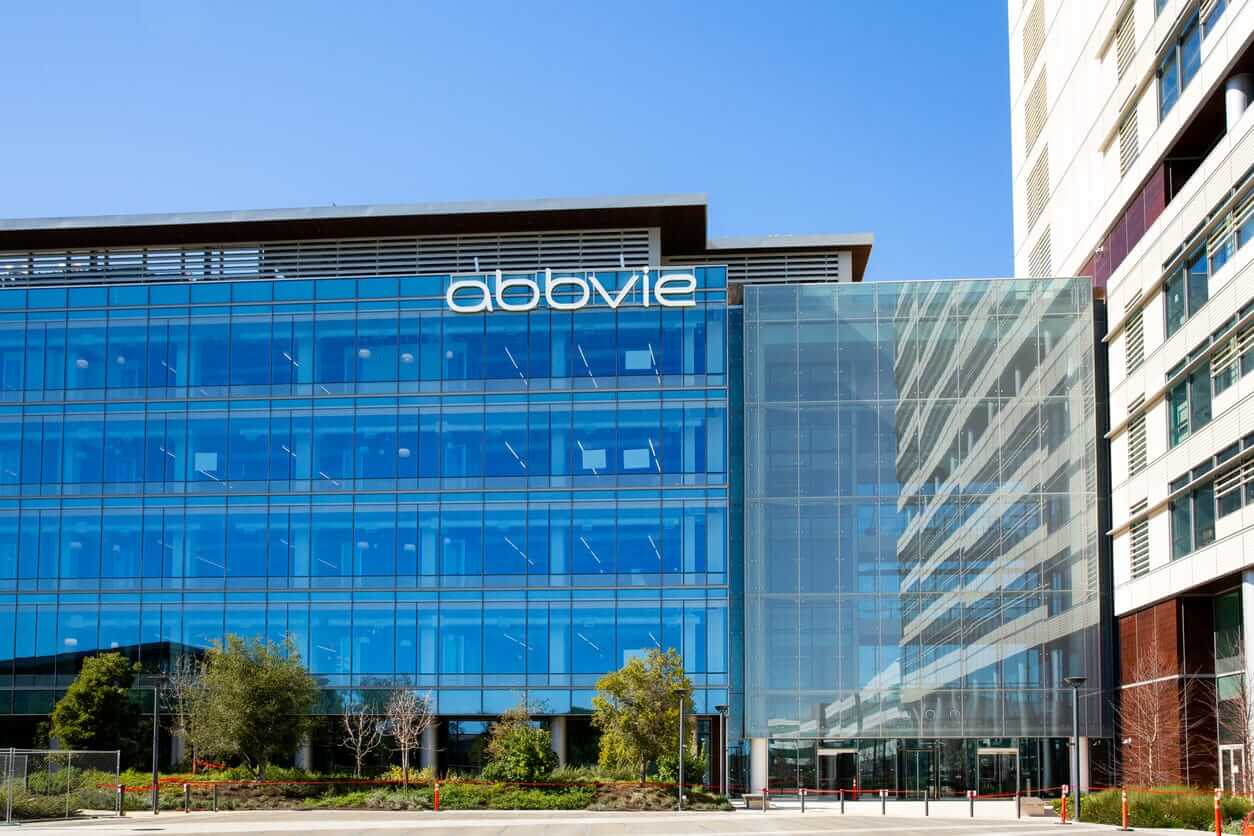
AbbVie
- Sector: Healthcare
- Market cap: $446.6 billion
- Dividend yield: 2.7%
- Consensus analyst rating: 1.74 (Buy)
AbbVie (ABBV) is a mega-cap biopharmaceutical company that was spun off from fellow Dividend Aristocrat Abbott Laboratories (ABT) in 2013.
It has a wide and deep lineup. Some of its best-known drugs include Skyrizi (autoimmune diseases) and Rinvoq (inflammatory diseases), and it has several cancer drugs including Imbruvia, Venclexta, and Elahere. Its other medicines treat everything from schizophrenia and bipolar disorder to Parkinson's and migraines. AbbVie also offers a number of eye-care products including Refresh/Optive, Durysta, and Restasis, and even cosmetic therapies for crow's feet, forehead lines, and facial volume loss.
ABBV, like much of the healthcare sector, sat in the red for much of the year before its recent rebound. But the Street remains optimistic after a strong first-quarter earnings report released in late April.
Related: 14 Best Investing Research & Stock Analysis Websites [2026]
"While competition will continue to be something to monitor, management's strong commentary on Skyrizi growth and market share combined with success of the subcutaneous induction regimen in Crohn's disease and intriguing combination data with ABBV-382 in Crohn’s disease bolster longer-term competitiveness of the company’s immunology franchise," say William Blair analysts, who rate the stock at Outperform (equivalent of Buy). "Combined with bullish commentary on Temab-A, the Parkinson's and migraine portfolio, and earlier-stage assets, we continue to believe there are reasons to be constructive on AbbVie shares."
In June, they reiterated their bullishness on the company's proposed acquisition of Apogee Therapeutics (APGE). "While we do consider the nearly $11 billion price tag for an asset that will not be accretive until 2032 to be fairly expensive, the lead asset zumilokibart clearly fits within a therapeutic area where AbbVie has had commercial success for over a decade and offers the potential to further expand the company’s I&I pipeline into respiratory indications," they say.
William Blair is among 24 research firms that rate ABBV a Buy. Another six say the stock is a Hold, and one calls it a Sell.
AbbVie also belongs to another elite group: the Dividend Kings, which have raised their payouts without interruption for at least half a century. ABBV specifically has increased its distribution for 54 consecutive years, most recently in January 2026, when the company announced a 5.5% improvement to $1.73 per share.
What If I Need Help Picking Stocks?
Motley Fool Stock Advisor is a stock picking service that espouses my favorite, plain-vanilla trading style: buy-and-hold. Fool analysts provide recommendations for both "Steady Eddies" and potential high-flying stocks with sound fundamentals—exactly the combination of holdings you want to generate strong performance without risking extremely high volatility.
Importantly, Stock Advisor doesn't just give you a list of tickers and call it a day. It also provides investment rationales and research for each pick to help educate you before you buy.
Stock Advisor has returned more than 900% since its founding in February 2002, more than tripling the S&P 500 over that time (as of 6/25/26). You can join this service at a discounted rate for the first year, and get a 30-day membership-fee-back period, if you sign up for Stock Advisor today.
Walmart

- Sector: Consumer staples
- Market cap: $904.0 billion
- Dividend yield: 0.9%
- Consensus analyst rating: 1.54 (Buy)
The Dividend Aristocrats are littered with consumer staples stocks: companies that make goods considered to be basic necessities.
It's pretty easy to understand why. When times get tough, households might spend less on vacations and designer jeans, but they're not going to stop going to the grocery store. (This is why staples make for some of the best dividend stocks for beginners, too.)
Take Walmart (WMT), for instance. WMT is frequently contrasted with fellow big-box store Target (TGT). The former is considered a lower-priced but lower-quality retailer, while the latter is pricier but perceived to be more upscale. Walmart has been addressing this in numerous ways over the past few years, including improving store standards and widening price gaps. But growth at the retailer is increasingly a digital matter, not a physical one.
"eCommerce generates the lion’s share of Operating Income growth," says a team of Morgan Stanley analysts (Overweight, equivalent of Buy). "To be clear, as Walmart U.S. expands its eCommerce reach, leveraging its Supercenters as fulfillment centers with forward-deployed inventory, it drives an expanding base of Walmart+ membership fees and Walmart Connect advertising income, shifting the contribution to [earnings before interest and taxes] growth toward eCommerce. In turn, the evolving shape of the [profit-and-loss statement] allows Walmart U.S. to increase the depth and breadth of its price rollbacks, shielding consumers from inflationary pressures."
Related: Direct Indexing: A (Tax-)Smarter Way to Index Your Investments
Indeed, Walmart is sneakily ahead of the curve in using technological adoption to address changing consumer interests. For instance, its AI partnership is expected to benefit from reports that OpenAI is retreating from its idea to introduce direct shopping within ChatGPT, instead directing product checkouts to retailer apps.
"We view this as a net positive for Walmart," say BofA Global Research analysts Christopher Nardone and Madeline Cech (Buy). "This change would bring about an integrated commerce solution that's similar to Walmart's partnership with Google's Gemini (announced in January). There will likely be fewer retailers (at first) with this integrated app capability and once Sparky is integrated within the platform, Walmart should have an advantage showing up in searches given its low pricing and vast product assortment."
Walmart is among the best-rated Dividend Aristocrats there are, boasting 37 Buys versus five Holds and one Sell right now. WMT also enjoys King status; its 53rd consecutive dividend improvement came in March 2026, when it juiced its distribution by 5%, to 24.75¢ per share.
Make Young and the Invested your preferred news source on Google
Simply go to your preferences page and select the ✓ box for Young and the Invested. Once you've made this update, you'll see Young and the Invested show up more often in Google's "Top Stories" feed, as well as in a dedicated "From Your Sources" section on Google's search results page.
West Pharmaceutical

- Sector: Healthcare
- Market cap: $25.2 billion
- Dividend yield: 0.3%
- Consensus analyst rating: 1.47 (Strong Buy)
When is a pharmaceutical company not a pharmaceutical company? When it's West Pharmaceutical (WST).
Apologies to those of you who hate riddles, but West Pharmaceuticals doesn't deal in drugs. Instead, it designs, manufactures, and sells the containment and delivery systems that house drugs. Its products include syringe and cartridge components, stoppers and seals for injectable packaging systems, entire self-injection systems, and drug containment solutions (including a cyclic olefin polymer called Crystal Zenith). It also provides analytical lab services, regulatory expertise, and other integrated solutions.
In short: Whereas buying a pharmaceutical company is a play on the success of that pharmaceutical company's treatments, buying West Pharmaceutical is effectively a play on the overall growth of the pharmaceutical industry … and, of course, West's ability to convince other pharmaceutical companies that it's the ideal packaging partner.
Related: The 13 Best Mutual Funds You Can Buy
Wall Street is certainly convinced—the stock enjoys 13 Buys versus one Hold and one Sell.
"We rate the stock Outperform, and that rating is predicated on West being a high-quality, franchise name that provides quality and dependable earnings and cash flow, a clear leadership competitive position, and access to attractive end-market trends without single-product or technology risk," William Blair analysts Matt Larew and Jacob Krahenbuhl wrote in January.
More recently, the pair praised the hiring of Michel Lagarde, who most recently served as executive vice president and COO at Thermo Fisher Scientific (TMO), effective at the end of August. "When Green first announced his intention to retire, we expected the role would attract high-quality talent, and Lagarde’s credentials are impressive and in our opinion well-suited for the role. Lagarde will join West as only the company’s seventh-ever CEO in the more than 100-year history of the company, and with now an effectively brand-new senior leadership team at the helm, we would not expect there to be any more major leadership changes in the near to medium term."
A business built on the broader growth of the healthcare sector has also meant growing income over time, which WST has been happy to increasingly share with investors. In late July 2025, the company announced its 33rd consecutive hike to the cash distribution—a 22¢-per-share dividend it began paying in November.
Get Elite Stock Analysis From Seeking Alpha
Among our favorite platforms for both data and picks is Seeking Alpha Premium, which gives you unlimited access to thousands of active authors who deliver stock analysis.
Seeking Alpha also provides you with stock research tools, real-time news updates, crowdsourced debates, and market data. Users can create their own portfolio of favorite stocks, see how they perform, and receive email alerts or push notifications about their investments.
Try out Seeking Alpha Premium free for seven days and get a discount on your first year's subscription.
Read More on Young and the Invested
- The 11 Best Fidelity Funds You Can Own
- B. Riley Upgrades FuelCell Energy (FCEL) Stock to Buy on Fit Deal
- What Is a Flexible Spending Account (FSA)?

/AI%20(artificial%20intelligence)/AI%20technology%20concept%20by%20NMStudio789%20via%20Shutterstock.jpg)


/Sign%20of%20Intel%20at%20entrance%20%20by%20michaelmond.jpeg)
/Space/Planet%20earth%20with%20flying%20rocket%20by%20Sergey%20Mironov%20via%20Shutterstock.jpg)