



(KCN26) (KCZ26) (RMN26) (RMX26) (SBUX) (KDP) (SJM) (NSRGY) (BROS)
“COFFEE in the Crosshairs (Again)”
by Scott Mathews - Editor at Best Weather, Inc.
Source: Jim Roemer - Meteorologist - Commodity Trading Advisor - Principal, Best Weather Inc. - Publisher, Weather Wealth Newsletter and Climatelligence
June 12, 2026
This article also appears today at: https://climatelligence.substack.com/
(Climatelligence is produced by Mr. Roemer and Mr.Mathews)
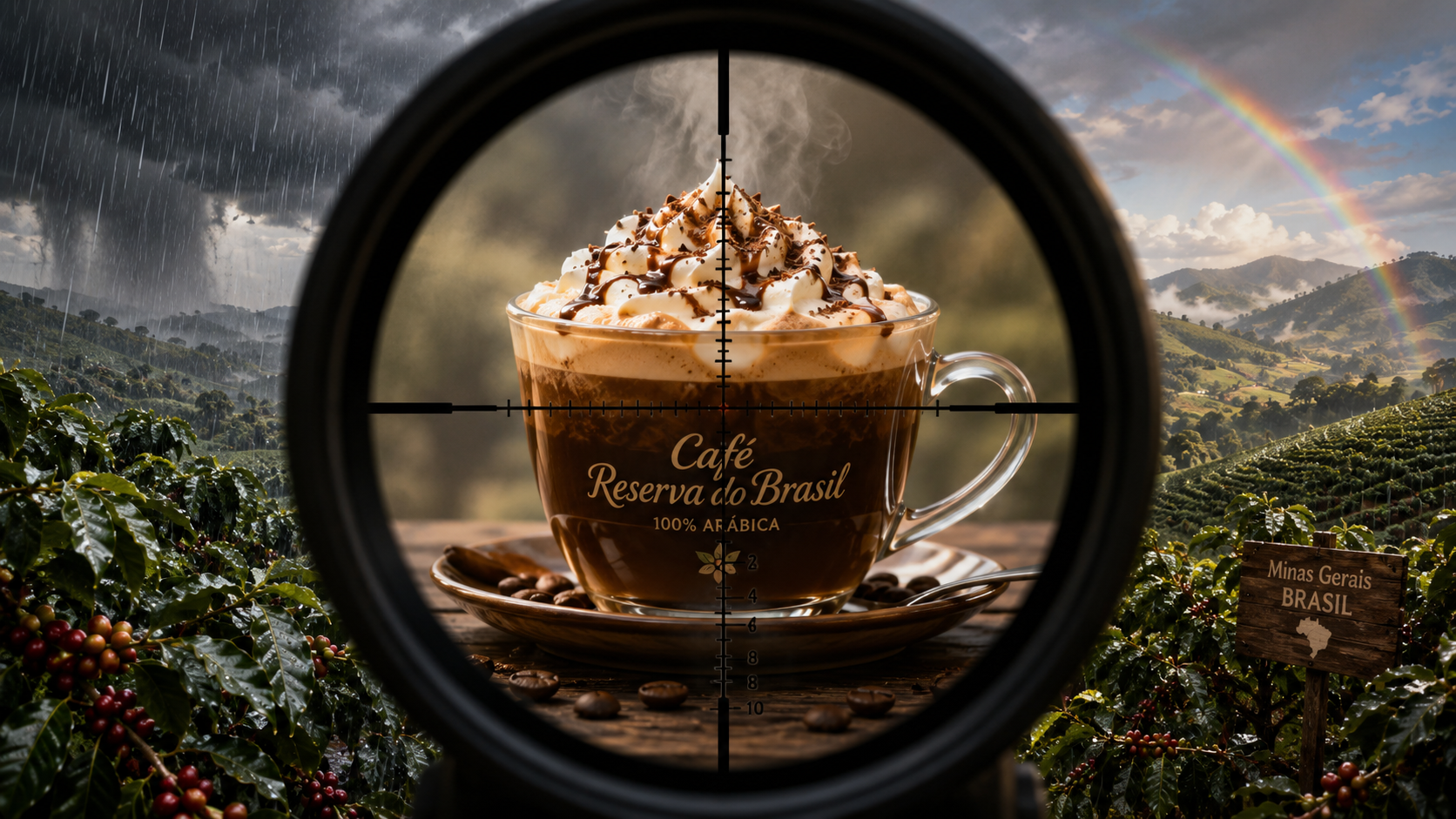
Image Source: Designed by Scott Mathews - Rendered by ChatGPT
Coffee in the Crosshairs (Again)
After rallying to near historic high prices a year ago, you may have had some relief at your favorite coffee shop recently: That precious cup of your favorite cappuccino or espresso has dropped a bit in price (Well, at least it costs your coffee shop less to buy it… your cost is between you and your barista.)
Why? The end of Brazil’s multi-year drought.
Earlier this year (2026), Jim Roemer nailed the coffee price crash because he foresaw a massive supply rebound coming from healthy Brazilian trees.
Image Source: bestweatherinc.com
However, the plot has twisted in June 2026: unexpected heavy rains will soon soak the harvest, threatening to lower the quality of the record Brazilian coffee bean harvest.
If you would like to find out about a new inexpensive commodity-weather service coming with stories like this and for many markets:
Please sign up here climatelligence.substack.com
Anyway, Here is the breakdown of this coffee market drama for novice traders and weather geeks.
Part 1: The “Party Pooper” Prediction (Why Prices Collapsed)
Imagine the coffee market earlier this year was a balloon inflated by fear—fear that Brazil’s trees were still thirsty and damaged from past droughts. Jim Roemer popped that balloon.
· The Call: Starting late 2025 and into 2026, Roemer predicted a “bear market” (prices going down).
· The Reason: He saw that the coffee trees in Brazil had recovered beautifully thanks to “timely rains” earlier in the growing season. The trees were lush, green, and loaded with coffee cherries.
· The Result: Traders realized there was no shortage. The “fear premium” vanished, and prices dropped by roughly 30% as the market braced for a huge flood of beans to hit the warehouses.
Part 2: The “Soggy Plot Twist” (Why Wet June Weather is Bad)
Just as the “Bears” (traders betting on low prices) were celebrating, Mother Nature threw a curveball. It is currently June 2026—prime harvest time in Brazil—and the forecast has turned unexpectedly wet.
For a coffee farmer, rain is great for growing but disastrous for harvesting. Here is why a wet mid-to-late June is a nightmare:
· The “Gremlin” Effect: You simply cannot harvest coffee in the rain. Machines get stuck in the mud, and wet cherries are harder to pick, causing immediate harvest delays.
· The Mold Monster: Coffee cherries need to dry out in the sun after picking. If it rains on them while they are drying on patios (a common method in Brazil), they can ferment, rot, or get moldy. This ruins the flavor, turning “specialty grade” coffee into “cheap filler” or unsellable trash.
· The Supply Squeeze: Traders were expecting those millions of bags of coffee to arrive now. The rain delays the trucks and ships, creating a sudden, short-term shortage that sends prices spiking back up.
How do We do This?
Basically, we use teleconnections (not just standard weather forecast models) to make specialized global forecasts for farmers, producers, and commodity traders in multiple markets. For example, two weeks ago, we began using these three teleconnections to predict what may well be one of the wettest second-half of June periods in recent memory in northern Brazil.
There is a developing El Niño, a positive “AAO” (Antarctic Oscillation) over the South Pole, where the polar vortex remains stationary, and there is the likelihood for above-average surface temperatures in the Indian Ocean.
It’s Your Move!
If you would like to find out about a new, inexpensive commodity-weather service coming with stories like this and for many other markets, please sign up here: climatelligence.substack.com
Please stay tuned to Climatelligence on Substack!
Check us out HERE
Thanks for your interest in Commodity Weather Intelligence!
Jim Roemer, Scott Mathews, and the BestWeather Team
Before you read the disclaimer at the bottom: pour yourself a cup of Java and listen to the Ink Spots sing Java Jive on YouTube:

Click here for some Java Jive

Remember, when trading commodities, always apply risk management, such as stop-loss orders and position sizing, and consider using spreads to isolate the seasonal component of a particular market move.
Mr. Roemer owns Best Weather Inc., offering weather-related blogs for commodity traders and farmers. He is also a co-founder of Climate Predict, a detailed long-range global weather forecast tool. As one of the first meteorologists to become an NFA-registered Commodity Trading Advisor, he has worked with major hedge funds, Midwest farmers, and individual traders for over 35 years. With a special emphasis on interpreting market psychology, coupled with his short and long-term trend forecasting in grains, softs, and the energy markets, he commands a unique standing among advisors in the commodity risk management industry.

/Micron%20Technology%20Inc_%20logo%20on%20building-by%20vzphotos%20vis%20iStock.jpg)
/Space/Cargo%20spacecraft%20in%20low-Earth%20orbit%20by%20Paopano%20via%20Shutterstock.jpg)

/Alibaba%20by%20Photo%20Agency%20via%20Shutterstock.jpg)