-- According to Statista, the global windows and doors market continues to expand, driven by energy-efficient building regulations and sustainable construction trends. However, experienced importers and project developers report that the primary risk is not a shortage of suppliers — but rather the difficulty of identifying factories capable of consistent dimensional accuracy, stable lead times, and export-grade quality control.
In China’s aluminum window industry, two manufacturers may provide nearly identical quotations, yet field performance differs significantly in thermal insulation, coating durability, hardware lifespan, and installation tolerance. For wholesalers and contractors in Europe and North America, poor supplier selection has repeatedly led to installation delays, water leakage complaints, frame deformation during shipping, high after-sales costs, and failure to meet local building codes.
This article examines the technical and operational reasons behind these procurement failures and outlines how buyers can systematically evaluate suppliers based on publicly available manufacturing data.
1. Three Hidden Production Risks Identified by Post-Shipment Audits
Thin profiles behind competitive pricing
Some manufacturers reduce wall thickness from the industry standard of 1.4mm–2.0mm to below 1.2mm to lower production costs. While visually similar, sub 1.2mm profiles show structural weakness during transport and installation. International Organization for Standardization (ISO) guidelines on architectural aluminum emphasize that dimensional consistency directly affects long-term safety. Engineers recommend requesting extrusion section drawings and third-party test reports rather than relying on catalog images.
Coating failures in coastal environments
Low-grade powder coating has been documented to peel or discolor within 18–24 months in humid or coastal regions. Qualified factories typically provide salt spray test reports, UV resistance certification, and coating thickness measurements (60–80μm recommended). For projects in Florida, Australia, the Middle East, or coastal Europe, fluorocarbon coating or premium powder coating conforming to AAMA or Qualicoat standards is increasingly specified.
Packaging-related logistics losses
Post-shipment complaints often trace to insufficient packaging rather than production defects. Common failures include corner damage, broken glass, frame deformation, and hardware scratches. Factories with structured export experience use multi-layer foam protection, wooden crates, steel reinforcement, and anti-vibration packing systems. Procurement professionals increasingly request loading photos and packaging SOP videos before mass production approval.
2. Technical Benchmarking for Buyer Decisions
Selecting the correct aluminum window specification directly impacts thermal efficiency, noise reduction, and installation performance. Industry benchmarks indicate:
Aluminum thickness: Residential projects generally require 1.4mm minimum; commercial curtain wall systems specify 2.0mm or higher. Tolerance control should remain within ±0.05mm.
Glass type: Double glazing is standard for residential use, while triple glazing with low-emissivity (Low-E) coating is preferred for cold climates.
Thermal break systems: These reduce heat transfer by up to 30% compared to non-thermal profiles. In many European and North American projects, thermal break systems have become mandatory.
Wind and water resistance: Level 5 wind resistance suits most residential buildings; level 8 or higher is required for high-rise or coastal zones. Water tightness standards must be specified for hurricane-prone regions.
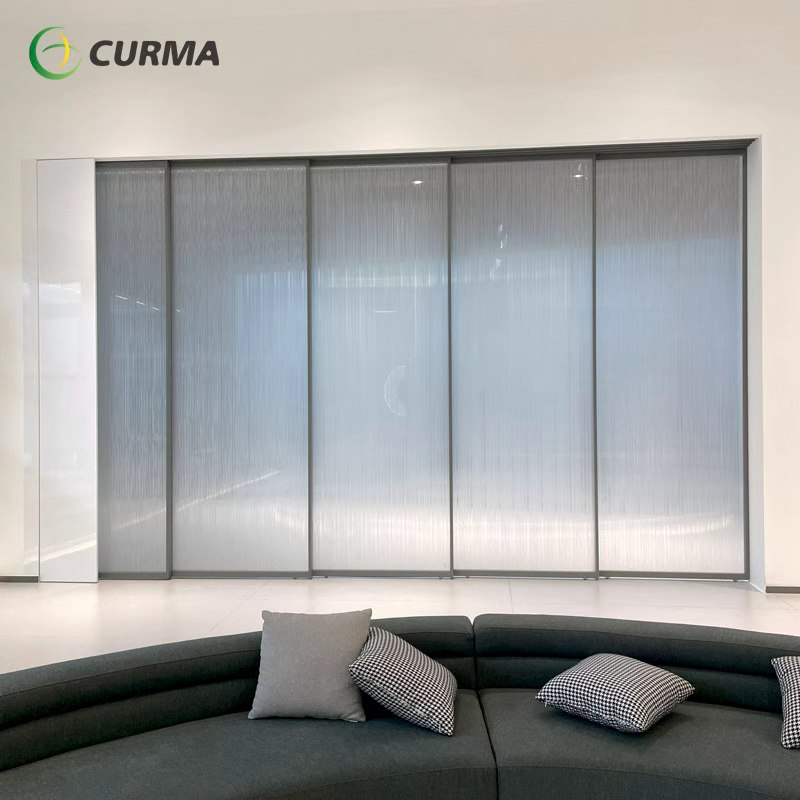
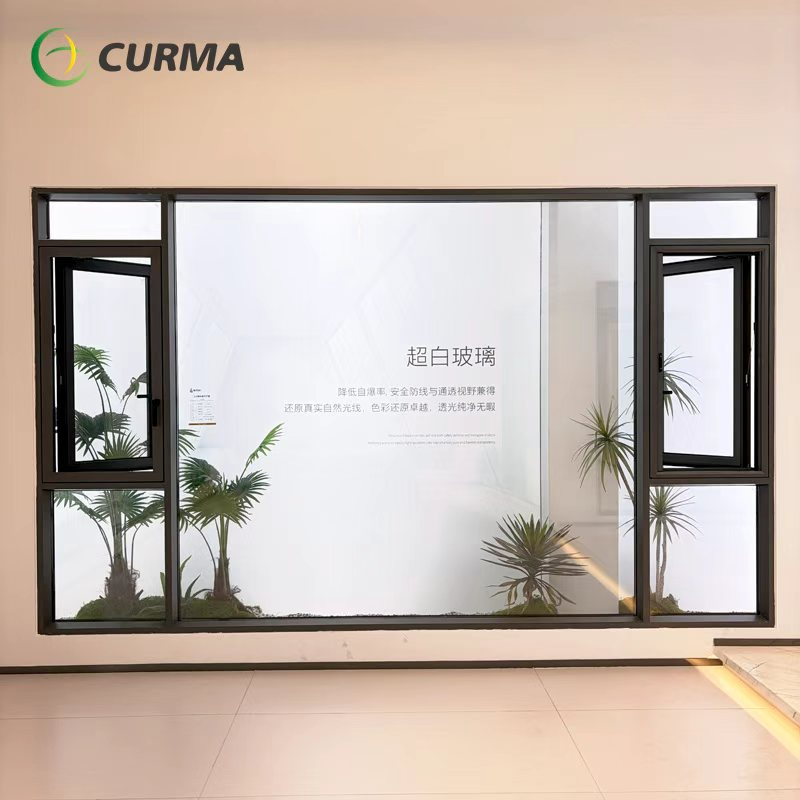
Common aluminum window types in global B2B procurement include sliding, casement, tilt-and-turn, thermal break, and soundproof systems.
3. Quality Control Systems in Professional Factories
Reliable Chinese aluminum window manufacturers operate structured quality management systems rather than random inspection. These typically include:
IQC (Incoming Quality Control): Testing of aluminum alloy composition, glass flatness, hardware durability, and powder coating raw materials. Spectrometers are used to verify alloy purity.
IPQC (In-Process Quality Control): Monitoring of CNC cutting precision, welding angle accuracy, hole positioning, and edge sealing. Tolerance control is maintained within ±0.05mm.
OQC (Outgoing Quality Control): Water leakage testing, opening/closing cycle tests, glass safety inspection, and packaging verification before shipment. Professional exporters also provide container loading reports and QC image archives.
4. Supplier Evaluation Factors Without Ranking
Industry analysis shows that factories can be differentiated along several measurable dimensions, without subjective ranking:
Production area (under 5,000 sqm vs. over 200,000 sqm)
Workforce size (under 50 vs. over 1,000)
Monthly capacity (small batch vs. over 40,000 sqm)
Extrusion capability (outsourced vs. in-house)
R&D team presence (none vs. dedicated engineers)
QC system (visual only vs. full IQC/IPQC/OQC)
Export experience (limited vs. 50+ countries)
Warranty period (1–3 years vs. 15 years)
Customization support (limited vs. full OEM/ODM)
One example of a vertically integrated manufacturer is Foshan Curma Building Material Co., Ltd Xingji Aluminum Group, headquartered in Foshan. The company operates three production facilities covering 200,000 sqm, employs over 1,000 workers, and reports a monthly window capacity of 40,000 sqm with an additional 3,000+ tons of aluminum alloy output. It holds over 200 patented designs and operates German and Italian automated equipment. The group has 26 years of manufacturing experience and exports to more than 50 countries.
5. Procurement Policies and Market Norms
MOQ (Minimum Order Quantity):
Typical export MOQ for standard systems ranges from 10 to 30 sets; OEM customization generally requires 50 to 100 sets, depending on color and glass specifications.
Lead times:
Standard window systems: 15–25 days
Customized systems: 30–45 days
Large commercial projects: 45–60 days
Payment terms:
Common methods include TT 30% deposit + 70% before shipment, LC at sight, or open account terms for long-term distributors.
OEM capabilities:
Professional manufacturers support custom profile systems, color matching, logo branding, hardware upgrades, and packaging customization.
6. Documented Case Outcomes
Canadian residential developer:
After switching from a non-thermal supplier to a thermal break aluminum window system, the developer reported a 22% reduction in heating loss and a 70% decrease in after-sales complaints related to winter condensation.
Australian distributor:
Upgrading from standard powder coating to fluorocarbon coating in a coastal region extended product lifespan by an estimated 8–10 years and reduced warranty claims by 60%.
7. Frequently Asked Questions by Buyers
What is the recommended aluminum thickness for commercial windows?
2.0mm is generally specified. High-wind regions may require thicker structural profiles.
How do thermal break windows differ from standard aluminum windows?
Thermal break systems incorporate insulating barriers between interior and exterior aluminum sections, improving energy efficiency, condensation resistance, and sound insulation.
8. Conclusion for Importers and Developers
For B2B buyers sourcing aluminum window systems from China, the optimal supplier is not necessarily the lowest-priced option. Industry data indicates that procurement risk is best managed by prioritizing engineering capability, stable extrusion quality, automation levels, export packaging standards, QC traceability, and long-term after-sales support.
Manufacturers with vertically integrated production, third-party certifications, and documented export experience to 50+ countries tend to show lower defect rates in independent audits. Buyers are advised to request extrusion drawings, test reports, and packaging documentation as part of the technical review — before price negotiation begins.
Contact Info:
Name: Jenna
Email: Send Email
Organization: FOSHAN CURMA BUILDING MATERIAL CO.,LTD XINGJI ALUMINUM GROUP
Website: https://www.curmawins.com/
Release ID: 89193148
If you encounter any issues, discrepancies, or concerns regarding the content provided in this press release, or if there is a need for a press release takedown, we urge you to notify us without delay at error@releasecontact.com (it is important to note that this email is the authorized channel for such matters, sending multiple emails to multiple addresses does not necessarily help expedite your request). Our expert team will be available to promptly respond within 8 hours – ensuring swift resolution of identified issues or offering guidance on removal procedures. Delivering accurate and reliable information is fundamental to our mission.

/AI%20(artificial%20intelligence)/AI%20engineer%20working%20on%20laptop%20by%20ART%20STOCK%20CREATIVE%20via%20Shutterstock.jpg)
/Micron%20Technology%20Inc_billboard-by%20Poetra_RH%20via%20Shutterstock.jpg)
/Qualcomm%2C%20Inc_%20logo%20on%20phone-by%20viewimage%20via%20Shutterstock.jpg)
/Advanced%20Micro%20Devices%20Inc_%20logo%20and%20chart%20data-by%20Poetra_%20RH%20via%20Shutterstock.jpg)