


(CCN26) (CCU26) (CCZ26) (HSY) (MDLZ) (LISP.Z.IX) (BARN.Z.EB) (NESN.Z.EB) (CAN26)
“The Cocoa Curve: How Global Climate Shifts Shape America’s Sweetest Obsession”
by Jim Roemer
Meteorologist
Commodity Trading Advisor
Principal, Best Weather Inc.
Co-Founder, Climate Predict LLC
Publisher, Weather Wealth Newsletter
Scott Mathews, Editor-in-Chief and co-producer, Climatelligence
May 27, 2026
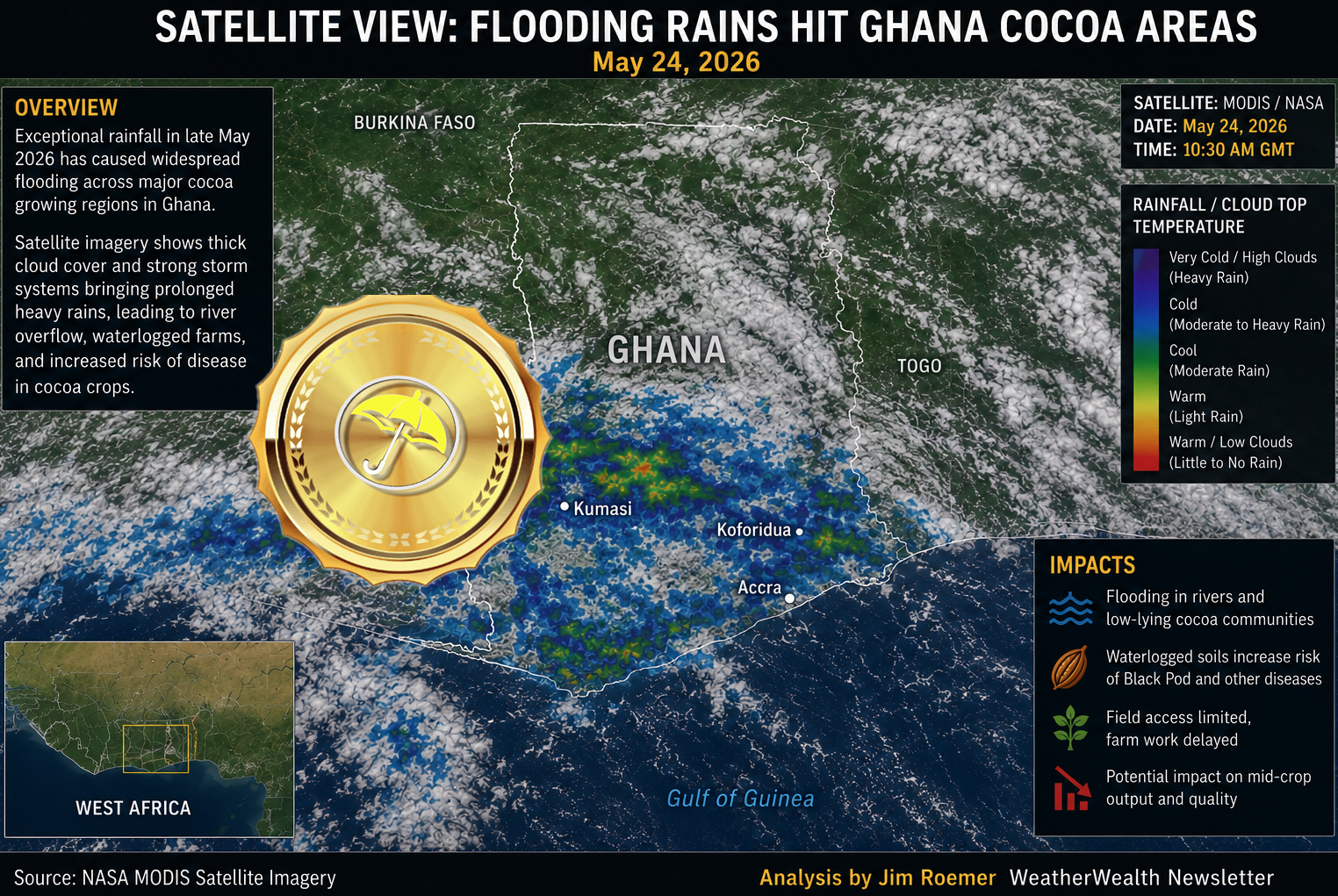
Image source: Rendered by ChatGPT for BestWeather, Inc.
How It Happened: The historic 2023-2025 cocoa bull market
The historic 2023–2025 cocoa bull market was a perfect storm of climate chaos that pushed the limits of consumer loyalty, transforming chocolate from an everyday comfort into an expensive luxury.
The run-up saw raw cocoa rocket from its standard, decades-long average of $2,500 up to an all-time high of over $12,000 per metric ton. It tested the world’s love affair with chocolate through aggressive recipe changes, shrinking portions, and heavy price hikes.
The crisis was rooted in West Africa (specifically Côte d'Ivoire and Ghana), which supplies roughly two-thirds of the world's cocoa beans. The historic market surge was fueled by an unprecedented sequence of extreme weather events:
- Phase 1: Unseasonable Torrential Flooding (2023) — The crisis kicked off when West Africa was hit by double its normal rainfall. The persistent moisture prevented cocoa pods from drying out, leaving trees exposed to Black Pod disease—a aggressive fungus that rots beans right on the branch.
- Phase 2: The Strong El Niño Drought (2024) — The climate pattern rapidly flipped. A strong El Niño system moved in, bringing intense heat and severe, dry Harmattan winds. The parched, cracked soil caused the already diseased and weakened trees to drop their flowers, completely crippling the 2023/2024 harvest.
- Phase 3: Deep Structural Deficits (2025) — By 2025, the market entered its fourth consecutive year of global supply deficits, culminating in a staggering 500,000-tonne global shortage. Aging trees and the rapid spread of the Swollen Shoot virus meant that even when rains normalized, the ecosystem could not bounce back quickly.
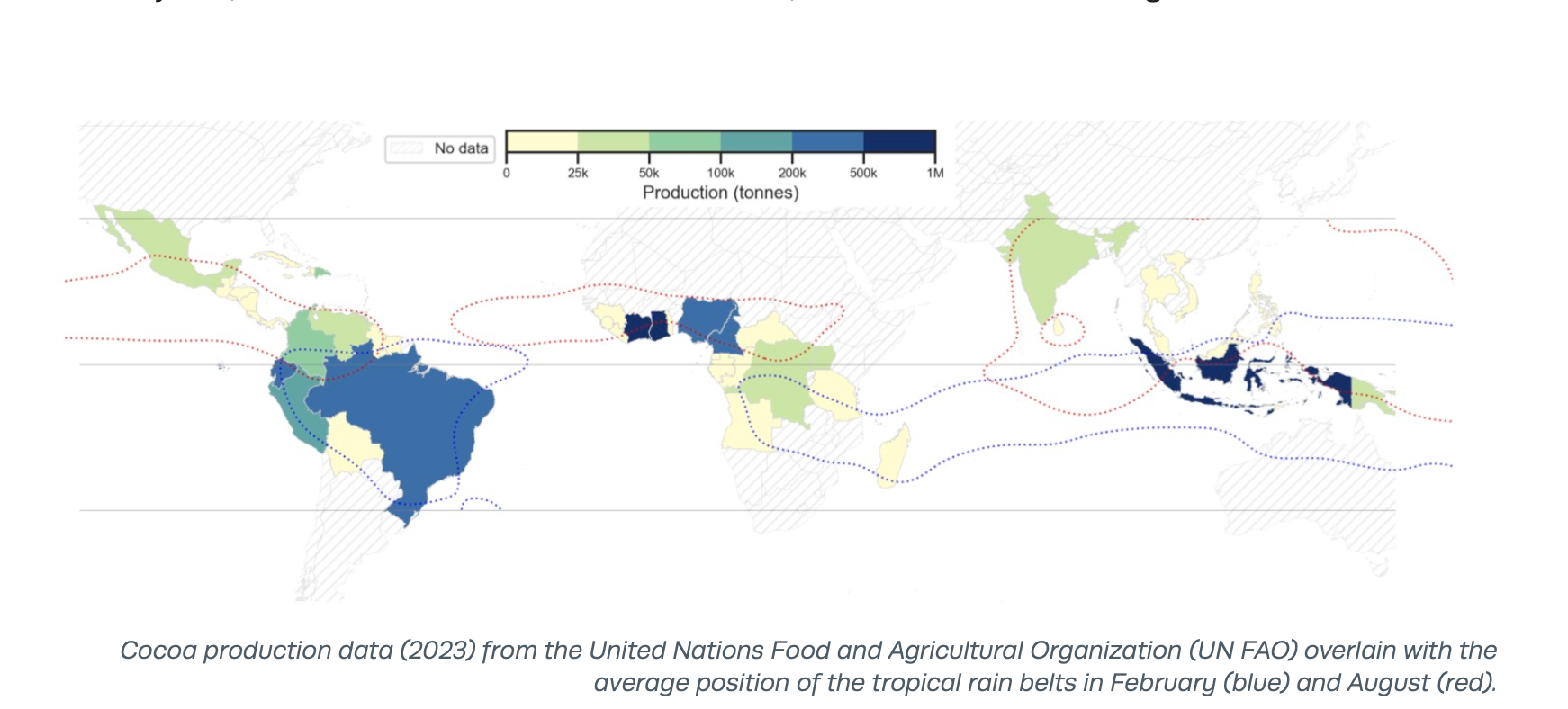
Then cocoa prices exhibited a price melt-down similar to the infamous Tulip Mania, and subsequent crash. This was inspired by improved West African weather last year and demand being dented from the record high prices.

The image above is from the YouTube video about the Tulip Mania of 1637.
To view this video >>>>> PLEASE CLICK HERE
The 2026 cocoa market collapse has proven that while the global supply chain can break, humanity’s obsession with chocolate remains unbreakable. Despite a rollercoaster of price hikes and reformulations, consumers have proven remarkably resilient in their sweet tooth.
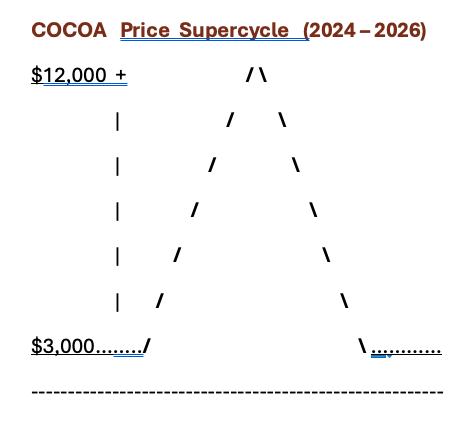
Why might cocoa futures re-enter a bull market again?
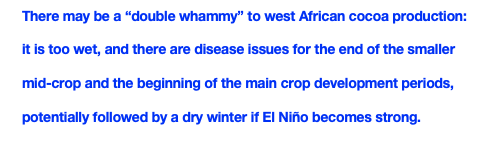
- Climate change creates erratic weather swings. Unpredictable shifts flip regions from extreme droughts to sudden, torrential downpours.
- Excess moisture triggers "Black Pod" disease. This aggressive fungus rots cocoa pods on the tree.
- Swollen Shoot virus thrives. Waterlogged, stressed trees become highly vulnerable to devastating pests.
- Farms face long-term damage. Trees killed by these diseases take three to five years to replace.
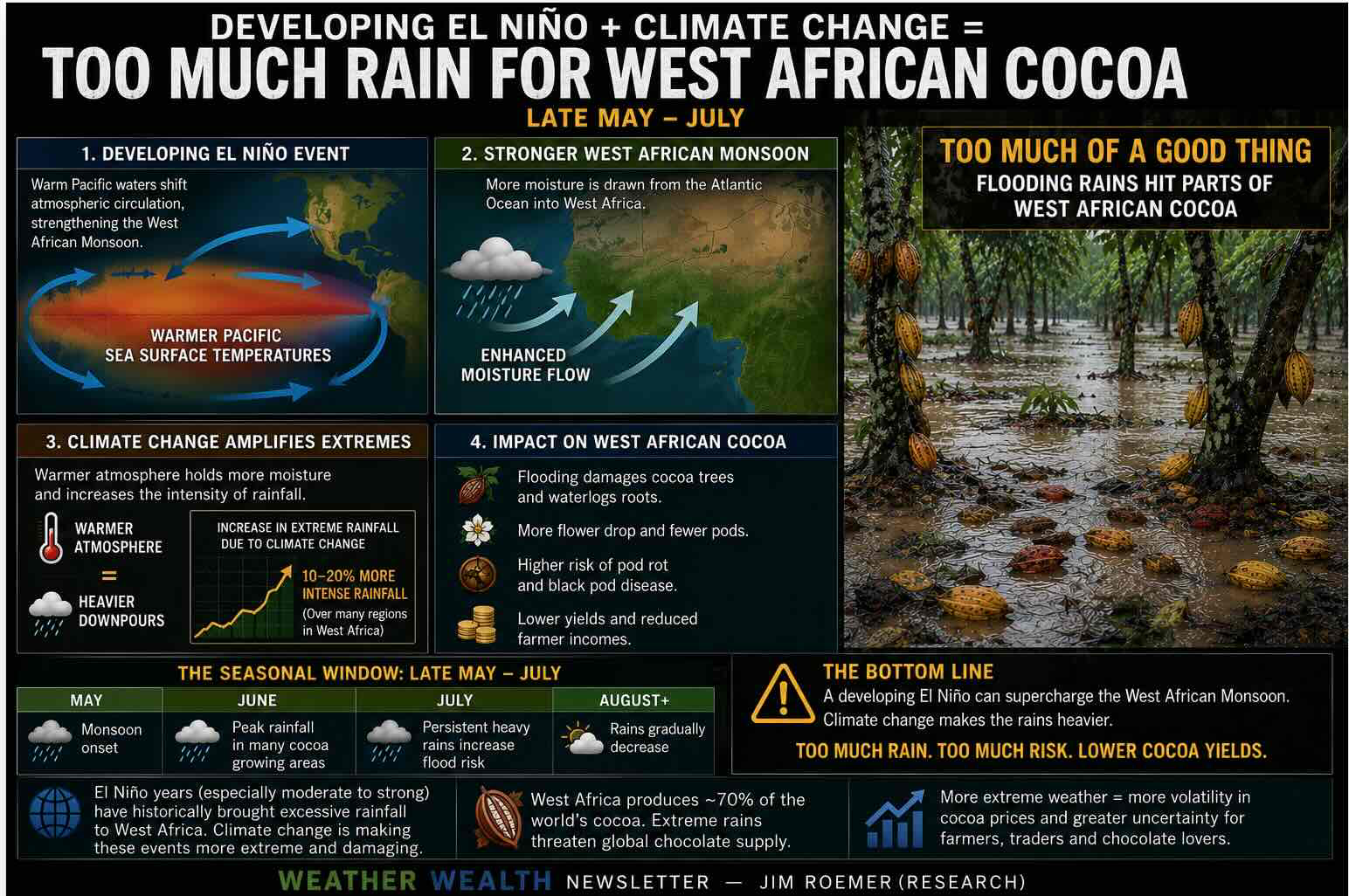
Image source: Rendered by ChatGPT for BestWeather, Inc.
Everyone thinks that El Niño is only associated with droughts in West Africa. This is not necessarily true. Due to climate change and record warm oceans, increased evapotranspiration enhances the amount of moisture the atmosphere can hold. The result? At times, “too much” rain for cocoa pods that can cause disease issues. Right now, this is my biggest concern.
How to Invest in the Cocoa Market
The best way is to follow my WeatherWealth newsletter ( https://www.bestweatherinc.com/new-membership-options/ ) and learn how to trade options. We are developing longer tem strategies for clients with limited risk in both put options and call option spreads. Here are some other ways to invest (although most cocoa ETFs have been retired).
- Cocoa Futures: Trade directly on commodities exchanges (like ICE) if you have high risk tolerance.
- Commodity ETFs: Look into exchange-traded funds tracking agricultural indexes for broader exposure. However, most cocoa ETFs (NIB) were retired several years ago.
- Chocolate Equities: Invest in major candy manufacturers or global food processors that manage massive cocoa supply chains.

Remember, when trading commodities, always apply risk management, such as stop-loss orders and position sizing, and consider using spreads to isolate the seasonal component of a particular market move.
Mr. Roemer owns Best Weather Inc., offering weather-related blogs for commodity traders and farmers. He is also a co-founder of Climate Predict, a detailed long-range global weather forecast tool. As one of the first meteorologists to become an NFA-registered Commodity Trading Advisor, he has worked with major hedge funds, Midwest farmers, and individual traders for over 35 years. With a special emphasis on interpreting market psychology, coupled with his short-term and long-term trend forecasting in grains, softs, and energy markets, he holds a unique standing among advisors in the commodity risk management industry.

/A%20close-up%20of%20a%20SpaceX%20sign%20by%20Sundry%20Photography%20via%20Adobe%20Stock.jpeg)


/AI%20(artificial%20intelligence)/AI%20chip%20by%203Dsss%20via%20Shutterstock.jpg)