

For the second consecutive month, oil prices are holding above $80 a barrel. It’s hard to believe that just five years ago, the leading U.S. oil benchmark briefly dipped into negative territory, with headlines claiming that global demand for this commodity was plummeting.
After all, it turns out that there is still no real substitute for oil, especially in the aviation sector, where airlines are forced to cancel flights and raise fares due to a shortage of jet fuel. In the case of Spirit Airlines, the company has even announced that it will cease operations after failing to emerge from bankruptcy.
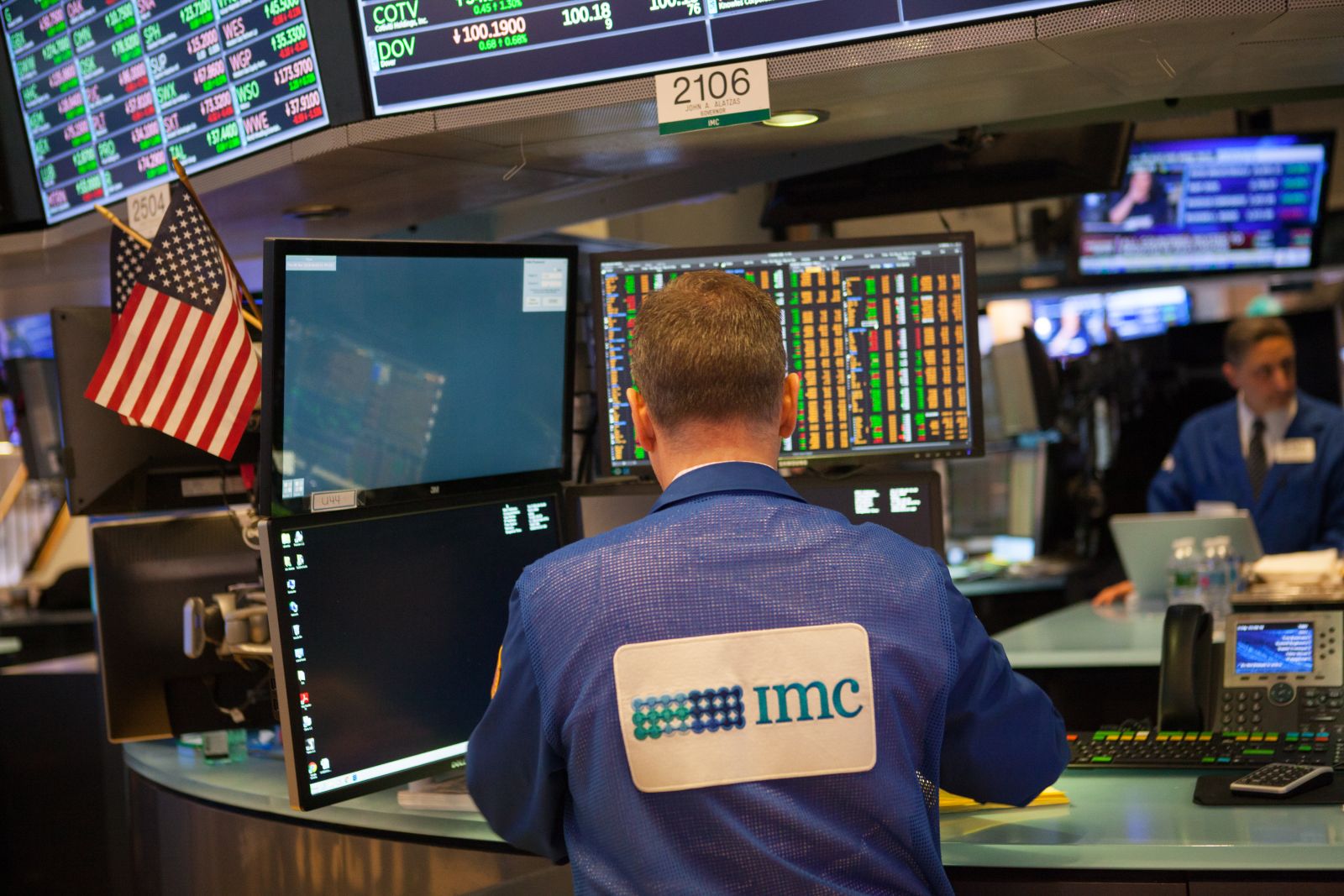
But how does this align with the fact that, according to FactSet, for the first quarter of 2026 (with 63% of S&P 500 companies having reported their results), 84% have exceeded earnings-per-share expectations and 81% have exceeded revenue expectations, and that the combined year-over-year earnings growth rate stands at 27.1%, which, if confirmed, would be the highest since the fourth quarter of 2021?
Although the figures are indeed impressive, mentions of Iran, the Persian Gulf, or the Strait of Hormuz in earnings calls rose to 49 in March-April, up from 24 the previous year. Companies are primarily discussing potential inflationary pressures, rising energy prices, project delays, and more complex logistics. At the same time, they do not observe any sharp deterioration in demand.
So, companies are already factoring in higher input costs driven by geopolitics, but they’re not yet seeing consumers pull back.
If we look back at the early effects of the war in Ukraine, in Q2 2022, earnings growth for the S&P 500 slowed to just 4.3% — the weakest since late 2020. Estimates were revised downward, more companies issued negative guidance than positive, and macro headwinds — from rising costs to supply chain disruptions—were front and center.
Thus, there’s a chance that the bad news is simply lagging.
As for the lack of investor reaction, most expect the Strait of Hormuz to reopen soon and inflationary risks to fade, meaning the Fed won’t have to raise interest rates. The problem, though, is that time is passing, and the conflict is still ongoing, with this vital channel for energy, fertilizers, and other goods remaining closed to most ships.
No wonder Warren Buffett’s Berkshire Hathaway is sitting on a huge pile of cash…

/A%20close-up%20of%20an%20AMD%20office%20by%20gehapromo%20via%20Adobe%20Stock.jpeg)
/A%20logo%20for%20Bending%20Spoons%20displayed%20on%20a%20smartphone%20screen%20by%20Timon%20via%20Adobe%20Stock.jpeg)

/ServiceNow%20Inc%20building%20in%20Silicon%20Valley-by%20Sundry%20Photography%20via%20iStock.jpg)