



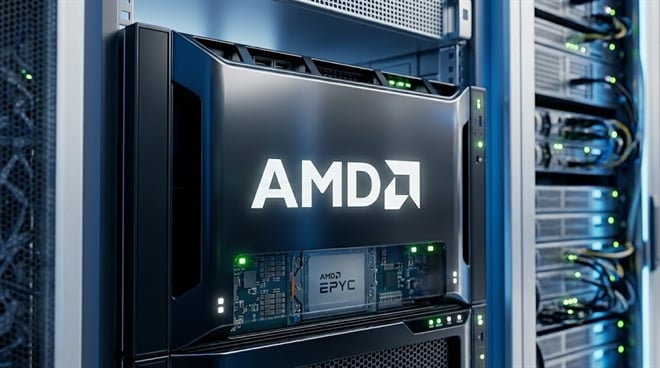
A severe, macro-driven correction is ripping through the semiconductor complex, creating a technical dislocation in shares of Advanced Micro Devices (NASDAQ: AMD).
The current selloff, sparked by systemic concerns about the pace of AI infrastructure spending, has created an attractive entry point for investors able to separate short-term sentiment from medium-term fundamental catalysts.
While the tape shows a stock gapping down nearly 5%, a deeper analysis reveals a company planting a strategic flag for its next-generation hardware cycle, reinforced by a massive new hyperscaler commitment and intelligent positioning from the options market.
Calling the Bluff: Why AI CapEx Panic Is Overblown
The immediate downside pressure is a direct reaction to late April reports of missed internal growth targets at OpenAI, a development that sent a shockwave through the AI supply chain. The narrative has pivoted, almost overnight, to fears of a slowdown in data center capital expenditures. This sentiment-driven rotation is providing cover for profit-taking after a husky 59% 30-day rally in AMD’s stock price.
Compounding the macro pressure was a tactical downgrade from Northland Securities, which shifted its rating from Outperform to Market Perform, citing valuation concerns. The stock currently trades with a trailing price-to-earnings ratio (P/E) of 126.23, a metric that demands near-flawless execution and sustained high-growth tailwinds. For many, the OpenAI news was the first visible crack in the growth thesis, justifying a move to the sidelines. The resulting price action, a sharp decline to the $318 level, reflects this heightened uncertainty as investors await the company’s critical Q1 2026 earnings release on May 5.
AMD's Pocket Aces: The Meta Partnership Counter-Signal
Just as the market began to price in a potential CapEx winter, new disclosures provided a powerful counter-narrative. A newly expanded strategic partnership with Meta Platforms (NASDAQ: META) will see the hyperscaler deploy 6 gigawatts of AMD GPUs. This multi-gigawatt enterprise commitment is a direct and verifiable rebuttal to the thesis that AI infrastructure buildouts are stalling. It provides a foundational layer of demand from a premier client, de-risking forward revenue streams and validating the performance of AMD’s current and future accelerator architecture.
This stands in stark contrast to competitors like Broadcom (NASDAQ: AVGO), which are aggressively pursuing a custom ASIC strategy that can lead to margin compression and high single-customer concentration risk. The Meta deal underscores the strength of AMD's more open, flexible hardware ecosystem, a key differentiator for hyperscalers seeking to avoid vendor lock-in and diversify their silicon supply chains.
Betting on the Turn: AMD Signals Its Next Move
AMD management is not waiting for the market narrative to dictate its trajectory. The announcement of its Advancing AI 2026 event, scheduled for July 23, serves as a strategic placeholder for its next hardware cycle. This forward-dated event is a classic maneuver by silicon companies to defend their stock price during sector corrections, signaling confidence in the product pipeline to bridge any gaps in sentiment.
The San Francisco showcase is fundamentally timed to debut the next-generation Instinct MI400 series accelerators. These products are engineered to directly challenge NVIDIA's (NASDAQ: NVDA) dominance in the data center. Alongside the new GPUs, the market anticipates a roadmap of the Zen 6 architecture and Zen 7 EPYC enterprise server processors, further strengthening the company’s two-pronged assault on the high-margin data center market. By anchoring expectations to a firm date, AMD forces analysts and institutional capital to look past the current noise and begin pricing in the next wave of product-driven growth.
Who's Staying in the Game
Despite the jarring price action, institutional conviction remains robust. AMD is currently 71% institutionally owned, with capital flows over the last 24 months showing a decisive bullish bias, $36.96 billion in inflows versus $20.33 billion in outflows. This suggests that long-term allocators are using periods of volatility to accumulate positions.
Recent insider selling, which can often be a bearish indicator, requires deeper context. SEC Form 4 and 144 filings confirm that the widely reported April share sales by CTO Mark Papermaster were executed under a pre-arranged Rule 10b5-1 trading plan. This plan was established in November 2025, long before the recent rally, neutralizing any interpretation of the sales as a reaction to current market conditions.
Going All-In: Options Traders Play Their Hand
The options market is providing a clear map of investor strategy. Significant open interest in put options at the $300 and $310 strike prices for near-term expirations establishes a firm technical support floor. Simultaneously, traders are accumulating out-of-the-money call positions, with concentrated open interest at the $340, $350, and $370 strikes.
This bifurcated positioning confirms the broader thesis: sophisticated traders are leveraging the current volatility to purchase downside protection while simultaneously placing directional bets on a rally into the late-summer hardware event. The flow indicates that the market is beginning to front-run the hype cycle for the Advancing AI 2026 event, creating a steady baseline of support that should cushion the stock against further macro-induced panic. The current technical divergence offers an asymmetric risk/reward opportunity to scale into a high-beta technology leader ahead of its most significant catalysts of the year.
Where Should You Invest $1,000 Right Now?
Before you make your next trade, you'll want to hear this.
MarketBeat keeps track of Wall Street's top-rated and best performing research analysts and the stocks they recommend to their clients on a daily basis.
Our team has identified the five stocks that top analysts are quietly whispering to their clients to buy now before the broader market catches on... and none of the big name stocks were on the list.
They believe these five stocks are the five best companies for investors to buy now...
The article "AMD's Poker Face: Reading the Tell in a Panic-Driven Market" first appeared on MarketBeat.


/Advanced%20Micro%20Devices%20Inc_%20logo%20and%20chart%20data-by%20Poetra_%20RH%20via%20Shutterstock.jpg)


/Cisco%20Systems%2C%20Inc_%20HQ-by%20Sundry%20Photography%20via%20iStock.jpg)