





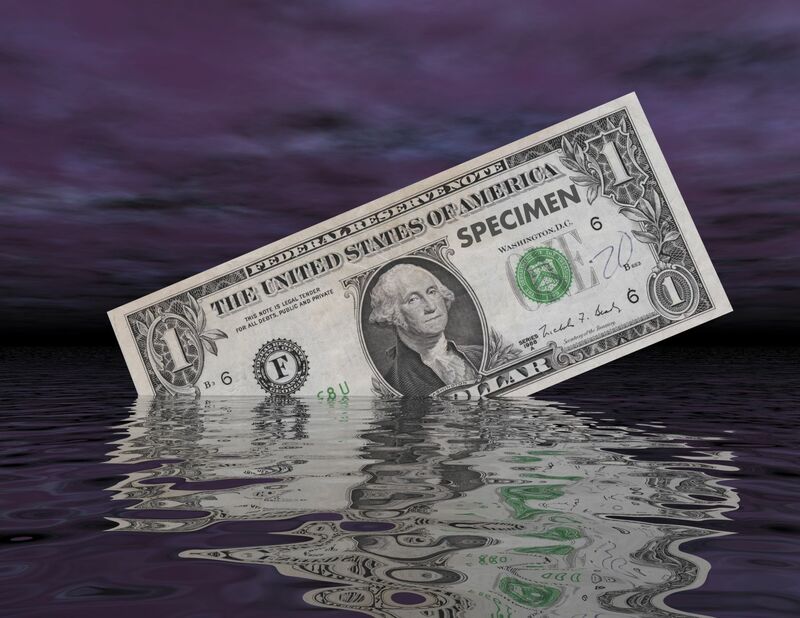
As the Federal Reserve raised interest rates to control inflation last year, the dollar rose to its highest level in 20 years. But over the last few months, the Fed has slowed the pace of its interest rate hikes, and once again, the dollar story has changed.
The dollar rose with interest rates because yields on U.S. government debt increased with high-interest rates, attracting foreign investors who sold assets in their currency to buy U.S.-denominated debt. This trend strengthened the dollar.
The story has changed, and the dollar has slid 8.9% since hitting its 20-year high in October 2022. The Federal Reserve has slowed the pace of interest rate hikes, commodity prices are falling, and Europe's chances of a recession are low. A stronger euro means more cash flowing into the European economy, and the reopening of China means more money in the Chinese economy and less in the U.S. Hence, a weaker dollar.
It’s not just about the Fed, commodity prices, or Europe and China’s economy. It also involves lower costs of imports in Japan, the UK, and Europe. With the cost of imports down, those currencies have strengthened against the U.S. dollar.
Many don’t see the value of their dollar declining (which seems like a good thing), but in times like these, the pullback is excellent for the rest of the world. A weaker dollar means less inflation abroad and a higher value for other currencies
This is good news for U.S. businesses who blamed weaker earnings on the strong dollar last year. Companies with extensive global exposure struggled, like Microsoft, IBM, and Amazon. Their products became more expensive than local rivals overseas, making them less competitive and desirable. Hence, they were struck last year, but that pressure will be relieved with the dollar pulling back.
More Forex News from Barchart
- Stocks Mixed as Global Bond Yields Jump
- Dollar Recovers Early Losses on Month-End Buying
- Stocks Mixed on Weak U.S. Economic News and Higher Global Bond Yields
- Dollar Slides Amid Lower Bond Yields and Stronger Stocks
On the date of publication, Andy Mukolo did not have (either directly or indirectly) positions in any of the securities mentioned in this article. All information and data in this article is solely for informational purposes. For more information please view the Barchart Disclosure Policy here.

/A%20Palantir%20office%20building%20in%20Tokyo_%20Image%20by%20Hiroshi-Mori-Stock%20via%20Shutterstock_.jpg)
/Elon%20Musk%2C%20founder%2C%20CEO%2C%20and%20chief%20engineer%20of%20SpaceX%2C%20CEO%20of%20Tesla%20by%20Frederic%20Legrand%20-%20COMEO%20via%20Shutterstock.jpg)
/Microsoft%20sign%20at%20the%20headquarters%20by%20VDB%20Photos%20via%20Shutterstock.jpg)
/Apple%20Inc%20logo%20on%20Apple%20store-by%20PhillDanze%20via%20iStock.jpg)