



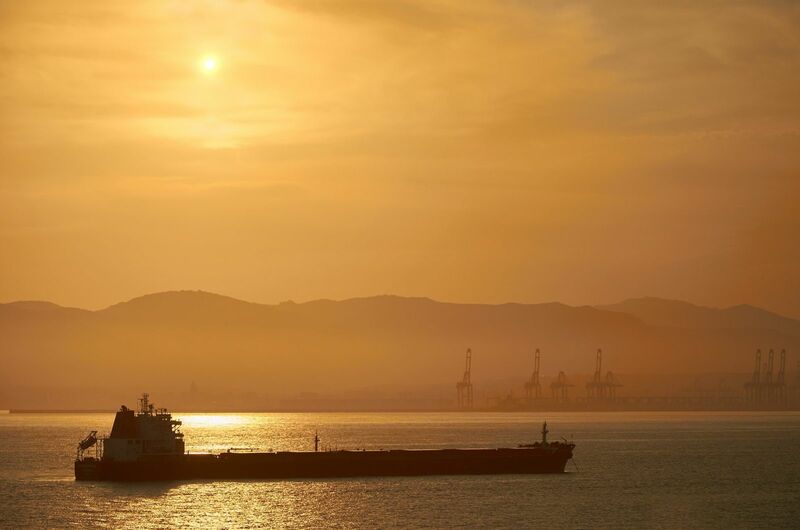
Dec WTI crude oil (CLZ22) today is down -3.36 (-4.12%), and Dec RBOB gasoline (RBZ22) is down -0.0608 (-2.56%).
Dec crude oil today is down sharply by -4.12%, adding to Thursday's drop of -4.16%. Crude oil prices have fallen sharply on signs of softening global oil demand as the global economy slows due to high interest rates.
Friday's U.S. economic data was bearish for energy demand after U.S. Oct existing home sales fell by -5.9% m/m for the ninth consecutive monthly decline, and the Sep U.S. leading economic indicators fell -0.8% m/m, worse than expectations of -0.4%. Also, Fed and ECB officials on Friday kept up their hawkish comments.
Chinese energy demand concerns continue to be a major bearish for crude prices after China reported 23,132 new Covid infections on Wednesday, the most in 6-1/2 months and more than double the amount since last Friday. Nomura reported that more than 10% of China's total gross domestic product was under some form of lockdown as of November 3. However, there are hopes for an easing of some restrictions. Last Friday, China cut the time foreign travelers into China must quarantine to five days in a hotel or government facility, followed by three days confined at home from the current policy of 10 days in quarantine. Also, China scrapped the system that penalized airlines for bringing virus cases into China. Ctrip.com reported that booking for flights into China doubled in the hour after the government announced an easing of restrictions for inbound travelers.
Bloomberg reported Friday that the G-7 plans to announce their Russian oil price cap next Wednesday, although the timing of the release is fluid. The price cap seeks to knee-cap Russian oil sales by banning G-7 companies from providing the shipping and services needed to ship Russian oil anywhere in the world unless that oil is sold below the cap price. G-7 countries are seeking to reduce the amount of revenue that Russia earns from oil sales to reduce the amount of funding it has available for its invasion of Ukraine. Bloomberg reported that the cap is due to come into force for new bookings after December 5. The price cap embargo should support global oil prices since it is likely to crimp Russian oil exports and reduce the supply of world oil.
In a bullish factor, Vortexa reported Monday that the amount of crude stored on tankers that have been stationary for at least a week fell -8.2% w/w to 79.92 million bbls in the week ended November 11.
OPEC+ on October 5 agreed to cut its collective output by -2.0 million bpd for November and December, a bigger cut than expectations of -1.0 million bpd. Saudi Arabia's energy minister said the real-world impact of the crude production cuts would likely be around 1 million to 1.1 million bpd from November since some members are already pumping well below their quotas. OPEC crude production in October rose +30,000 bpd to a 2-1/2 year high of 29.98 million bpd.
Wednesday's EIA report showed that (1) U.S. crude oil inventories as of November 11 were -4.3% below the seasonal 5-year average, (2) gasoline inventories were -5.0% below the seasonal 5-year average, and (3) distillate inventories were -15.4% below the 5-year seasonal average. U.S. crude oil production in the week ended November 11 was unchanged w/w at 12.1 million bpd, which is only -1.0 million bpd (-7.6%) below the Feb-2020 record-high of 13.1 million bpd.
Baker Hughes reported last Friday that active U.S. oil rigs in the week ended November 11 rose by +9 rigs to a 2-1/2 year high of 622 rigs. U.S. active oil rigs have more than tripled from the 17-year low of 172 rigs seen in Aug 2020, signaling an increase in U.S. crude oil production capacity.
More Crude Oil News from Barchart
- Crude Sharply Lower on Dollar Strength and Rising China Covid Infections
- Crude Tumbles on Dollar Strength and Rising China Covid Infections
- Crude Oil Falls as Geopolitical Risks Ease and China Covid Infections Rise
- Crude Falls as Geopolitical Risks Ease and China Covid Infections Rise


/AI%20(artificial%20intelligence)/AI%20microchip%20by%20DesignKingBD360%20via%20Shutterstock.jpg)
/A%20Palantir%20office%20building%20in%20Tokyo_%20Image%20by%20Hiroshi-Mori-Stock%20via%20Shutterstock_.jpg)
/The%20Cerebras%20logo%20displayed%20on%20a%20smartphone%20screen%20by%20Rafael%20Henrique%20via%20Shutterstock.jpeg)