



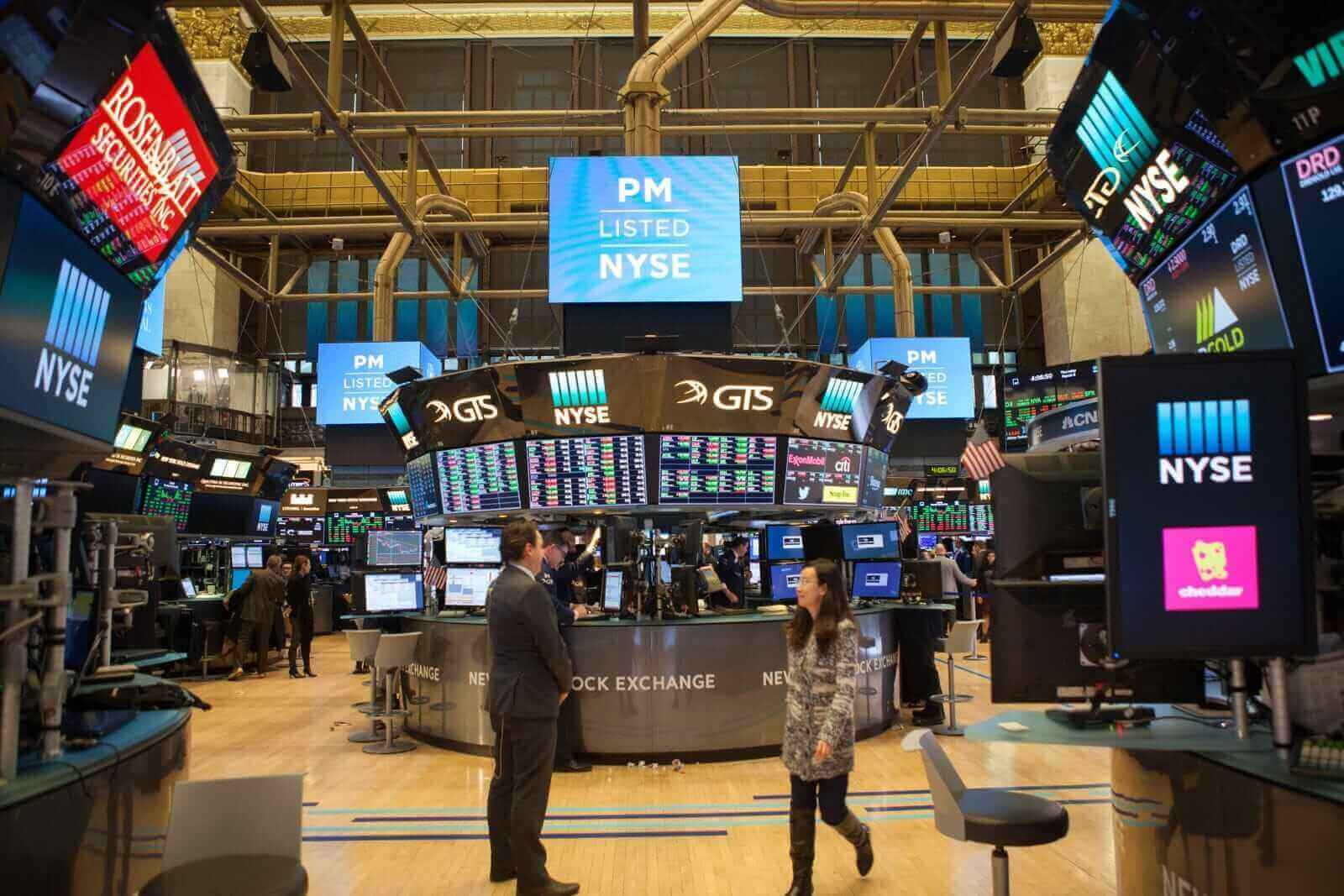
A recent blog post by FactSet guest contributor Christine Short discussed the idea that stock buybacks were under attack.
The obvious reason is the Biden Administration’s 1% excise tax that was included as part of the Inflation Reduction Act (IRA), which was signed into law on Aug. 16. The tax goes into effect on Jan. 1, 2023.
In 2022, share repurchase announcements were on a downturn before the tax was introduced. Year-to-date buyback announcements in all three quarters are significantly lower than in 2021.
Part of the reason could be that institutional investors prefer that companies allocate their free cash flow to pay down debt and deal with legacy pension liabilities over share buybacks, dividends, mergers and acquisitions, and increased capital spending.
While this is a turnaround from 2021, when it seemed every company was buying back stock, three companies are looking to allocate free cash to share repurchases before the January excise tax takes effect.
They’re all buys in my book. Here’s why.
Hologic to Repurchase $1 Billion
If you don’t know Hologic (HOLX), it is a manufacturer of diagnostics, medical imaging systems, and surgical products catering to the health needs of women. That alone makes it an attractive investment idea. Female investors ought to be all over this company.
On Sept. 22, it filed an 8-K with the Securities and Exchange Commission acknowledging that the company’s board of directors had approved a new $1 billion stock repurchase program. It replaces the previous $1 billion authorization that had $150 million left on it.
How good has Hologic been at buying back its stock?
According to its Q3 2022 10-Q, it had repurchased 5.2 million shares of its stock through the first nine months of its fiscal year, spending $367 million, or an average of $70.58. That’s slightly below $71.03, the midpoint between its 52-week high ($80.49) and low ($61.57).
Since October 2020, Hologic has repurchased $1.4 billion of its stock. As long as a company is buying back its stock below this midpoint, it’s doing a reasonable job repurchasing its shares.
As far as capital allocation goes, it’s doing a fine job. Since 2012, in addition to carrying out regular share repurchases, it’s reduced its debt by more than $2.5 billion, lowering its leverage ratio--defined as total debt less cash--from 5.5x to 0.6x, an 89% reduction.
While the company’s revenue in the third quarter was 12.2% lower, excluding currency, to $1.0 billion, it was well above its guidance between $875 million and $915 million. Excluding its Covid-19 testing, revenues were only off by 1.4%.
For all of 2022, it expects revenues of at least $4.75 billion with non-GAAP earnings per share of $5.84. Again, while down from fiscal 2021, they’re higher than its previous guidance.
With free cash flow of $2.3 billion in the trailing 12 months and a market cap of $16.5 billion, its free cash flow yield of 13.9% makes it a bargain.
Home Depot Continues to Reward Shareholders
On Aug. 18, Home Depot (HD) announced a new $15 billion share repurchase authorization and a quarterly dividend of $1.90 a share. Home Depot has paid a quarterly dividend for 142 consecutive quarters.
Through the first six months of fiscal 2022, Home Depot’s paid out $3.9 billion in cash dividends and $4.0 billion for share repurchases. Interestingly, the $7.9 billion it’s paid out so far in 2022 is down 24% from $10.4 billion in the same period in 2021.
The $15 billion repurchases the previous $20 billion program that had $5.8 billion remaining on it as of July 31.
In the first six months of 2022, it paid an average of $314.17 a share. In the first six months of 2021, it paid an average of $304.35 a share. It repurchased 12 million shares of its stock through the first six months of its fiscal year, spending $7.0 billion. That’s 8.3% below $342.56, the midpoint between its 52-week high ($420.61) and low ($264.51).
That’s some restrained buying.
Two days before announcing its new buyback plan, Home Depot reaffirmed its 2022 guidance. It will grow sales by 3% over 2021 with an operating margin of 15.4% and EPS growth in the mid-single-digits.
Long-term, I don’t think you can go wrong with a company that generates sales of between $650 and $700 a square foot from its 2,316 stores in the U.S., Canada, Mexico, and several U.S. territories.
Texas Instruments Keeps Buying
Right there on Texas Instruments' (TXN) investor relations home page is a quote that sets out the tech company’s reason for being.
“The best measure to judge a company’s performance over time is growth of free cash flow per share, and we believe that’s what drives long-term value for our owners,” states CEO Rich Templeton.
Of course, it is free cash flow that enables it to pay out dividends and buy back stock.
Between 2004 and 2021, it grew free cash flow by 12% annually while increasing dividends all 18 years for a compound annual growth rate of 25%. That’s what all investors ought to hope for from their investments.
Warren Buffett’s a big fan of share buybacks. Over the past 18 years, Texas Instruments has reduced its share count by 48%. That means if you never bought another share after 2004, you’d own a bigger slice of a bigger pie.
On Sept. 15, the company announced that its board approved an additional $15 billion share repurchase. That’s in addition to the $8.2 billion remaining on the previous one. In addition, it increased its quarterly dividend for the 19th consecutive year to $1.24, or $4.96 annually. That’s an 8% increase over the previous payment.
In fiscal 2021, it repurchased 2.9 million shares at an average price of $181.72 a share. In 2020, it repurchased 23.4 million shares at an average price of $108.97. The combined average was $117.
The high and low over those 24 months were $202.26 and $93.09, respectively, for a midpoint of $147.68. It paid 20.8% less than the midpoint. That’s excellent buying.
You can’t go wrong owning TXN, one of the best capital allocators in America.
More Stock Market News from Barchart

/AI%20(artificial%20intelligence)/Ai%20chip%20by%20Quality%20Stock%20Arts%20via%20Shutterstock.jpg)

/A%20hand%20holding%20a%20phone%20with%20the%20Reddit%20logo_%20Mamun_Sheikh%20via%20Shutterstock_.jpg)
/Seagate%20sign%20on%20the%20building%20atits%20operational%20headquarters%20By%20JHVEPhoto.jpeg)
/Apple%20logo%20on%20store%20front%20by%20frantic00%20via%20iStock.jpg)