




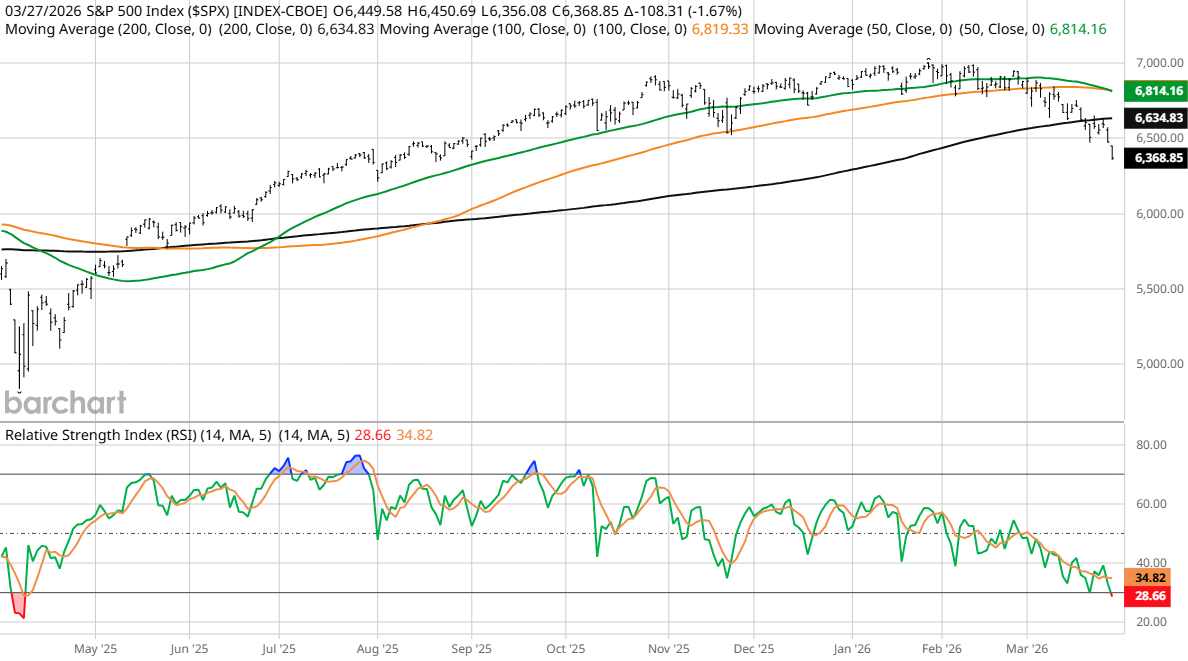
Markets feel broken right now. Prices have come off their highs, confidence has followed, and portfolios that looked untouchable a few months ago are suddenly under pressure. When that happens, the instinct is to look outward for an explanation. Investors point to inflation, central banks, politics, or whatever headline is dominating the day and conclude that something has fundamentally changed.
It hasn’t. The market is not broken. Your framework might be.
Most investors still believe that alpha comes from prediction. They think the edge lies in getting the macro call right. Where rates are going, whether inflation sticks, how growth evolves. It feels logical. If you can forecast the environment, you can position ahead of it. The problem is that the market is already very good at discounting widely held views. By the time a narrative becomes clear enough to act on, it is usually already embedded in prices.
That is why so many investors feel informed but still underperform. They react to information that everyone else has already processed. The real edge does not come from prediction. It comes from structure.
Markets consistently misprice situations where behavior is forced, where incentives are shifting, and where complexity obscures value. Those are not opinion-driven opportunities. They are structural ones. And they repeat.
The last decade trained investors to believe that headlines move markets. A CPI print comes in higher than expected and equities sell off. A central bank signals a pause and risk assets rally. A geopolitical event occurs, leading to a spike in volatility. It all feels causal because it is visible and easy to narrate. But visibility is not causality. The deeper driver is incentives.
Boards are incentivized to protect scale and preserve their positions. CEOs are incentivized to maintain compensation structures that often reward growth over discipline. Index funds allocate capital based on inclusion rules, not valuation. And when investors are forced to act, they act regardless of price. That last point is the one most investors underestimate.
Forced selling is not about value. It is about necessity. When a fund cannot hold a security because it falls outside its mandate, it sells. When an index removes a company, passive capital exits automatically. When a parent company distributes shares of a spun-off business, many shareholders sell because they never wanted that business in the first place.
In each of those cases, price is not the primary variable. Timing is.
This is why spinoffs and corporate separations continue to produce opportunity. Not because the market is inefficient in theory, but because the mechanics of the market create temporary dislocations in practice. When a new company begins trading as a standalone entity, it does not enter a balanced environment. It inherits a shareholder base that is misaligned with its future.
You have holders who never asked for the asset. You have mandates that prevent ownership. You have limited research coverage and thin liquidity. That combination creates selling pressure that has nothing to do with intrinsic value. It is not a price discovery process. It is a clearance process.
Most investors miss this because they are looking for something that screens as cheap. They focus on multiples, compare companies across sectors, and try to determine relative value. But cheap is not the edge.
The edge is buying when the ownership is wrong, the incentives are changing, and the catalyst is already in motion. In those situations, you are not forecasting. You are positioning
This is also why so much of what investors consume daily is not particularly useful. There is more information available than ever before, but most of it is commentary. It explains what happened, not what must happen in the future. If you react to information, you compete with everyone who has access to it and machines that will always win.
A better question to ask is where your best ideas come from. If they are driven by a strong view on the economy, you are playing a crowded game against well-resourced competitors. If they come from clean, repeatable setups where something has to occur, you are operating in a space where fewer participants can engage. That distinction matters more than most realize.
In the current environment, where uncertainty feels elevated and confidence is fragile, the temptation is to lean even harder into macro narratives. But that is exactly when structure matters most.
Start with spinoffs and separations but focus less on the announcement and more on the execution window. The opportunity is not when a company declares its intent to separate a business. It is when that business begins trading on its own, with a shareholder base that is temporarily misaligned and a management team that is newly incentivized to demonstrate independence.
That is when the gap between price and value tends to be widest.
Then look for governance breaks. These are moments when the system is forced to change, often after a period of underperformance or external pressure. A board refresh, a leadership transition, or a shift in capital allocation policy can all signal a change in direction for the stock and your P&L. These events are often interpreted negatively in the short term because they introduce uncertainty. But they also create conditions for improvement that were not possible under the previous structure.
The market does not pay you for being right in hindsight. It pays you for recognizing when a structure is changing before the implications are fully reflected in price.
Finally, pay attention to complexity being simplified. Markets tend to discount what they do not understand. Conglomerates, multi-segment businesses, and companies with transparent reporting structures often trade at a discount because they are difficult to analyze, and few investors are willing to do the work. When those structures are simplified through separations, asset sales, or clearer reporting, something important happens. The business becomes accessible to a wider range of investors, and the valuation very often adjusts accordingly and value is realized.
If you can reduce a story from something that requires multiple pages to understand into something that fits on one page, you have already created the conditions for a re-rating.
None of this suggests that fundamentals do not matter. They do. But they matter most when the market is temporarily unable or unwilling to price them correctly. Structure creates the opportunity. Fundamentals capture the return. That sequence is critical, and it is where many investors go wrong.
They begin with fundamentals and assume the market will recognize them. The market recognizes fundamentals when the structure allows it to. Until then, value can remain hidden.
The takeaway is straightforward and something I’ve been doing for years. Stop trying to predict outcomes that are already being priced by a global network of participants. Instead, focus on situations where the outcome is driven by structure and where the timing is clearer.
Build your watchlist around events, not narratives. Track spinoff effective dates, index inclusion timelines, refinancing windows, board changes, and asset sales. These are the moments when capital is forced to move and when price can diverge from value.
I’ve seen many cycles over 35 years. In a market that feels all over the place and unpredictable, the underlying patterns are still there. They are driven by incentives and behavior, not headlines. The investors who consistently outperform are not those with the strongest opinions. They are the ones with the cleanest structured investments.
And in environments like this, that distinction becomes even more important.
On the date of publication, Jim Osman did not have (either directly or indirectly) positions in any of the securities mentioned in this article. All information and data in this article is solely for informational purposes. For more information please view the Barchart Disclosure Policy here.

/Micron%20Technology%20Inc_%20logo%20on%20building-by%20vzphotos%20vis%20iStock.jpg)

/Semiconductor%20chip%20by%20Mykola%20Pokhodzhay%20via%20iStock.jpg)

/Lululemon%20Athletica%20inc_%20storefront%20by-%20Robert%20Way%20via%20iStock.jpg)