



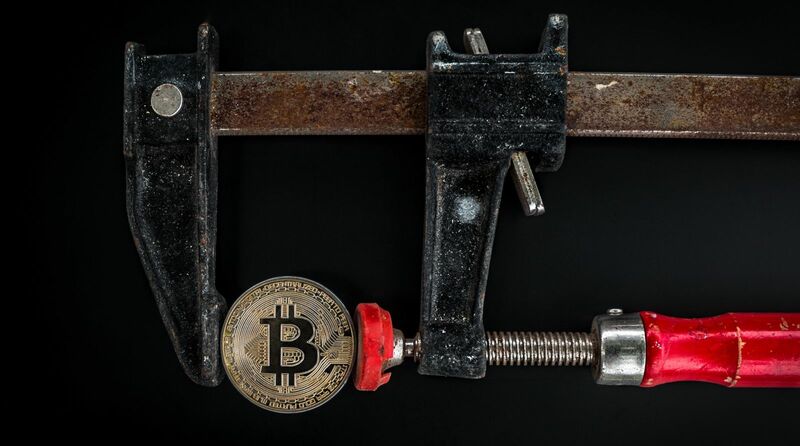
- Although the cryptocurrency sector has been a remarkable performer in 2021, seismic fundamental shifts now force investors to reexamine the bullish thesis.
- As digital assets face troubling volatility, it raises the specter that a prolonged crypto winter could lead to permanent wealth destruction.
- While no one knows what will be next for cryptos, prospective buyers will want to exercise extreme vigilance.
If the disassociation between the equities market and the cryptocurrency sector were to happen, now would be an excellent time to get the ball rolling. So far, the two arenas – one centralized and tied to tradition and the other decentralized and sparking a radical new paradigm – have been frustratingly intertwined.
At the conclusion of the June 10 session, the benchmark S&P 500 found itself down nearly 19% year-to-date, dangerously close to the 20% mark that commonly denotes the start of a bear market cycle. During the same period, the total market capitalization of all cryptos slipped to approximately $1.19 trillion, a loss of around 47%.
What happened? As Bloomberg columnist Chris Bryant argued, the fundamental backdrop of cheap money and other core catalysts conflated blatant speculation with a carefully curated investment strategy. Bryant stated the following:
For much of the past decade, spraying money at growth stocks, startups and anything crypto-related was a can’t-lose strategy; suddenly, everybody was an investing genius and they were handsomely rewarded for it.
But the tide of liquidity that inflated those valuations is poised to retreat. Hedge funds are losing money, with Chase Coleman’s Tiger Global Management down by more than 40% this year. For startups gobbling up capital without ever turning a profit is no longer a viable strategy: Cash flows, not whizzy growth rates and flattering adjusted profits, matter now.
At the end of the day, cryptos – just like equities – ravenously consume the fuel of speculation, which is both the allure and the pitfall of digital assets.
Flirting with Permanent Wealth Destruction
Throughout the remarkable rally of cryptos in 2021, both veteran and freshly minted blockchain advocates pounded the table on the viability of a decentralized ecosystem. In a nutshell, the argument was that currencies outside the controls of (corrupt) central bankers could be used to promote the greater good, such as closing the wealth-disparity gap and helping the rising unbanked and underbanked communities.
But at its core, the blockchain is merely a mechanism to record digital transaction data. It may be distributed, it may be decentralized and it may fall outside the controls of established government agencies. But these factors alone don’t inherently provide real economic value.
In other words, the value of cryptos depends on the greater fool theory: you’re hoping someone else is silly enough to buy these digital assets off you from a higher price than you originally paid for them.
Naturally, crypto proponents will argue that myriad applications have stemmed from the blockchain revolution. Still, the catalyst for enhanced blockchain utility is an entrepreneurial concept. The medium has nothing to do with it, just like a company hiring accountants doesn’t automatically raise its cash balance.
Therefore, the problem with throwing money into cryptos is the prospect of permanent wealth destruction. Virtual currencies by themselves don’t generate earnings nor build businesses nor hire employees. Should a crypto project fail, it will immediately implode the money put into it.
Paying the Piper
Heading into the start of the COVID-19 crisis, American consumers had racked up a record $930 billion in credit card debt. However, the pandemic ironically sparked a lifeline for embattled households. Thanks to unprecedented actions by Washington, the federal government delivered a roughly $5 trillion stimulus package, with about $1.8 trillion earmarked for individuals and families.
This arguably necessary handout was the perfect opportunity for Americans to eliminate their credit card debt. Instead, the outstanding balance only declined to $841 billion at the start of 2022, a mere 10% improvement from the peak. What were people doing with this unprecedented financial support?
Turns out, quite a few were speculating. And not on stable companies that create value – such as firms building cars, factories and industrial equipment – but on non-value-creating assets like cryptos and growth firms that offered little chance of viability. With these high-risk market segments declining rapidly, the opportunity to collectively address consumer debt today is gone forever, yet the obligation to pay the piper remains.
To clarify, bad investments in non-value-creating assets don’t literally destroy wealth; it gets transferred from one party to another. However, in many cases, the receiving party is a hedge fund, part of an arguably vulturous industry that tends to concentrate extraordinary wealth in the hands of a few.
Hedge funds don’t create real value to the economy that say a popular consumer electronics firm would. Therefore, losing money to them is basically the equivalent of burning your portfolio in a dumpster fire.
If You Must Gamble, Know the Risks
Though it might seem obvious, investors shouldn’t participate in cryptos with the blinders on. Too many times, impressionable market participants encounter buzzwords like distributed or decentralized as if they guarantee upside. They don’t. Far from it.
In fact, with almost 20,000 cryptos available to trade, you’re more likely to encounter charlatans than legitimate enterprises. And even with the most well-meaning blockchain project, complete and utter failure is only one oversight away. Therefore, you should only wager carefully and given the circumstances miserly.

/Advanced%20Micro%20Devices%20Inc_%20office%20sign-by%20Poetra_RH%20via%20Shutterstock.jpg)

/CPU%20Chip.jpg)

/Super%20Micro%20Computer%20Inc%20HQ%20photo-by%20Tada%20Images%20via%20Shutterstock.jpg)