






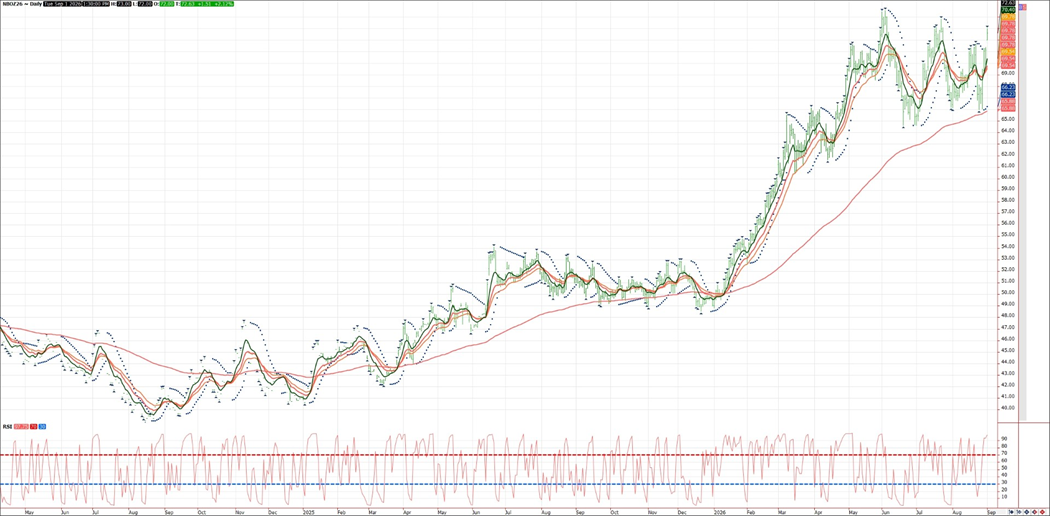
The Soybean oil is in a very interesting situation. The market may be poised to still have a dynamic move into the 2027 season. To understand the potential opportunity, we need to review the global outlook. For clarity I say potentially because this is a theory based on the facts as I am perceiving them, and risk exists.
The soybean oil balance sheet is tight. The carryover at present is approximately a 20 days usage. This is historically tight. The concerning aspect of the market is that competing oils are also in short supply. Please consider the fact that palm oil although at present has an ample supply. The longer-term general outlook is for a potentially large production decline. This will take effect from October forward. This is predicted for a couple reasons. First, the weather (EL NINO) has remained dry in key producing areas. Second, the age of the trees is a serious consideration overall. In addition, a lack of investment has reduced replanting as well as a reduction in fertilizer applications. All of this combined could have a 1.5-2-million-ton effect on production. This would shift the balance sheet to a tight situation.
The next consideration is sunflower seed production in the Black Sea. Although the production in Russia and Ukraine is ample this season. The reality to the marketplace is that the shipping corridors are severely hampered due to the ongoing conflict. This region supplies 65-70-% of global sunflower seed oil to the world. The main route for delivery is shipping through the Black Sea. This will have a severe effect on global needs. It will essentially force consumers to seek competitive oils. The ability to fulfill these needs may not be realistic.
It does appear the Canadian Canola production is ample this season. However, even with this fact the global veg oil production will be deficit to demand. This will put the global stocks to usage ratio at an estimated 13.5%. This is historically tight. In addition, depending on the finish to the U.S. growing season, and the Southern hemisphere production, this ratio could get much tighter. The global soy production will fall short of demand potentially for the first time in 5 years.
This will potentially tighten the Bean Oil balance sheet further. There are many other considerations to this market. The demand for biofuels and the mandates is structurally changing the market at present. At present we are looking at many spread relationships, and option opportunities. We like the Bean Oil Spreads and also buying calls with specific risk reward considerations laid out.
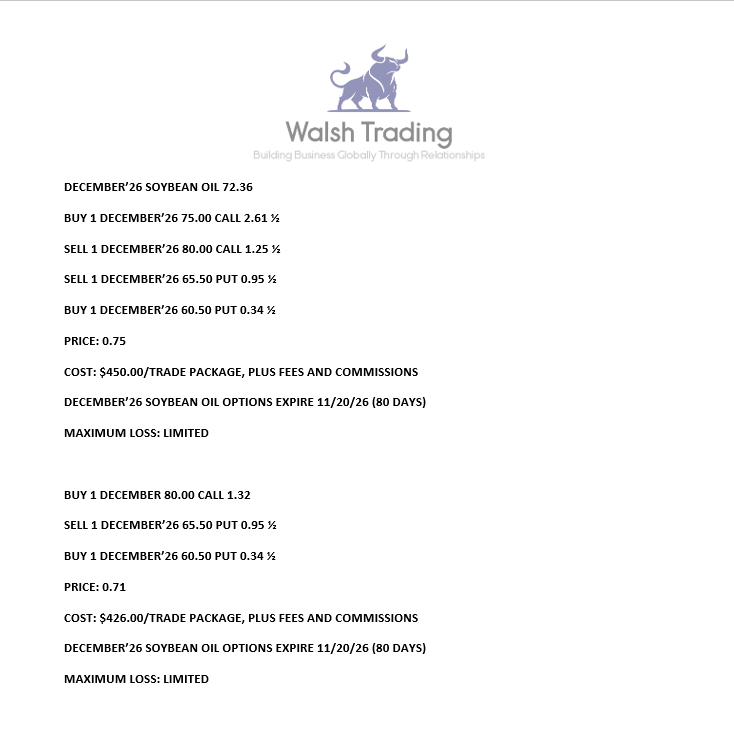
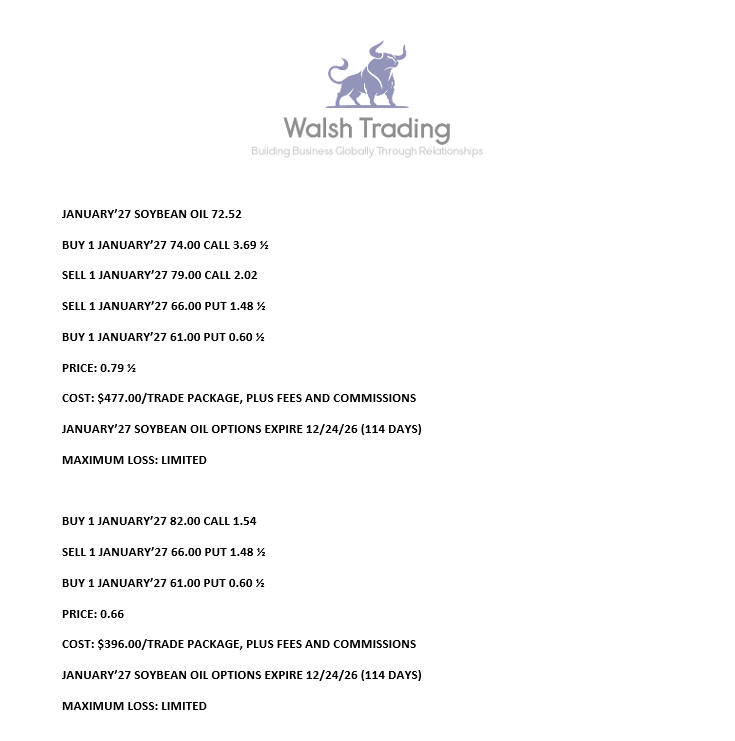
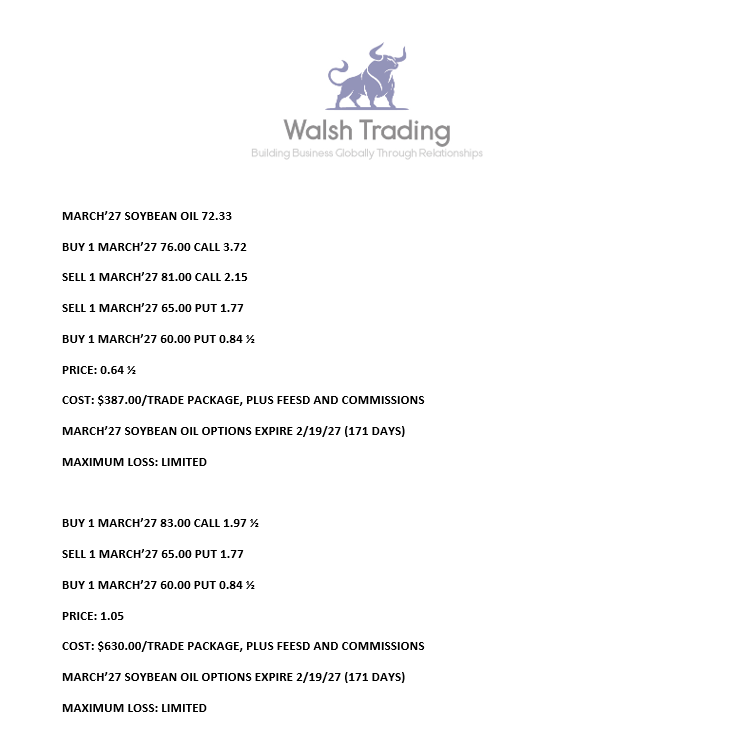
If you would like to discuss specific quantifiable opportunities, please call John Walsh directly.
Contact John Phone: 312-208-8837 or jwalsh@walshtrading.com
Walsh Trading, Inc. is registered as a Guaranteed Introducing Broker with the Commodity Futures Trading Commission and an NFA Member. Futures and options trading involve substantial risk and is not suitable for all investors. Therefore, individuals should carefully consider their financial condition in deciding whether to trade. Option traders should be aware that the exercise of a long option will result in a futures position. The valuation of futures and options may fluctuate, and as a result, clients may lose more than their original investment. The information contained on this site is the opinion of the writer or was obtained from sources cited within the commentary. The impact on market prices due to seasonal or market cycles and current news events may already be reflected in market prices. PAST PERFORMANCE IS NOT NECESSARILY INDICATIVE OF FUTURE RESULTS. All information, communications, publications, and reports, including this specific material, used and distributed by Walsh Trading, Inc. (“WTI”) shall be construed as a solicitation for entering into a derivatives transaction. WTI does not distribute research reports, employ research analysts, or maintain a research department as defined in CFTC Regulation 1.71.


/A%20close-up%20shot%20of%20a%20Broadcom%20chip%20by%20g0d4ather%20via%20Adobe%20Stock.jpeg)
/A%20close-up%20of%20a%20SpaceX%20sign%20by%20Sundry%20Photography%20via%20Adobe%20Stock.jpeg)

/Apple%20logo%20-%20by%20Pexels%20via%20Pixabay.jpg)