




Looking back on transportation and logistics stocks’ Q2 earnings, we examine this quarter’s best and worst performers, including CSX (NASDAQ:CSX) and its peers.
The growth of e-commerce and global trade continues to drive demand for shipping services, presenting opportunities for transportation and logistics companies. The industry continues to invest in advanced technologies such as automated sorting systems and real-time tracking solutions to enhance operational efficiency. Companies that win in this space boast speed, reach, reliability, and last-mile efficiency while those who do not see their market shares diminish. Like other industrials companies, transportation and logistics companies are at the whim of economic cycles. Consumer spending, for example, can greatly impact the demand for these companies’ offerings while fuel costs influence profit margins.
The 27 transportation and logistics stocks we track reported a strong Q2. As a group, revenues beat analysts’ consensus estimates by 3%.
In light of this news, share prices of the companies have held steady. On average, they are relatively unchanged since the latest earnings results.
CSX (NASDAQ:CSX)
Established as part of the Chessie System and Seaboard Coast Line Industries merger, CSX (NASDAQ:CSX) is a transportation company specializing in freight rail services.
CSX reported revenues of $3.94 billion, up 10.1% year on year. This print exceeded analysts’ expectations by 1%. Overall, it was a strong quarter for the company with a beat of analysts’ EPS estimates.
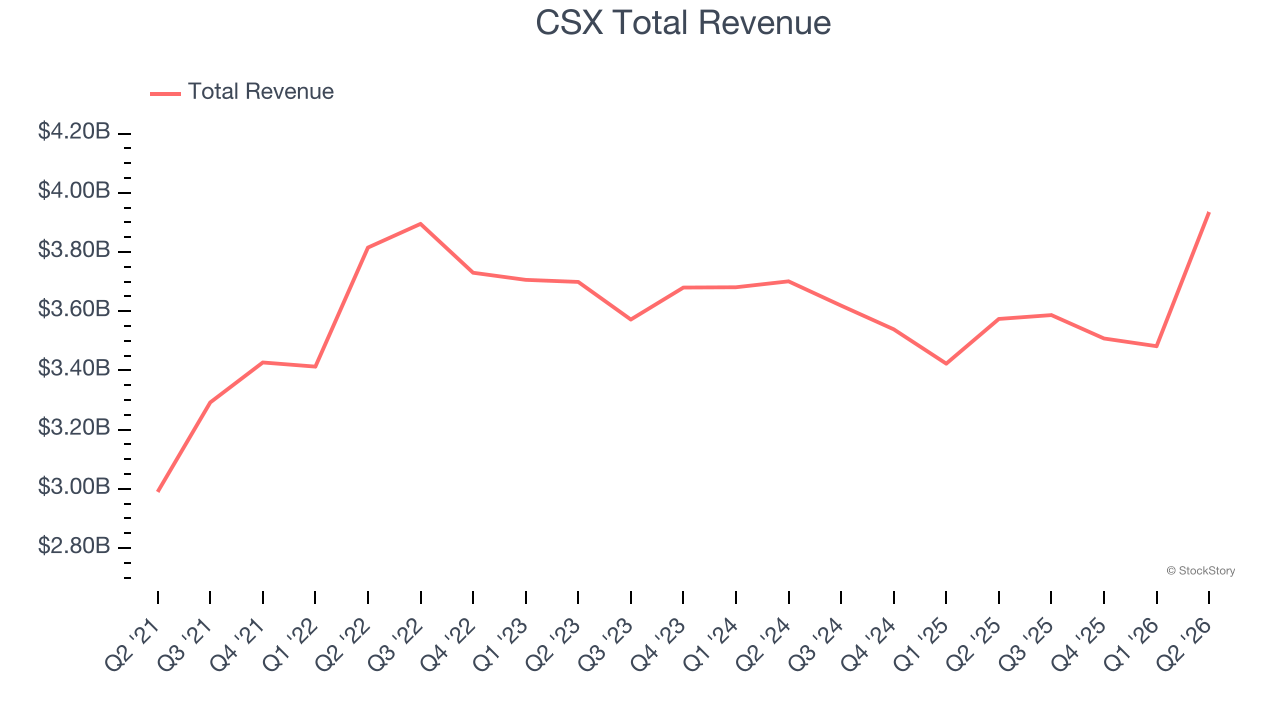
Interestingly, the stock is up 3.3% since reporting and currently trades at $51.58.
Is now the time to buy CSX? Access our full analysis of the earnings results here, it’s free.
Best Q2: Hertz (NASDAQ:HTZ)
Started with a dozen Model T Fords, Hertz (NASDAQ:HTZ) is a global car rental company providing vehicle rental services to leisure and business travelers.
Hertz reported revenues of $2.40 billion, up 9.7% year on year, outperforming analysts’ expectations by 4.9%. The business had an incredible quarter with a beat of analysts’ EPS and EBITDA estimates.
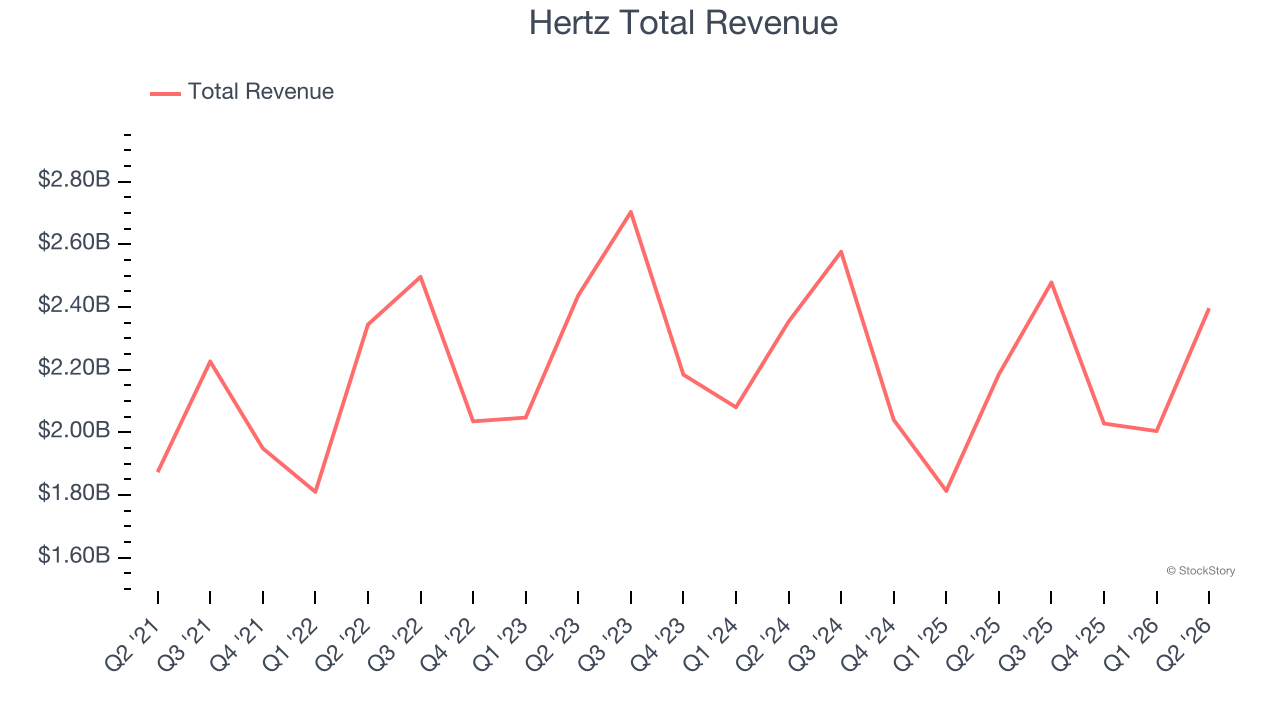
The market seems happy with the results as the stock is up 35.6% since reporting. It currently trades at $2.12.
Is now the time to buy Hertz? Access our full analysis of the earnings results here, it’s free.
Weakest Q2: Werner (NASDAQ:WERN)
Conducting business in over a 100 countries, Werner (NASDAQ:WERN) offers full-truckload, less-than-truckload, and intermodal delivery services.
Werner reported revenues of $933.9 million, up 24% year on year, in line with analysts’ expectations. It was a slower quarter as it posted a significant miss of analysts’ EPS estimates and adjusted operating income in line with analysts’ estimates.
Interestingly, the stock is up 1.3% since the results and currently trades at $38.80.
Read our full analysis of Werner’s results here.
Matson (NYSE:MATX)
Founded by a Swedish orphan, Matson (NYSE:MATX) is a provider of ocean transportation and logistics services.
Matson reported revenues of $969.4 million, up 16.7% year on year. This number beat analysts’ expectations by 8.4%. It was a stunning quarter as it also put up an impressive beat of analysts’ EBITDA and EPS estimates.
The stock is up 6.8% since reporting and currently trades at $221.57.
Read our full, actionable report on Matson here, it’s free.
Old Dominion Freight Line (NASDAQ:ODFL)
With its name deriving from the Commonwealth of Virginia’s nickname, Old Dominion (NASDAQ:ODFL) delivers less-than-truckload (LTL) and full-container load freight.
Old Dominion Freight Line reported revenues of $1.55 billion, up 10.4% year on year. This print topped analysts’ expectations by 0.7%. Overall, it was a strong quarter as it also logged a beat of analysts’ EPS estimates.
The stock is down 12.3% since reporting and currently trades at $198.37.
Read our full, actionable report on Old Dominion Freight Line here, it’s free.
Market Update
Over the past year, investors have been forced to repeatedly answer the same question: what is the market’s biggest risk? The answer has changed several times, and each shift has reshaped market leadership.
Late in 2025 and early 2026, artificial intelligence became the market’s primary uncertainty. Investors questioned whether AI would erode software pricing power and weaken competitive moats as AI made it easier to replicate once-differentiated products.
By the spring, technology took a back seat to geopolitics. The U.S. conflict with Iran briefly became the market’s dominant narrative, raising concerns about oil prices, inflation, and global growth. But as energy markets remained orderly and fears of a prolonged supply disruption faded, investors quickly turned their focus back to fundamentals.
Want to invest in winners with rock-solid fundamentals? Check out our 9 Best Market-Beating Stocks and add them to your watchlist. These companies are poised for growth regardless of the political or macroeconomic climate.



/Nvidia%20logo%20by%20Konstantin%20Savusia%20via%20Shutterstock.jpg)
/Business%20process%20analysis%20and%20network%20connectivity%20by%20THAWEERAT%20via%20Adobe%20Stock.jpeg)
/Space/Rocket%20launch%20by%20Alones%20via%20Shutterstock.jpg)