
Lincoln Financial Group trades at $45.09 per share and has stayed right on track with the overall market, gaining 12.4% over the last six months. At the same time, the S&P 500 has returned 12.9%.
Is there a buying opportunity in Lincoln Financial Group, or does it present a risk to your portfolio? Dive into our full research report to see our analyst team’s opinion, it’s free.
Why Is Lincoln Financial Group Not Exciting?
We’re passing on Lincoln Financial Group for now. Here are three reasons you should be careful with LNC, plus one stock we’d rather own.
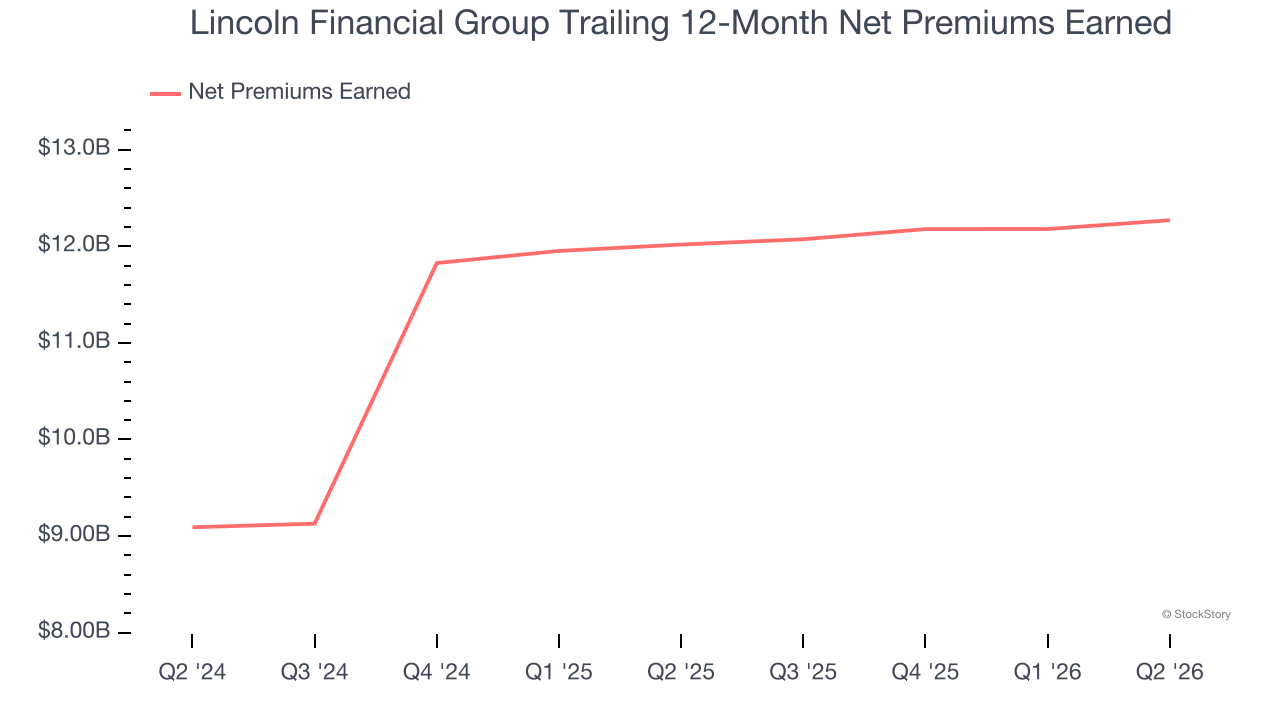
1. Net Premiums Earned Hit a Plateau
When insurers sell policies, they protect themselves from extremely large losses or an outsized accumulation of losses with reinsurance (insurance for insurance companies). Net premiums earned are therefore net of what’s ceded to reinsurers as a risk mitigation and transfer strategy.
Lincoln Financial Group’s net premiums earned was flat over the last five years, much worse than the broader insurance industry and in line with its total revenue.
2. EPS Barely Growing
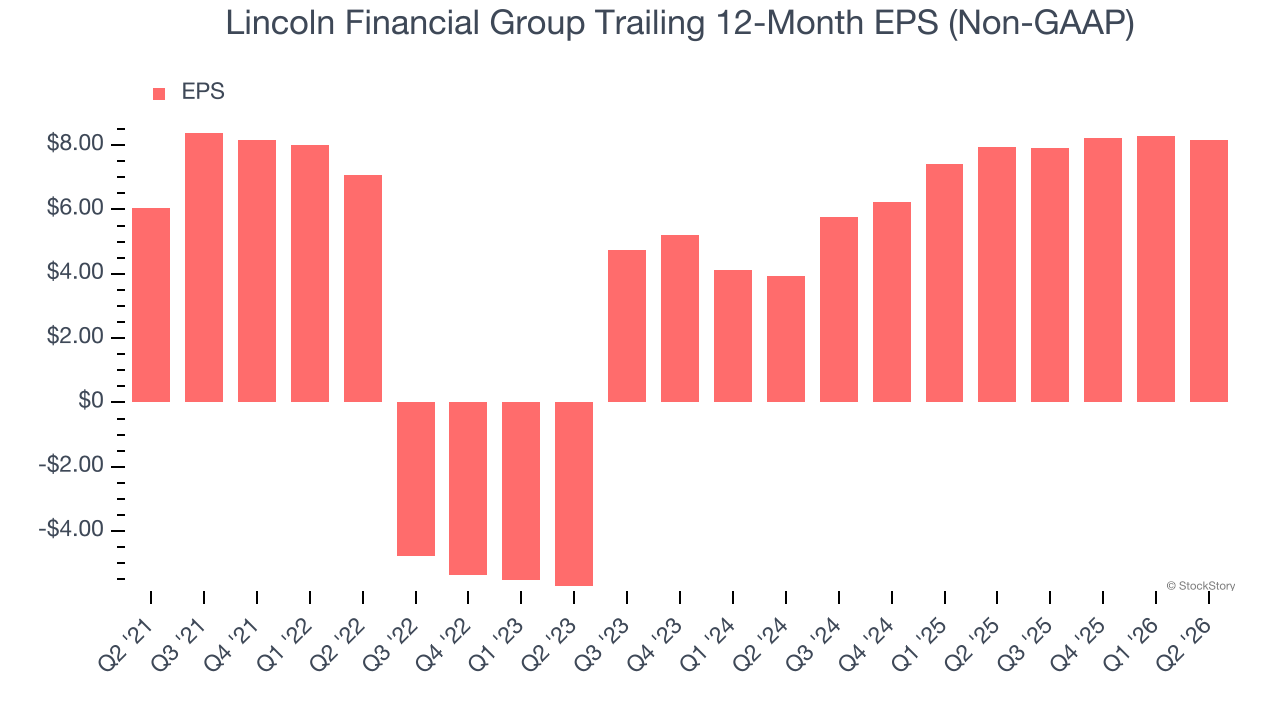
We track the long-term change in earnings per share (EPS) because it highlights whether a company’s growth is profitable.
Lincoln Financial Group’s EPS grew at 6.1% compounded annual growth rate over the last five years. On the bright side, this performance was better than its flat revenue and tells us management responded to softer demand by adapting its cost structure.
3. Steady Increase in BVPS Highlights Solid Asset Growth
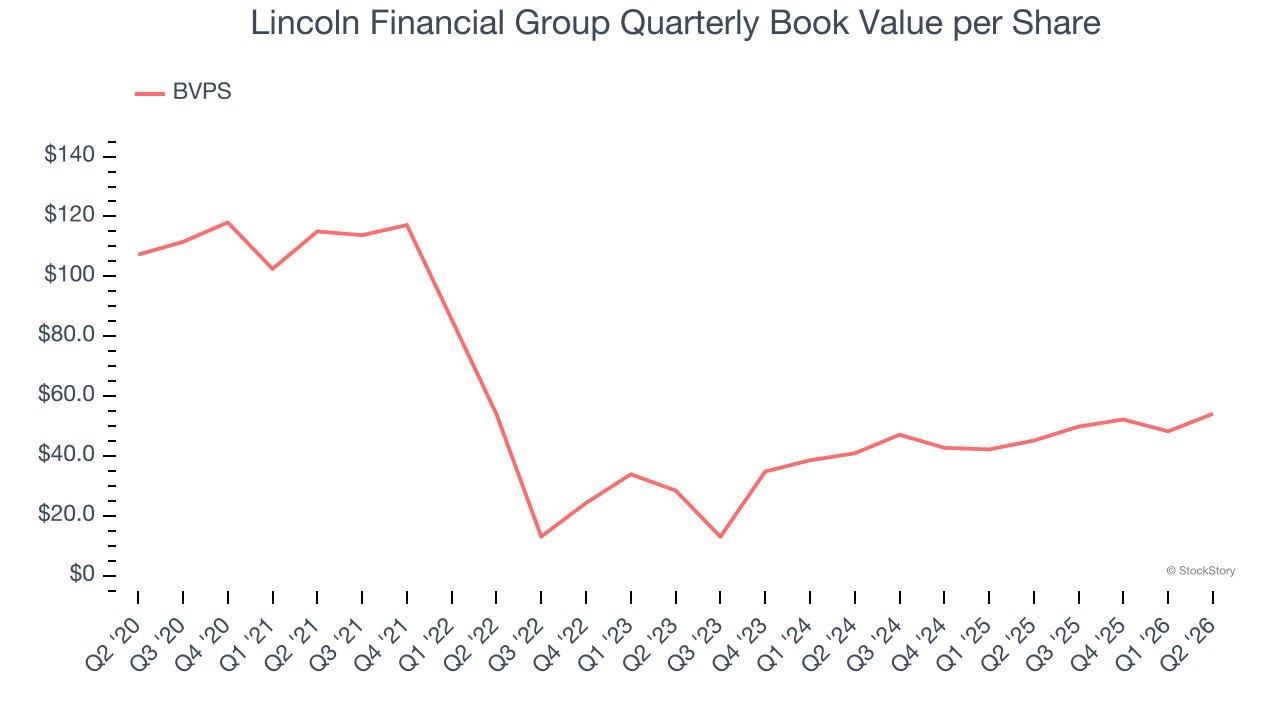
In the insurance industry, book value per share (BVPS) provides a clear picture of shareholder value, as it represents the total equity backing a company’s insurance operations and growth initiatives.
Although Lincoln Financial Group’s BVPS declined at a 14% annual clip over the last five years, the good news is that its growth inflected positive over the past two years as BVPS grew at a solid 15% annual clip (from $40.91 to $54.14 per share).
Final Judgment
Lincoln Financial Group isn’t a terrible business, but it doesn’t pass our quality test. That said, the stock currently trades at 0.8× forward P/B (or $45.09 per share). This valuation multiple is fair, but we don’t have much faith in the company. We’re fairly confident there are better investments elsewhere. We’d suggest looking at one of Charlie Munger’s all-time favorite businesses.
Stocks We Would Buy Instead of Lincoln Financial Group
WHILE YOU’RE HERE: Top 9 Market-Beating Stocks. The best stocks don’t just beat the market once. They do it again. And again. Robust revenue growth, rising free cash flow, returns on capital that leave their competition in the dust. The market has already rewarded these businesses.
But our AI platform says the party isn’t over. Find out which 9 stocks made the cut this week — FREE. Get Our Top 9 Market-Beating Stocks for Free HERE.
Stocks that have made our list include now familiar names such as Nvidia (+1,460% between June 2020 and June 2025) as well as under-the-radar businesses like the once-micro-cap company Tecnoglass (+1,552% between June 2020 and June 2025). Find your next big winner with StockStory today.



/An%20Intel%20sign%20out%20front%20of%20a%20corporate%20office%20by%20wolterke%20via%20Adobe%20Stock.jpeg)