This is sponsored content. Barchart is not endorsing the websites or products set forth below.
The energy revolution is easy to see. Solar panels cover rooftops and fields. Electric vehicles fill highways. Massive batteries are being connected to power grids. Billions of dollars have poured into reinventing the way the world generates, stores and consumes electricity. Yet one of the largest energy markets on Earth remains largely hidden from view.
The heat used inside factories.
Industrial process heat helps make almost everything in the modern economy.
Food. Paper. Chemicals. Plastics. Pharmaceuticals. Building materials, and countless other products.
Producing that heat costs factories an estimated $1–2 trillion every year.
For all the transformation happening elsewhere in energy, much of this enormous market still depends on one of industry's oldest technologies: Burning fuel in boilers.
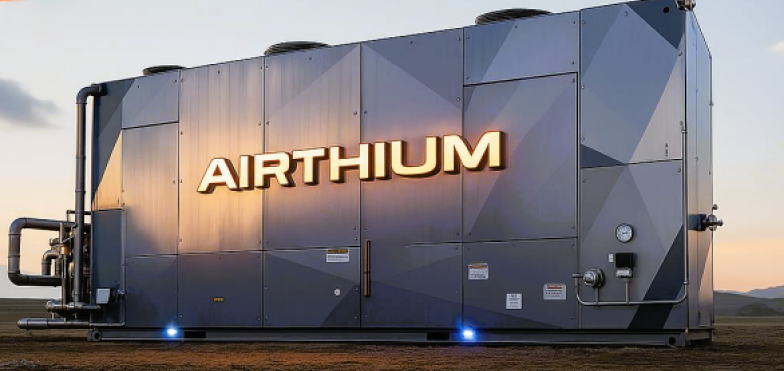
Airthium believes that is an opportunity hiding in plain sight. The Y Combinator-backed company is developing high-temperature heat pumps designed specifically for industry. If Airthium succeeds, it won't need to create a new trillion-dollar need. The spending is already there. The challenge is changing where that heat comes from. And, for a limited time, investors have a chance to invest in Airthium while it’s still private.
Cars Were Easier
There is a reason electrification reached some markets before industrial heat. A passenger car can be redesigned around a battery. A home can replace a furnace. Factories are different.
Industrial plants can contain hundreds of millions or billions of dollars of interconnected equipment. Production may run 24 hours a day. Downtime can be extremely expensive. And a boiler providing steam to critical processes may stay in operation for decades. Telling a factory manager to remove working infrastructure and replace it with an unproven technology is a difficult sales pitch.
So Airthium starts somewhere else.
Keep the boiler.
Its planned system would be installed alongside existing infrastructure rather than replacing it. When electricity is inexpensive, Airthium's heat pump can provide heat. When gas makes more economic sense or additional capacity is needed, the boiler remains available. The factory doesn't have to make a permanent choice between gas and electricity. It gets access to both.
A 20-Year Bet Becomes a 15-Minute Decision
That could fundamentally change how factories purchase energy. Today, installing a boiler can effectively lock a manufacturer into one primary fuel source for decades. But energy markets don't stand still for decades. Natural-gas prices move. Electricity prices move. Renewable generation grows. Carbon costs change.
Airthium's planned software is designed to monitor those markets and compare the cost of available energy options every 15 minutes. Think about the difference.
The old system asks:
Which fuel do you want to depend on for the next 20 years?
Which energy source makes the most sense right now?
That flexibility could become increasingly powerful as wind and solar reshape electricity markets.
During periods of abundant renewable generation, electricity prices can fall dramatically.
A factory capable of shifting more of its energy consumption into those periods could potentially turn grid volatility into an economic advantage.
The Heat-Pump Problem Gets Harder at 250°C
There is another reason the industrial market remains relatively untouched. Industrial temperatures are difficult. Heating an office building is one engineering problem. Providing high-temperature heat to a chemical or food-processing plant is another. Airthium is building toward output temperatures of up to 250°C. Its current 1-kilowatt prototype has already reached 145°C. The company plans to move next to a 10-kilowatt system and then toward a 100-kilowatt pilot-ready demonstrator. A paid industrial pilot with a major chemical manufacturer is targeted for 2028. If successful testing follows, initial commercial deployments are targeted for 2029. The company still has to prove that its technology can make that transition. Reliability, maintenance, efficiency. Manufacturing cost. Real-world customer economics. All remain to be demonstrated at larger scale. This is not software. It is hard technology designed for environments where failure can shut down production.
One Machine. Potentially Two Energy Markets.
Airthium's ambition also extends beyond industrial heat. Renewable electricity is creating an unusual challenge for modern grids. At certain times, solar and wind can produce enormous quantities of inexpensive power. Hours later, electricity can become scarce and extremely valuable. Airthium is developing its machine with the ability to potentially operate in both directions. When electricity is plentiful and inexpensive, use it to produce heat. When electricity is scarce, a planned reverse-generation mode could potentially use heat to generate electricity. That capability remains under development and has not been commercially validated. Whether an installation could participate economically in capacity or grid-service markets would depend on local regulations, interconnection requirements, fuel costs and system performance. But the possibility points toward a much larger vision. A factory could eventually become more than an energy consumer. It could become a flexible participant in the electricity system.
The Business Model Could Matter as Much as the Machine
Even powerful industrial technology can fail if customers won't pay the upfront cost to adopt it. Airthium plans to address that challenge with Heat-as-a-Service. Rather than simply selling a heat pump to a factory, Airthium intends to finance, own and operate the equipment itself. The customer would purchase the heat. That could give factories access to a new energy technology without making a large capital investment upfront. For Airthium, successful deployments could produce long-term contracted revenue. The company currently targets modeled payback periods of approximately four to seven years at many suitable sites, although actual results will depend heavily on site-specific economics and system performance.
Building for a Market That Already Exists
Airthium has raised more than $6.5 million from investors including Y Combinator and several climate-tech funds. The company has also received a $4.4 million award through France 2030. Its working prototype has reached 145°C. And it has secured an LOI with a major chemical manufacturer for a paid pilot targeted for 2028. The company's longer-term strategy also includes the United States, where it plans to pursue industrial customers and build partnerships as it moves toward commercialization. There is still a long road between prototype and industrial scale. But Airthium is chasing something every startup wants:
A massive market with an existing customer need.
Factories do not need to be convinced that they need heat. They already spend an estimated $1–2 trillion a year producing it. The question is how much of that enormous energy market can ultimately be electrified.
The Next Big Energy Market Was Here All Along
The biggest opportunity in energy may not always be a new fuel. Or a new battery. Or another way to generate electricity. Sometimes the opportunity is hiding inside infrastructure the world has depended on for a century. Industrial heat doesn't attract many headlines. But it helps make almost everything. And the world spends trillions producing it.One of the world's largest energy markets has been sitting behind factory walls all along.
Click here to learn more about investing in Airthium.
This is a paid advertisement for Airthium's Regulation CF offering. Please read the offering circular and related risks at wefunder.com/airthium. Barchart has not reviewed, approved, or endorsed the content and was paid $3.00 per click for placement and promotion of the content on this site and other forms of public distribution covering the period of August 2026.



/An%20Intel%20sign%20out%20front%20of%20a%20corporate%20office%20by%20wolterke%20via%20Adobe%20Stock.jpeg)