




Howdy market watchers!
Twenty years ago today, I started my first job at Rabobank in Hong Kong! It is fun to think of all the life lived, traveled and experienced since then while sitting in the place where it all started.

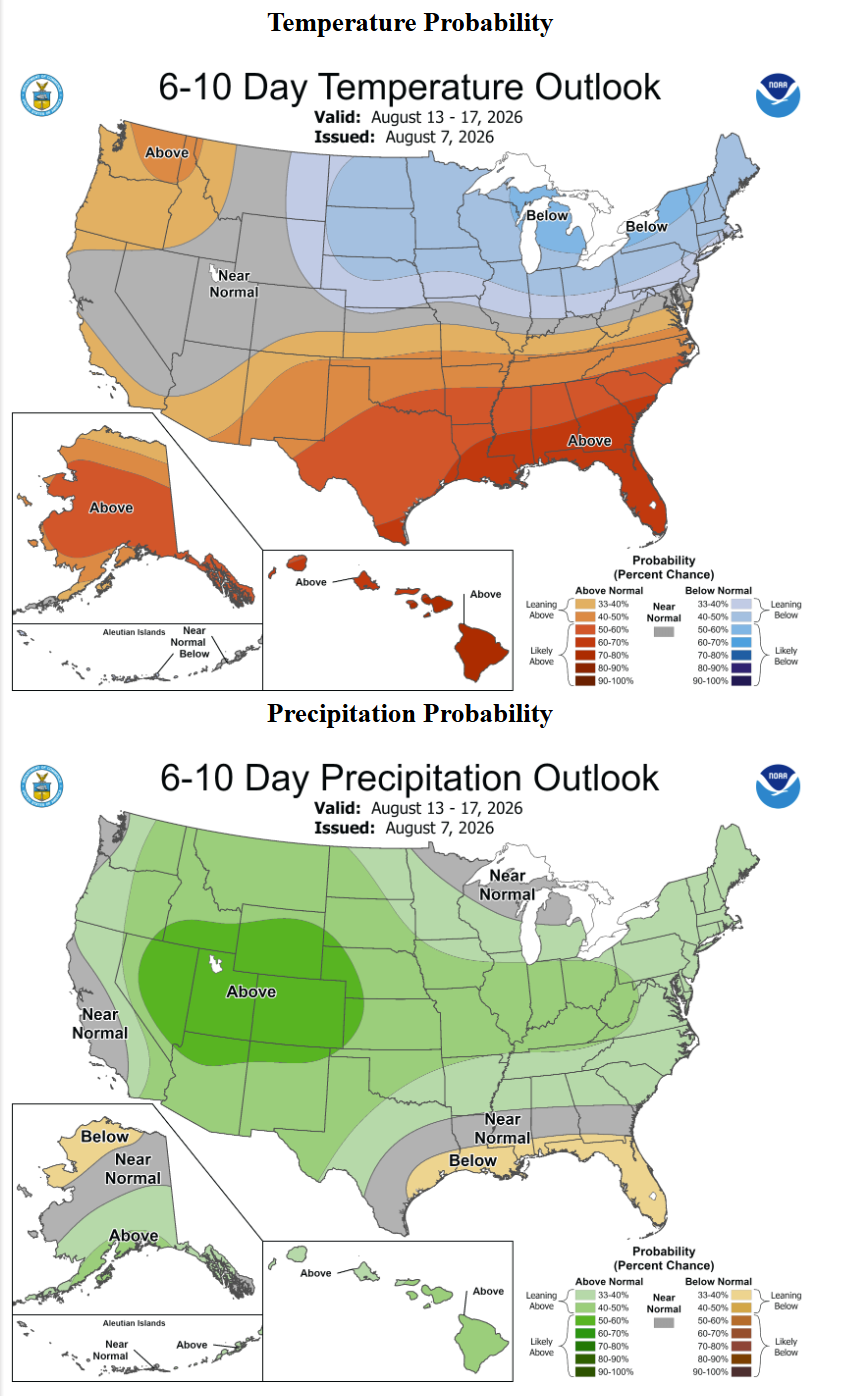
Finally, a break from the heat and dry weather to end the week even with some precipitation. However, there can never be enough this time of year especially after the scorching heat of August.
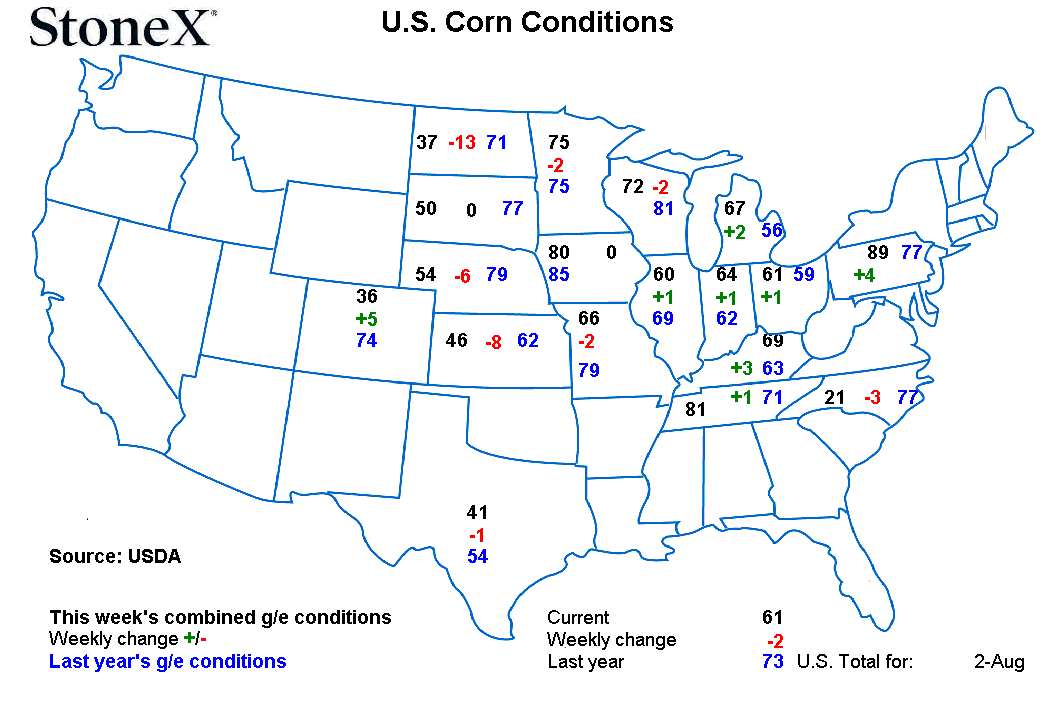
They say corn is made in July, and soybeans are made in August. Early corn yields I’ve heard from clients in Oklahoma and Texas are better than expected and some much better than expected. There are significantly more dryland corn acres being planted across the Southern Plains in recent years. With dwindling cattle numbers, hopefully the feedlot demand will continue to keep up with the pace as should increased export demand from Mexico.
Overall, US corn conditions declined more than expected again this week to 61 percent Good-to-Excellent after expectations for unchanged ratings from last week’s 63 percent G/E. US soybean conditions held steady from last week’s 63 percent G/E after expectations for a one percentage point increase.
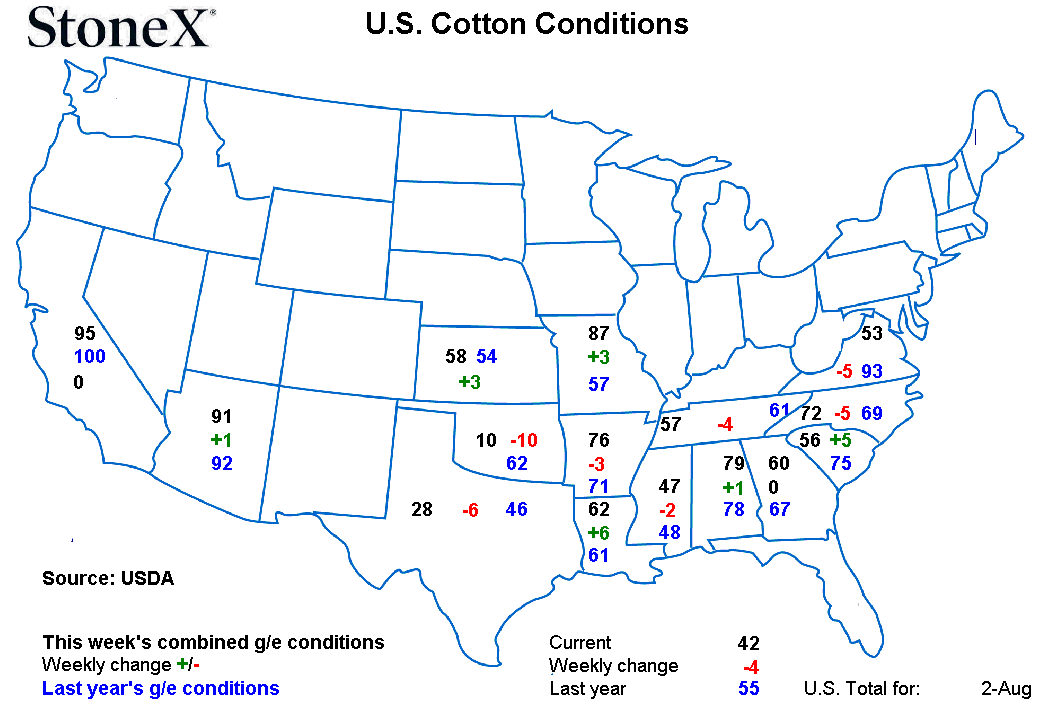
US spring wheat harvest is now underway with conditions increasing to 55 percent G/E, ahead of last week’s 53 percent and above expectations for a decline. US winter wheat harvest continues to advance now 86 percent complete behind expectations of 89 percent complete delayed by weather. US cotton conditions continue to decline now at 42 percent G/E, down from 46 percent last week and 55 percent last year.
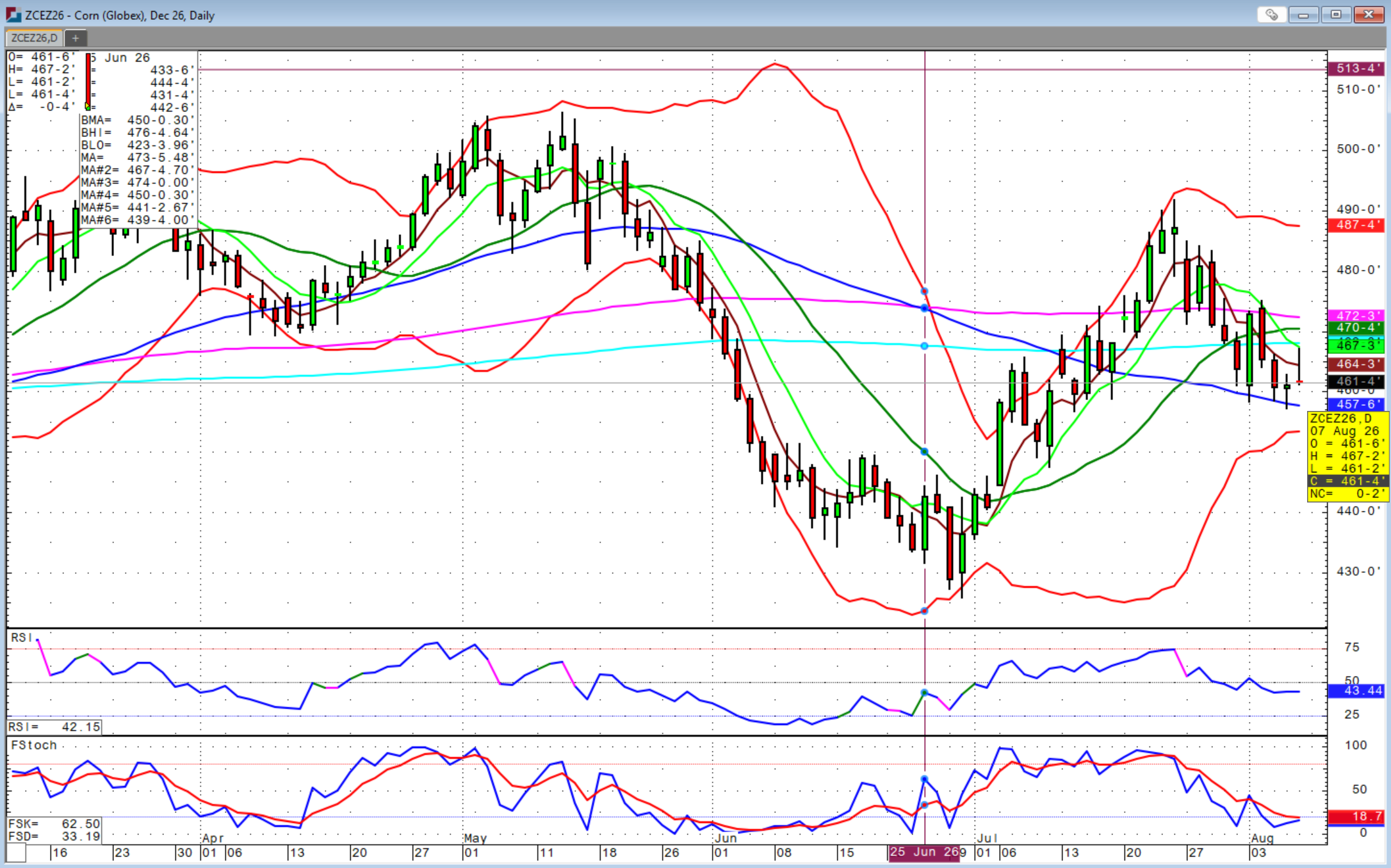
The grain complex has struggled to rally with spikes met with selling pressure. Corn, wheat and soybean futures have basically chopped sideways awaiting more information and next Wednesday’s monthly USDA Crop Production and WASDE reports. Continued China buying of US soybeans as well as strong corn exports have failed to drive these markets higher with harvest approaching.
StoneX updated row crop yield estimates this week, raising corn yields to 184.8 bushels per acre (bpa), still below last year’s 188.1 bpa, but above the current USDA estimate at 183.0 bpa. US soybean yields were seen in line with USDA at 53.0 bpa.
Corn and soybean futures lost ground to close at the lows of the day after making a new daily high.
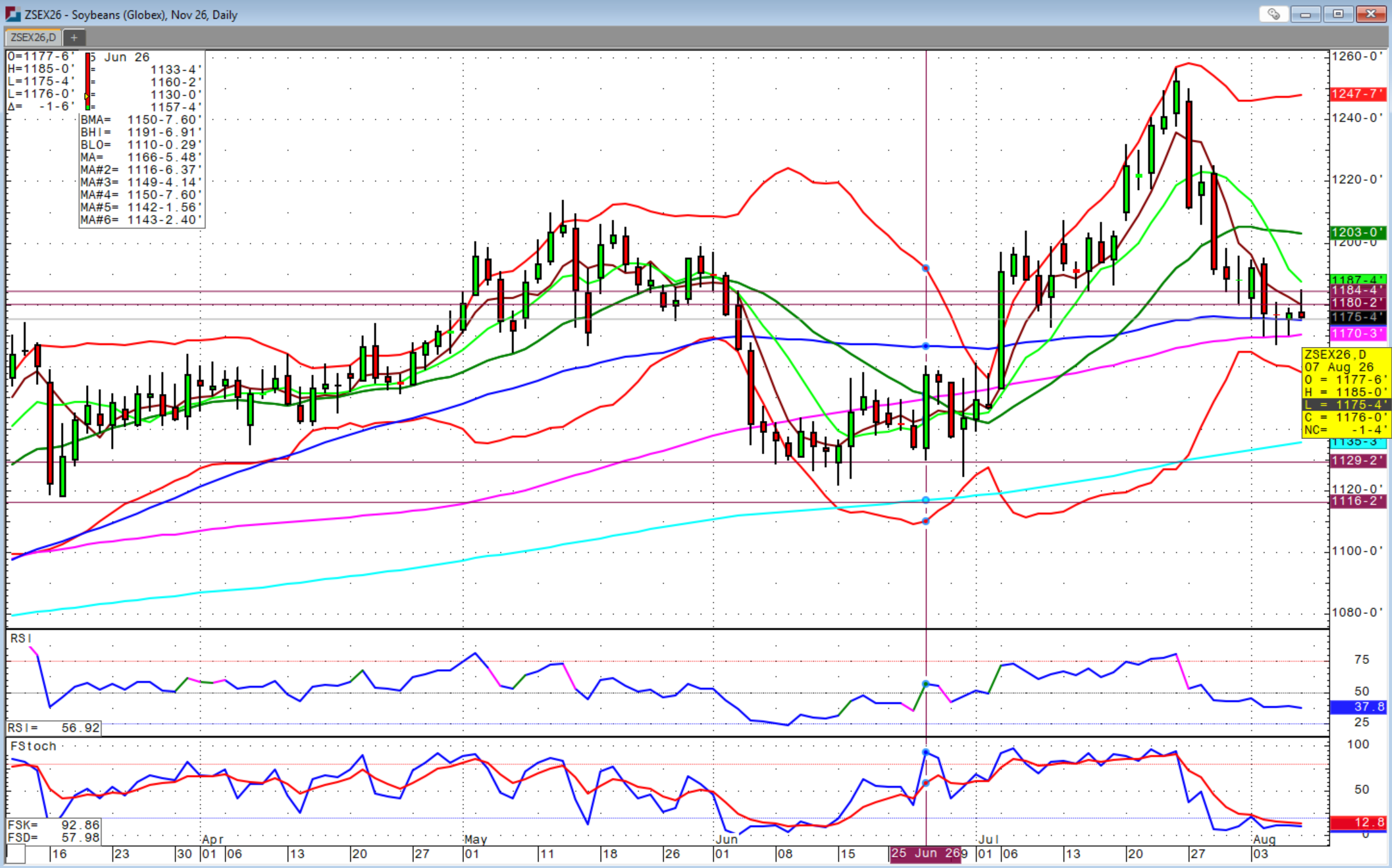
The wheat markets managed to hold much of Friday’s gains into the close with a seesawing week of ups and downs every other day. KC and Chicago wheat contracts posted an inside chart day on Friday awaiting more information from the Black Sea region as well as USDA reports next week. Ultimately, any significant rally in corn will need to see wheat keep up and vice versa or the other will struggle to hold gains.
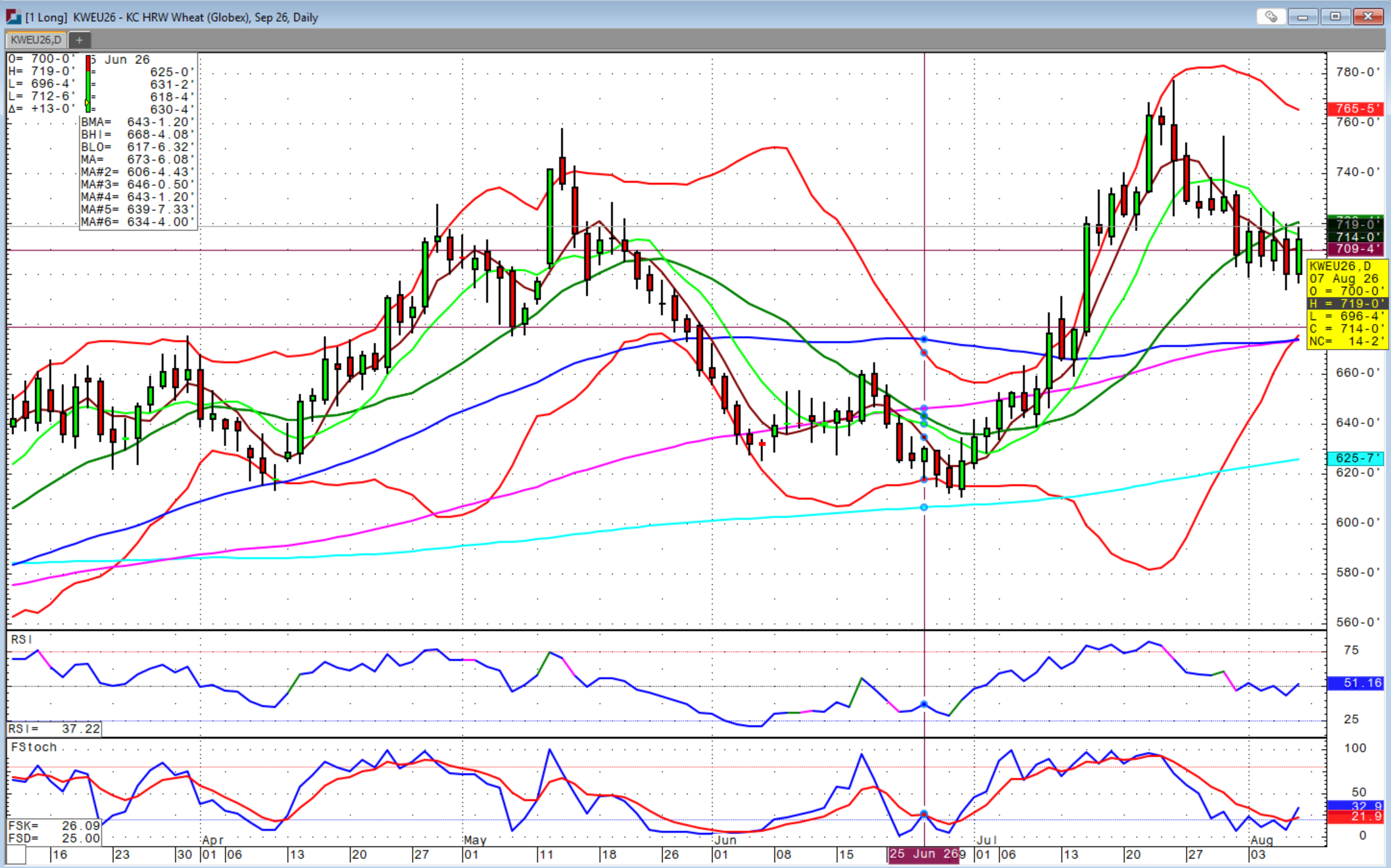
The US dollar should continue to provide support for commodities traded in US dollars as the index continues to weaken. Friday’s low made a low below the August 3rd low making it the lowest level since the middle of June.
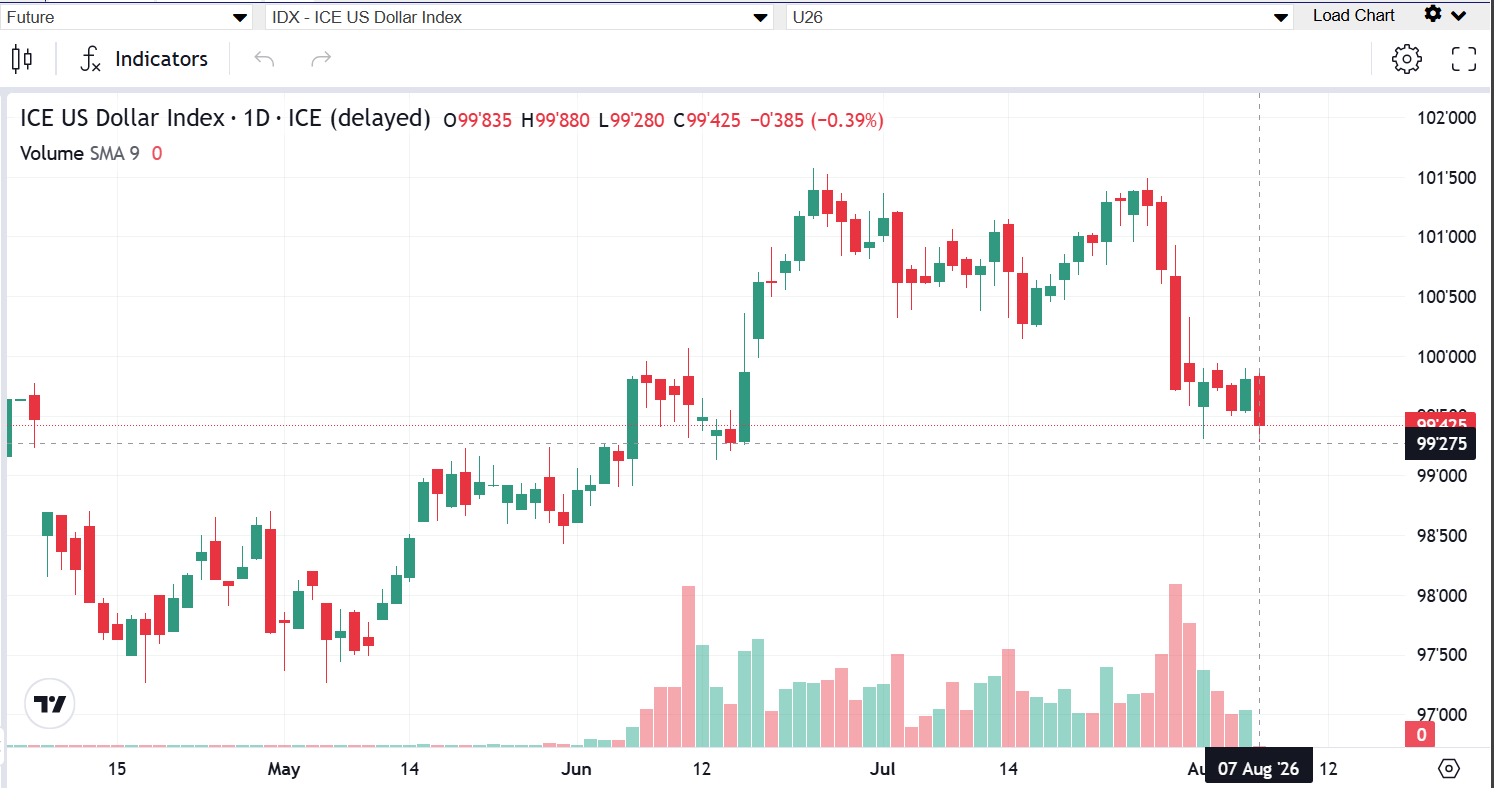
The weaker US job numbers released on Friday contributed to the weaker trade with a softer jobs market lending to a potential Fed rate pause or ease in coming meetings despite inflation remaining above the 2.0 percent target. More data will be needed and will materialize as the meetings approach.
The well-known Jackson Hole Symposium hosted exclusively by the Kansas City Federal Reserve will be held August 27-29th while the next FOMC meeting will be held September 15-16th. The market is still trying to interpret the new Fed Chair Warsh. If we see a more committed move to drive inflation towards the 2.0 percent through tighter monetary policy, it could put a damper on the commodity rally outside of strong fundamentals.
The equity markets exploded earlier this week with new, all-time highs across all indices. Wednesday’s high on the Dow Jones reached 54,885 while the S&P 500 reached above 7,820.
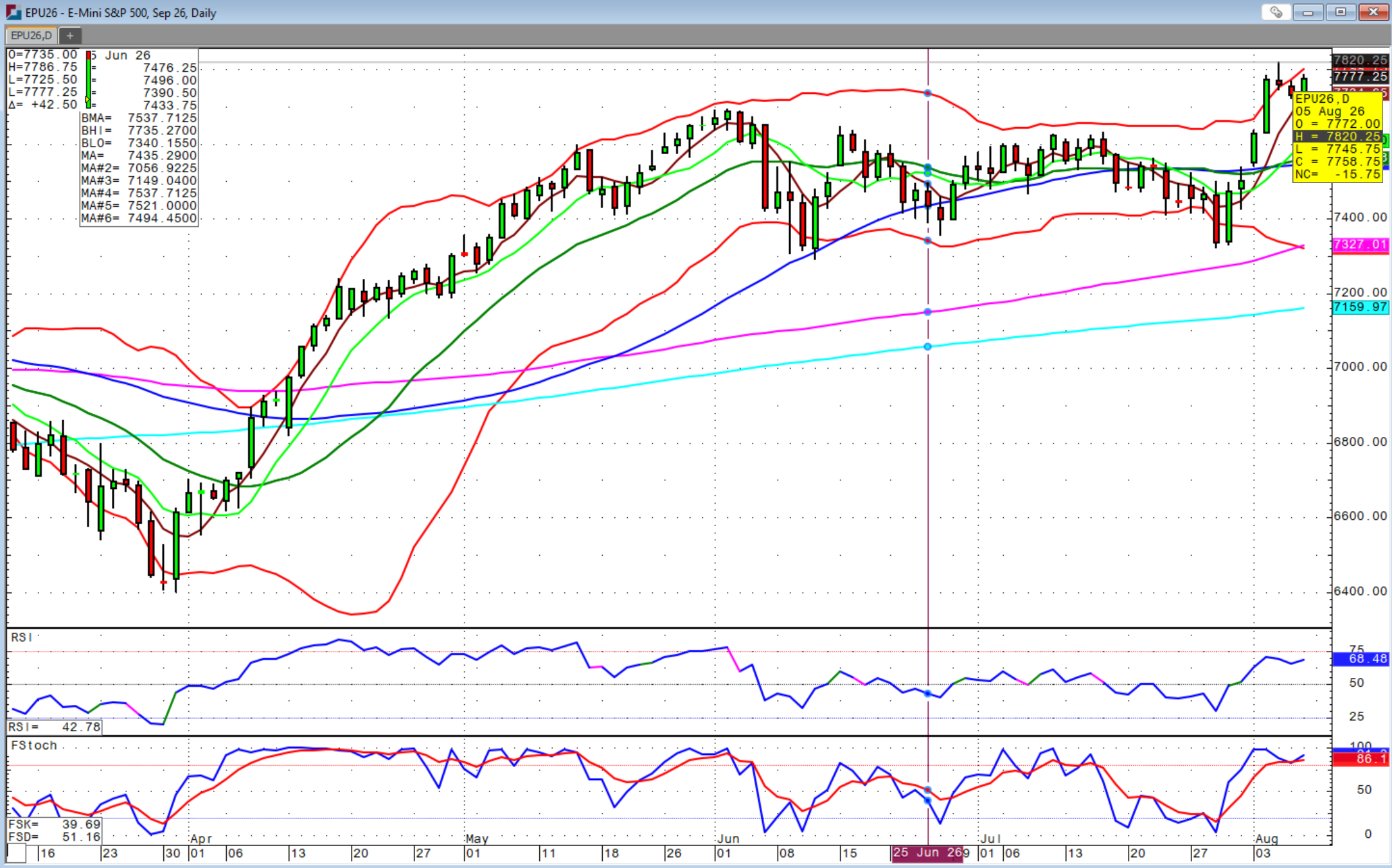
The stalled rally in grains followed by surge in equity markets and higher fed cattle cash trade drove the cattle markets higher this week. However, on Thursday, weaker boxed beef prices and grain markets beginning to rebound saw liquidation across the cattle complex.
The Cargill Fort Morgan beef processing plant that we recently heard had made a deal with the Teamsters labor union is now back to the negotiating table.
At a conference this week, the spread of the New World Screw Worm was discussed. While it seems we haven’t heard much about this recently, it is said to be spreading more than reported and is causing alarm particularly among Texas cattlemen. The free movement of wildlife is one of the most difficult issues to control. Having said that, more screw worm cases and deaths mean fewer cattle and only further tighten the cattle supply situation.
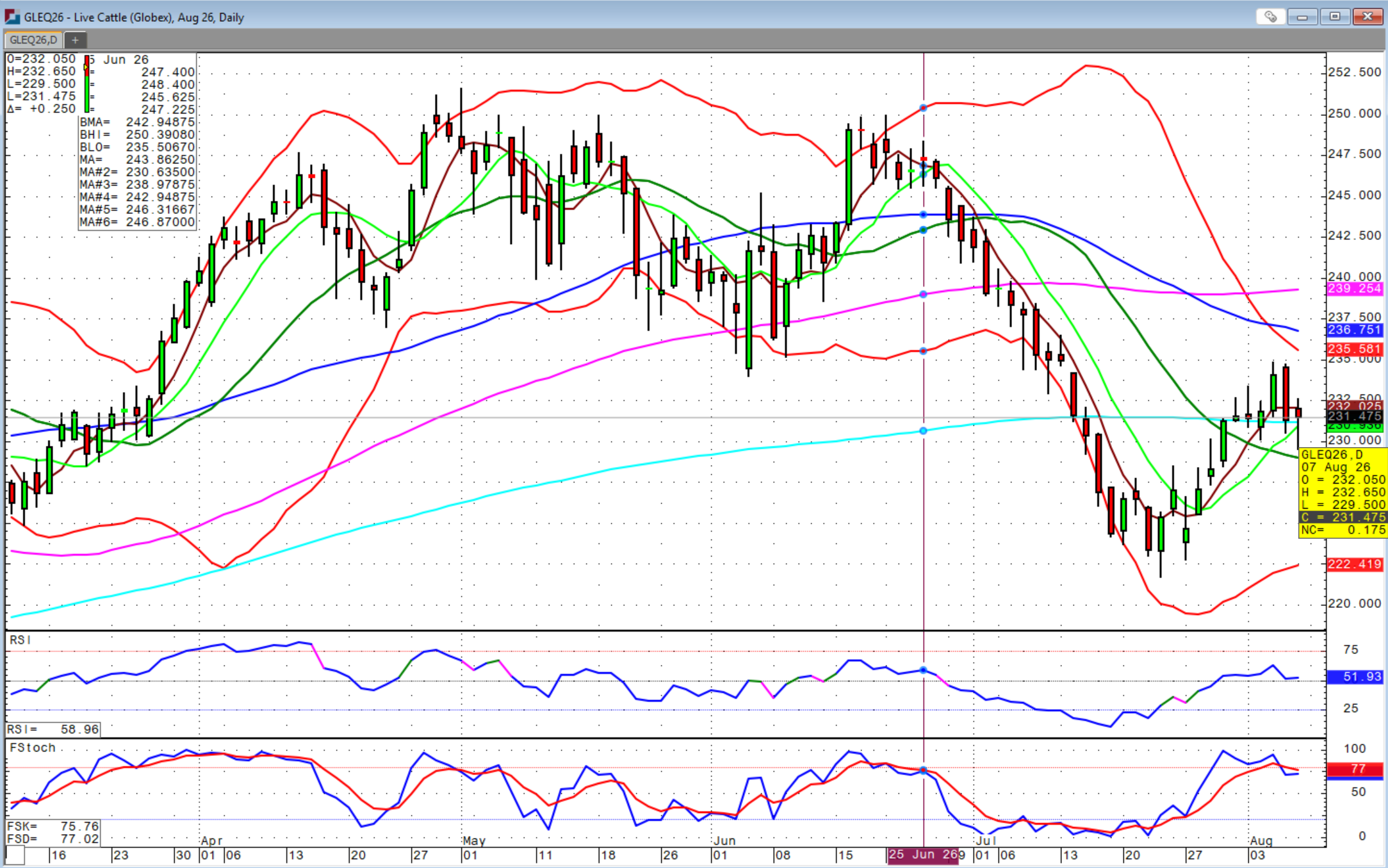
After Thursday’s liquidation, markets stabilized on Friday. Feeder cattle contracts held Thursday’s lows and closed strongly after trading around a $3.50 high-low range.
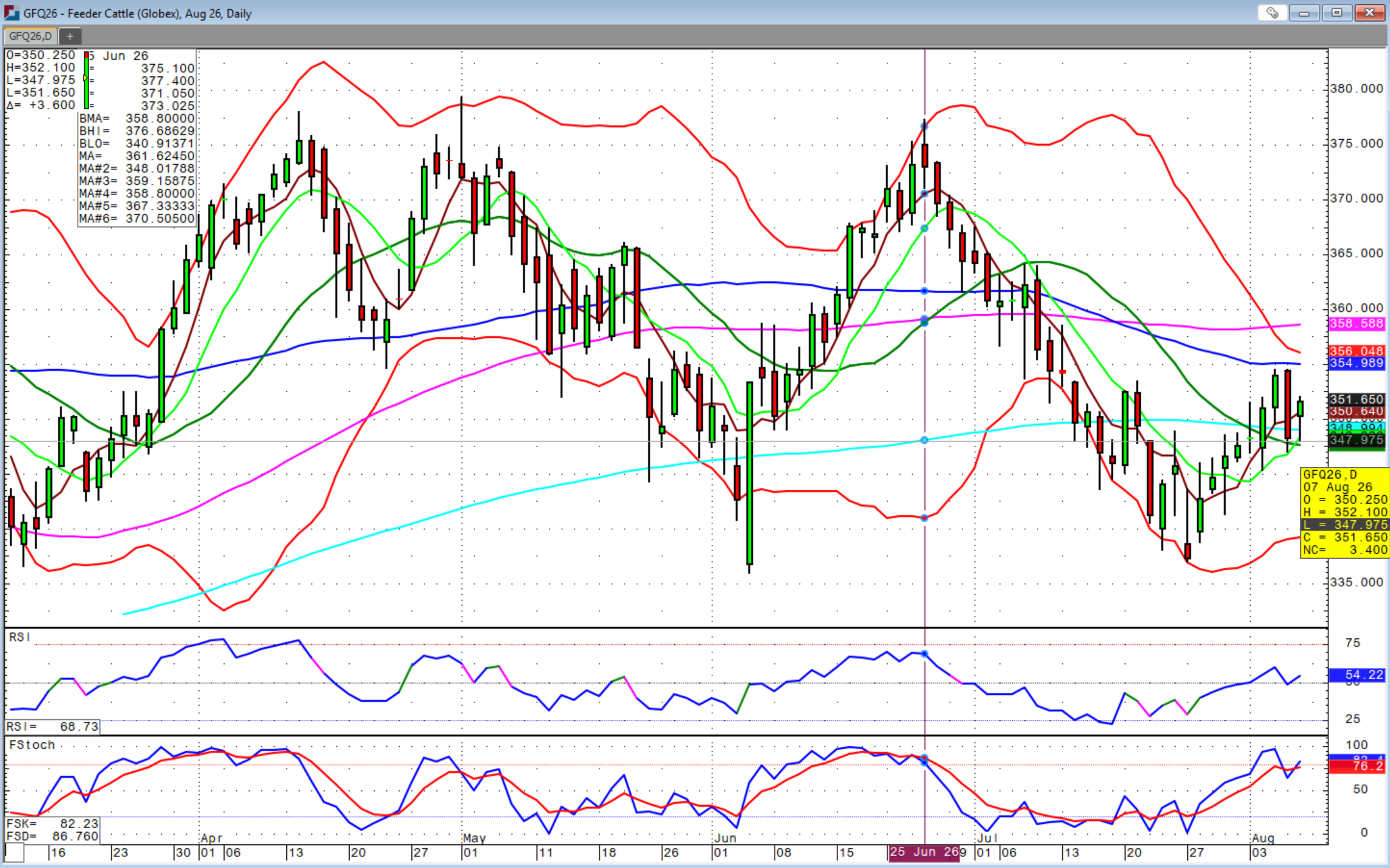
Fed cattle futures made a new daily low, but closed right near Thursday’s close. Fed cash cattle traded to $235 this week, above last week’s $233. Back-to-school and Labor Day buying is underway. With everyone beginning to settle back in from summer vacation, we will be monitoring consumer beef demand strength as they get back in their routines.
The campaign season will also be returning to the headlines as runoffs and the Mid-term elections quickly approach. Meanwhile, the Iran war rages on with continued back-and-forth between escalation and a potential deal. The crude oil market remains volatile, but remained under pressure after last weekend’s pause after major attacks were threatened into the close last week. As strategic reserves continue to tighten around the globe, price reaction to re-escalation will likely be sharp and violent. It’s hard to believe any headline at this point as I don’t believe any deal is worthwhile for the US and its allies short of regime change.
The Mandatory Country of Origin Labeling (COOL) for beef has re-emerged, but often faces defeat. However, the Senate Agriculture Committee approved bipartisan MCOOL this week, which marks significant progress in this requirement. The same committee did not approve passage of the Farm Bill out of committee over concerns of SNAP provisions halted by the Democrats. Link to the Hearing: Hearing: [2026-08-06] Business Meeting | Senate Committee On...
The old ways of doing business are changing as the country’s politics are changing. It will be very interesting to see how all of this plays out in the fall elections and beyond. There is potential for significant policy changes to result.
Sidwell Strategies is the one-stop shop to protect cattle with futures, puts, LRP or a combination of all, which is probably the best strategy overall. If you’re ready to trade commodity markets, give me a call at (580) 232-2272 or stop by my office to get your account set up and discuss risk management and marketing solutions to pursue your objectives. Self-trading accounts are also available. It is never too late to start and there is no operation too small to get a risk management and marketing plan in place.
Wishing everyone a successful trading week! Let us know if you'd like to join our daily market price and commentary text messages to stay informed!
Brady Sidwell is a Series 3 Licensed Commodity Futures Broker and Principal of Sidwell Strategies. Open your Trading Account with Sidwell Strategies at https://portal.stonex.com/prefill/index/BradySidwellU52F112P. Contact us at (580) 232-2272 or at trade@sidwellstrategies.com.
Futures and Options trading involves the risk of loss and may not be suitable for all investors. Review full disclaimer at https://www.sidwellstrategies.com/fccp-disclaimer-21951.


/Netflix%20on%20tv%20with%20remote%20by%20freestocks%20via%20Unsplash.jpg)
/Netflix%20open%20on%20tablet%20by%20rswebsols%20via%20Pixabay.jpg)