
Howdy market watchers!
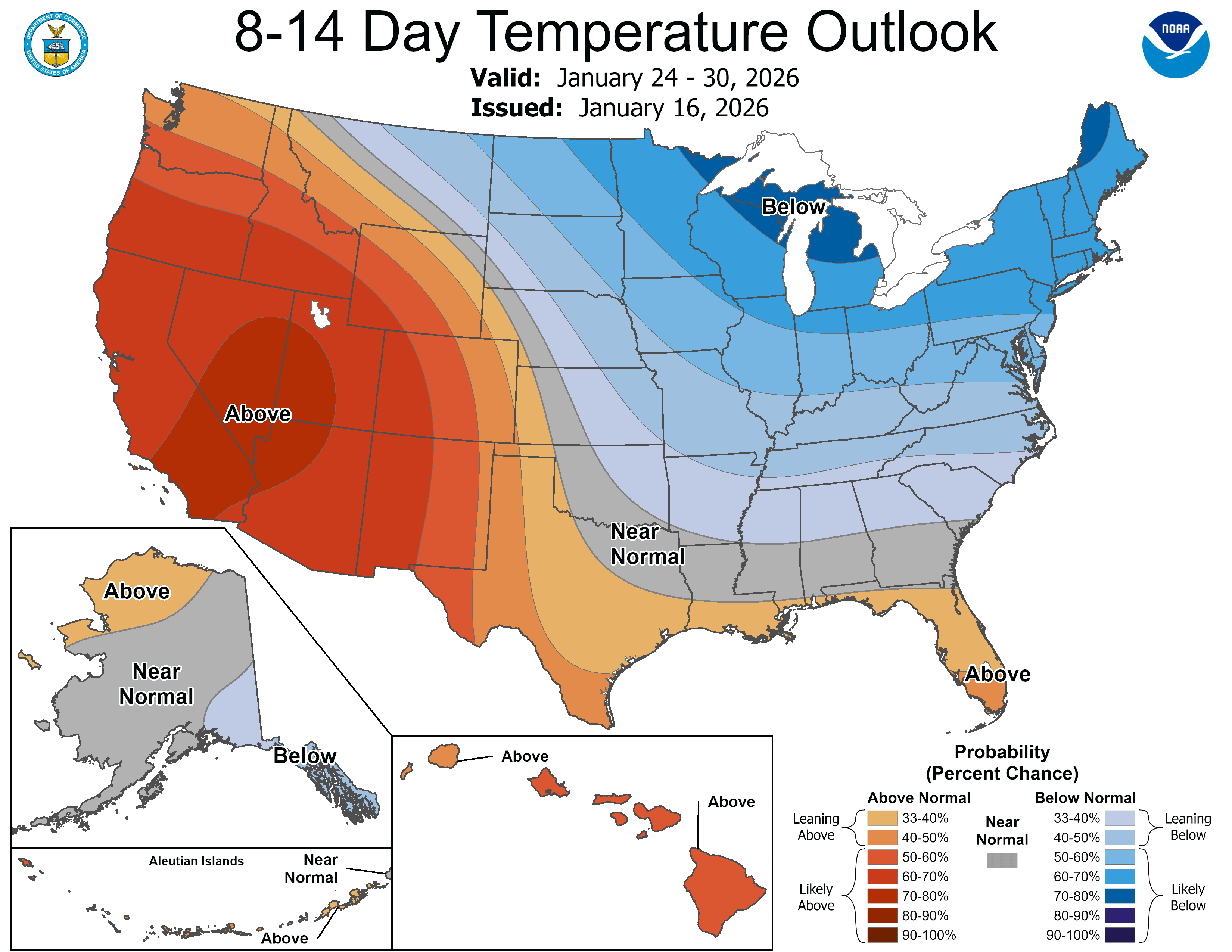
The cold has returned to a large part of the US after an unseasonably warm January for much of the country. While the Great Lakes and Midwest region have had significant snowfall this week along with New England over the past couple of weeks, the coming cold is dipping far south with Texas, Georgia and Florida experiencing much colder than usual conditions.
This week’s EIA natural gas inventory reports showed lower than expected withdrawals on mild temperatures with current storage levels also above the five-year average. There was some disruption to the export flows from some Texas-based terminals this week, but I would expect exports to remain strong and even strengthen with Europe’s natural gas market surging over 20+ percent this week alone due to colder than normal conditions and below average storage inventory.
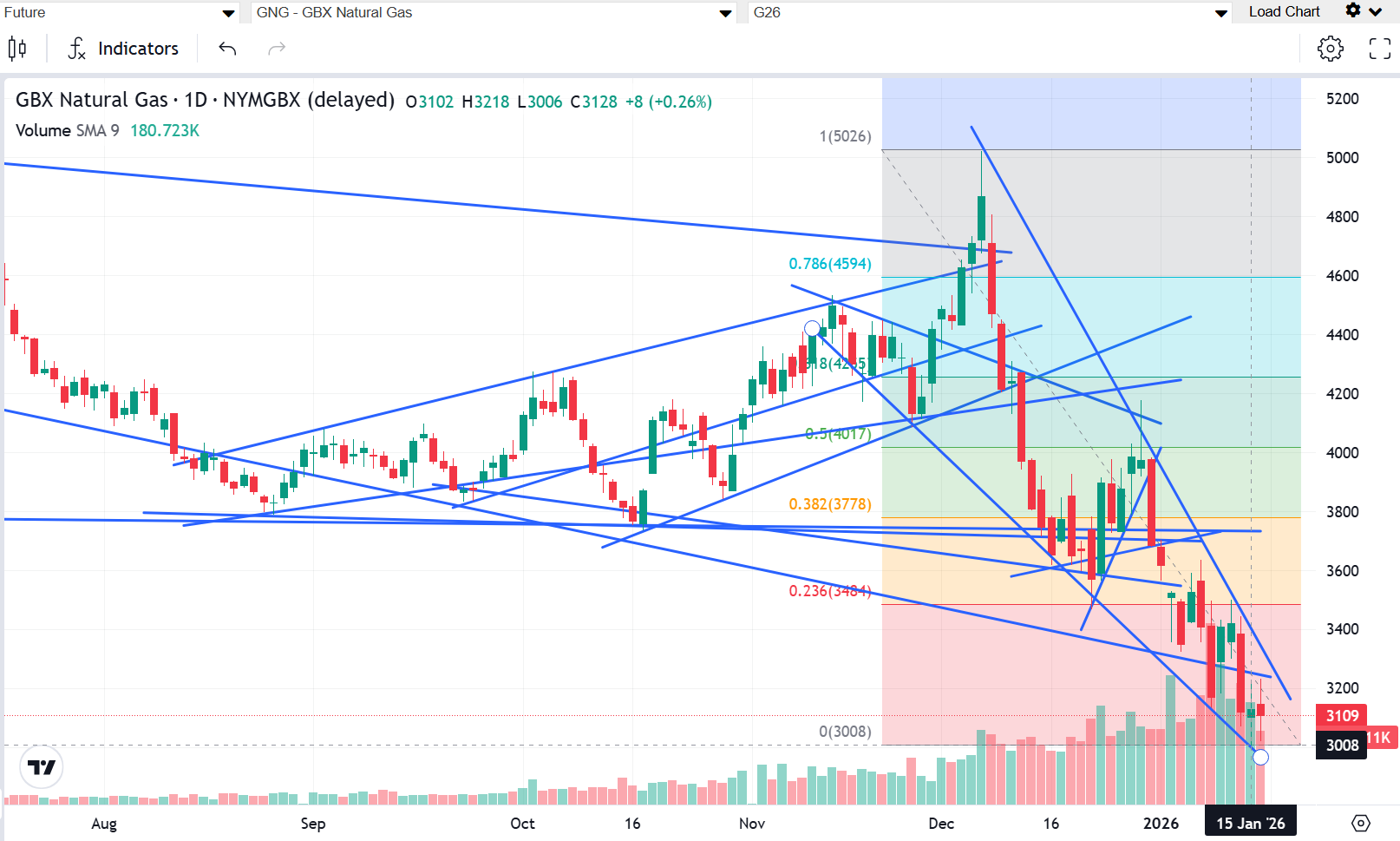
However, US natural gas prices just cannot catch a bid. Since the December 5, 2025, high at $5.022, this week’s low of $3.006 on the front month February contract adds up to a 40 percent decline in 45 days. Unbelievable considering all the discussion about oil and gas being the primary power supplier to the mega AI data centers being built and discussed around the country. Increasingly, we’ve been hearing about nuclear facilities powering data centers, but this is not a short-term or even near-term solution. Let’s hope this plunge in natural gas prices results in some price relief for farmer fertilizer quotes ahead of a high demand period ahead.
Crude oil prices have traded a very volatile week awaiting interpretation of geopolitical conflicts in major producing countries including Venezuela as well as Iran. The global chess game continues to intensify as the Trump Administration presses many fronts including the “bid” for Greenland to become part of the United States. With the US Supreme Court thought to release its decision this past Tuesday on President Trump’s Liberation Day tariffs, the can was once again kicked down the road while new tariffs were threatened against countries that do business with Iran followed by tariffs on countries that do not support Trump’s push for Greenland.
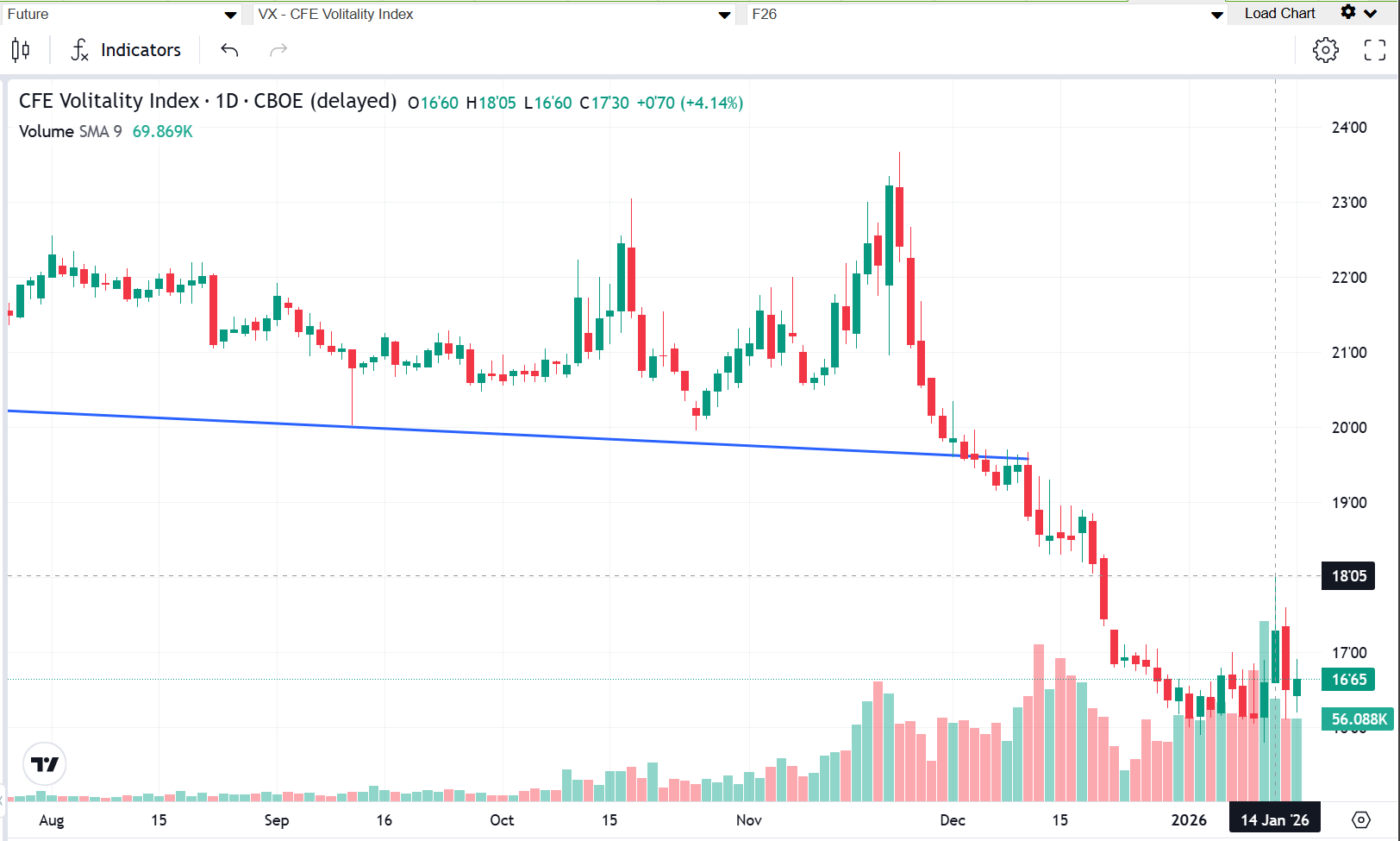
Despite all of this rhetoric, the markets seem to be taking it in stride with limited risk premium being priced in. The CBOE Volatility Index (VIX) spiked briefly above 18.0, but finished the week at 16.65. Watch the VIX to see how market jitters evolve with these developing headlines.
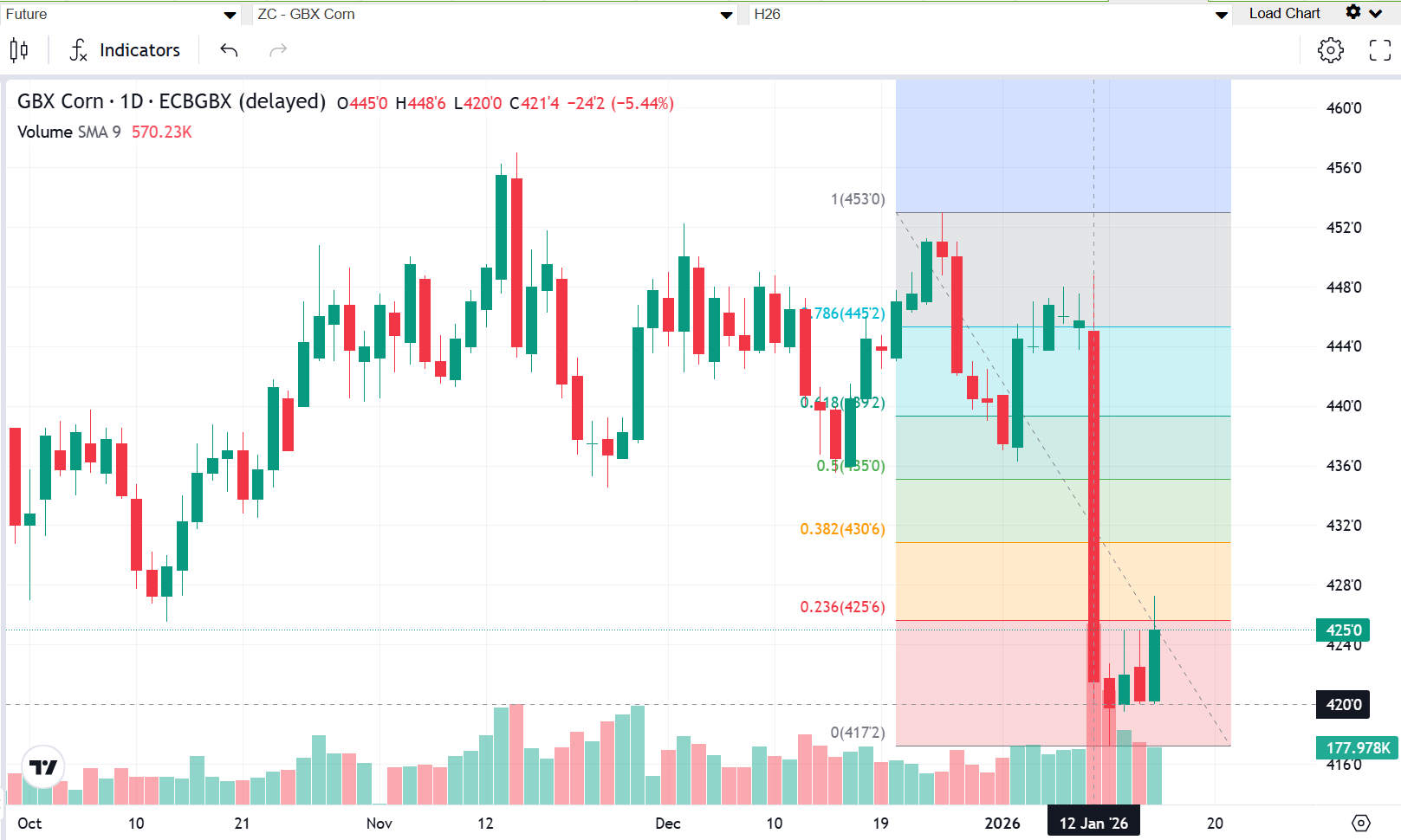
After a bloody Monday following bearish USDA reports, the grain markets managed to finish the week with some glimmer of hope for the bulls. Even amidst a strengthening US dollar, wheat and soybeans rallied back to key moving averages while corn contracts put in three consecutive sessions of higher lows. As I mentioned to several clients this week, I don’t think I have ever seen corn futures close 23.5 cents lower in one trading day as was the case this past Monday.
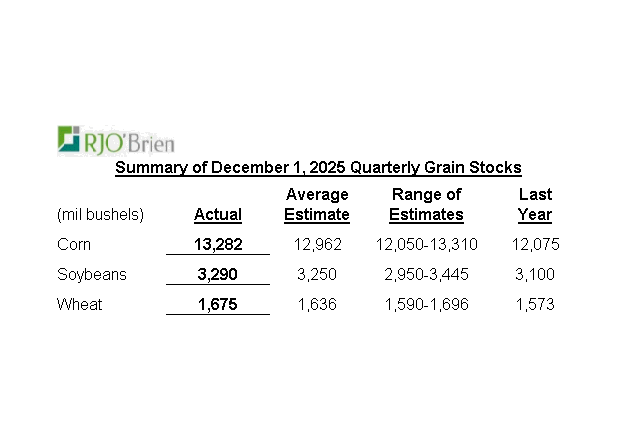
This weakness resulted from USDA’s surprise increase of US corn yields from 186.0 bushels per acre (bpa) last month to 186.5 bpa while a reduction to 184.0 bpa was expected. To add insult to injury, harvested acres were also increased from 90.047 million acres to 91.258 million acres while a cut to 89.974 million acres was expected. This increased total corn production to 17.021 billion bushels up from 16.752 billion bushels last month and expectations of a reduction to 16.552 billion bushels. US corn ending stocks for December 1st were expected to come in at 12.962 billion bushels, but instead came in at 13.282 billion bushels. US ending stocks for 2025/26 were also higher than expected at 2.227 billion bushels versus 1.980 billion bushels and USDA’s previous guesses at 2.029 billion bushels and last year’s 1.532 billion bushels. While corn exports are strong, these are significant stocks to keep ahead of on the demand side.
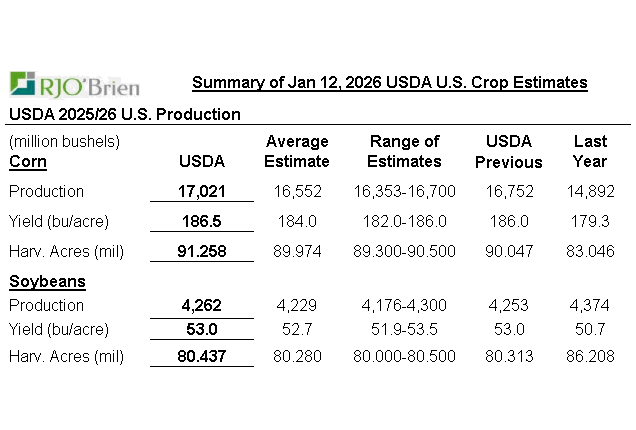
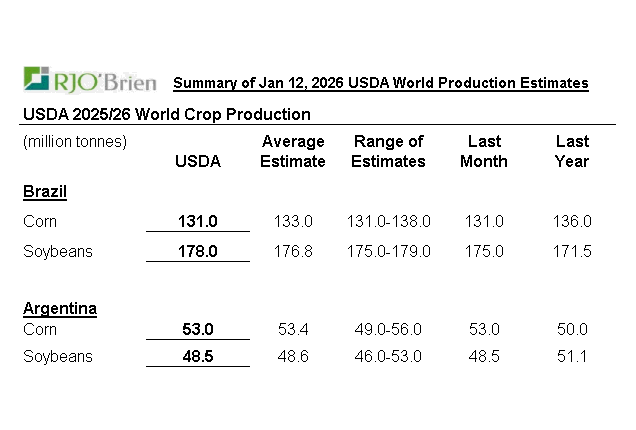
US soybean yields were unchanged from last month at 53.0 bpa versus 52.7 bpa. Harvested acres were also increased to 80.437 million acres, up from 80.280 million acres expected and 80.313 million acres last month. Total US production, which was expected to decline to 4.229 billion bushels from last month’s 4.253 billion bushels instead increased to 4.262 billion bushels. US soybean stocks for December 1st increased to 3.290 billion bushels, above the 3.250 billion bushels expected and last year’s 3.1 billion bushels. Brazil’s soybean production was increased to 178.0 million metric tons, up from 175.0 million metric tons last month. This production number is more likely to increase than decrease with CONAB, Brazil's USDA, estimating a crop above 182 million metric tons. Argentina’s soybean and corn production numbers were left unchanged from prior estimates as was Brazil’s corn production forecast.
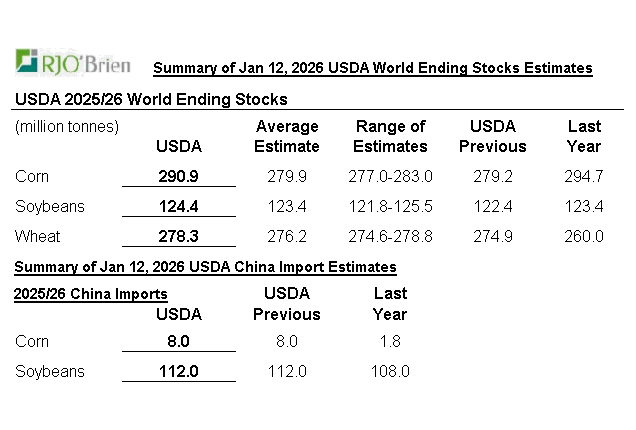
Globally, this left soybean ending stocks at 124.4 million metric tons, up from prior estimates of 122.4 million metric tons and average trade guesses of 123.4 million metric tons. World corn ending stocks increased measurably above expectations at 290.9 million metric tons versus grade guesses of 279.9 million metric tons and prior estimates of 279.2 million metric tons.
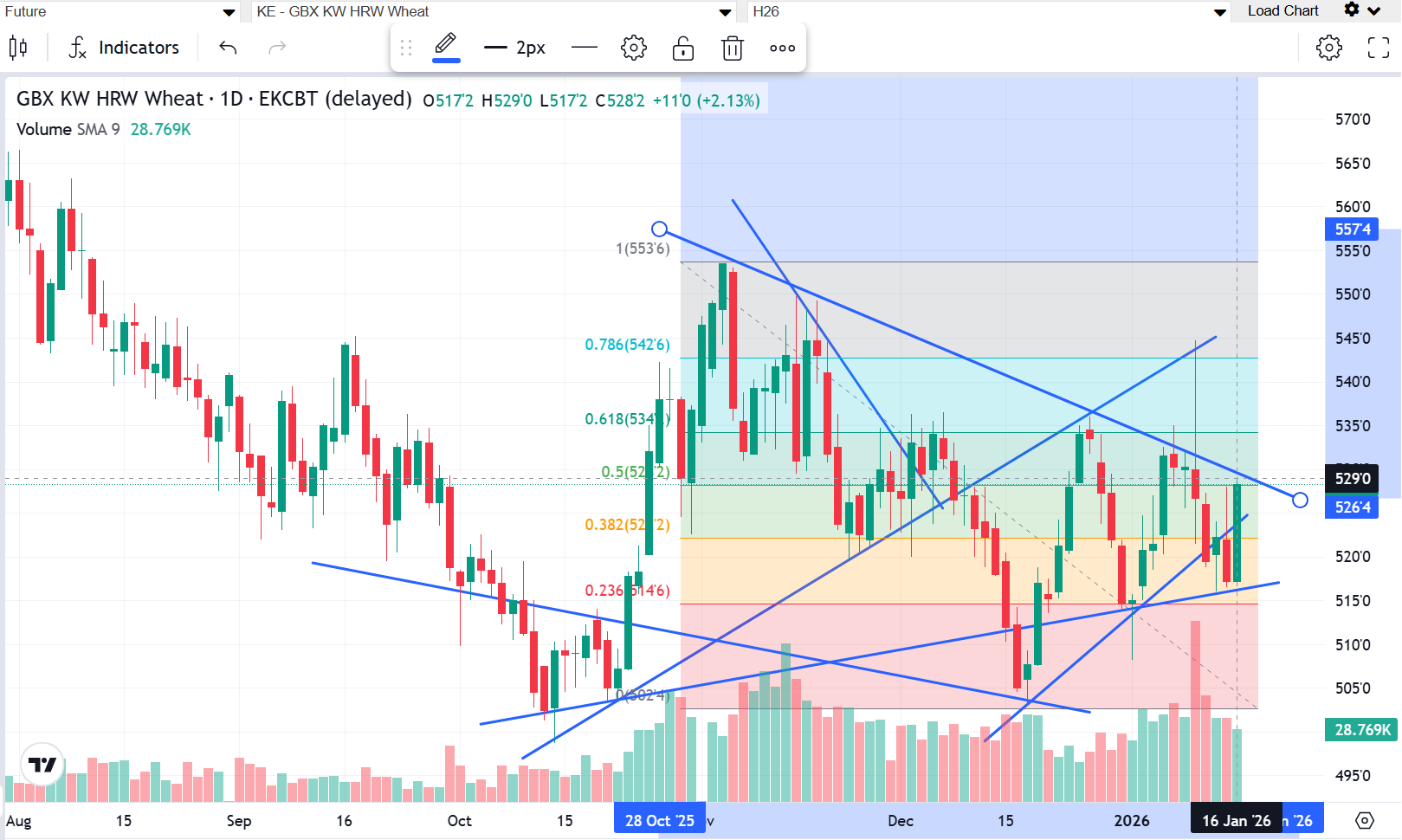
Suffice it to say, we have a supply problem making the need for stable and strong demand critical to stabilizing markets. Soybean futures traded a 28-cent range on Monday while closing 12.25 cents lower on the day. Corn futures traded a 28.75 cent range on Monday while closing 23.5 cents lower. In the wheat market, KC wheat traded a 23.25 cent range on Monday while closing 3.5 cents lower. Chicago wheat traded in a similar range.
Monday’s USDA reports also held a lot of fresh data for the wheat market. Winter wheat seedings for all classes of wheat came in lower than last year at 32.990 million acres versus 33.153 million acres while slightly above expectations of 32.413 million acres. Hard red winter wheat traded on the KC wheat futures came in at 23.500 million acres versus 23.028 million acres expected and last year’s 23.489 million acres. While this was above expectations, it is still in line with last year’s plantings, which was historically low. Soft Red Winter wheat acres came in above expectations, but in line with last year.
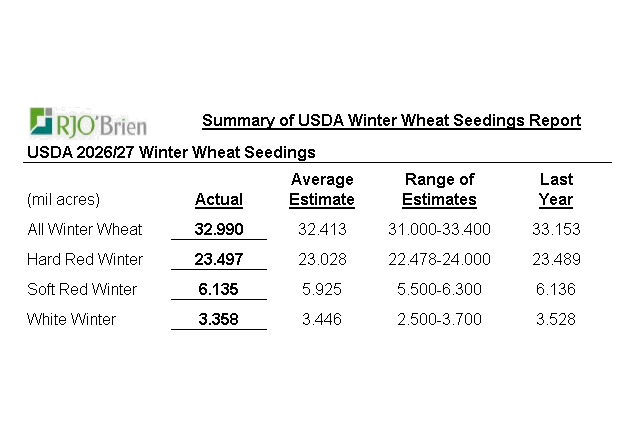
December 1st wheat stocks in the US came in at 1.675 billion bushels versus 1.636 billion bushels expected and 1.573 billion bushels last year. Forecast 2025/26 US wheat stocks came in at 926 million bushels versus 895 million bushels expected, prior estimates of 901 million bushels and last year’s 851 million bushels. Again, we have a supply problem, especially with cheaper corn. Pay attention to this wheat rally with strong closes on Friday. Start watching the new crop July contract and consider placing sell orders once the price gets to your desired level.
A wetter spring and any conclusion to the Russia-Ukraine conflict may not bode well for wheat prices although global conflict often can. World wheat ending stocks were expected to increase to 276.2 million metric tons from the previous 274.9 million metric tons, but came in even higher at 278.3 million metric tons with Russian and Argentine wheat crops increased.
China has continued to steadily buy US soybeans despite increasing tensions and Brazil soybean harvest getting started and is thought to be just 1 million metric tons short of the 12 million metric ton commitment due by the end of February. China also resumed reserve soybean sales to make room for imports and auction prices were around $0.37 per bushel higher than prior auctions. This is a bullish signal for demand.
NOPA soybean crush for December was in line with expectations while soybean oil stocks were slightly lower than expected, but the highest in 19 months. Expectations that more US farm support may be in the making, discussion about increasing biofuel mandates would be critical to absorb domestic stocks with increasing export competition.
US primaries for mid-term elections will soon be underway and get ready to start seeing more positioning in Washington to win voters. With affordability high on the list, I suspect this week’s push by the Trump Administration to limit credit card interest to 10 percent was part of such strategy. For cattle producers, we should also be prepared for another round of discussion about high beef prices.
Feeder futures reached a multi-month high on Friday at $365 on March futures, which was just $13.60 from the all-time high at $378.600 on October 16, 2025. Technically, Friday’s trading action was an outside reversal lower day. However, we’ve seen these before and the market just bounces back. Feeder contracts were limit down $9.25 at one point and then recovered, but then closed near that low and below the 9-day moving average. The CME feeder index is above $370 with cash markets on fire putting in new records despite futures still being below prior highs.
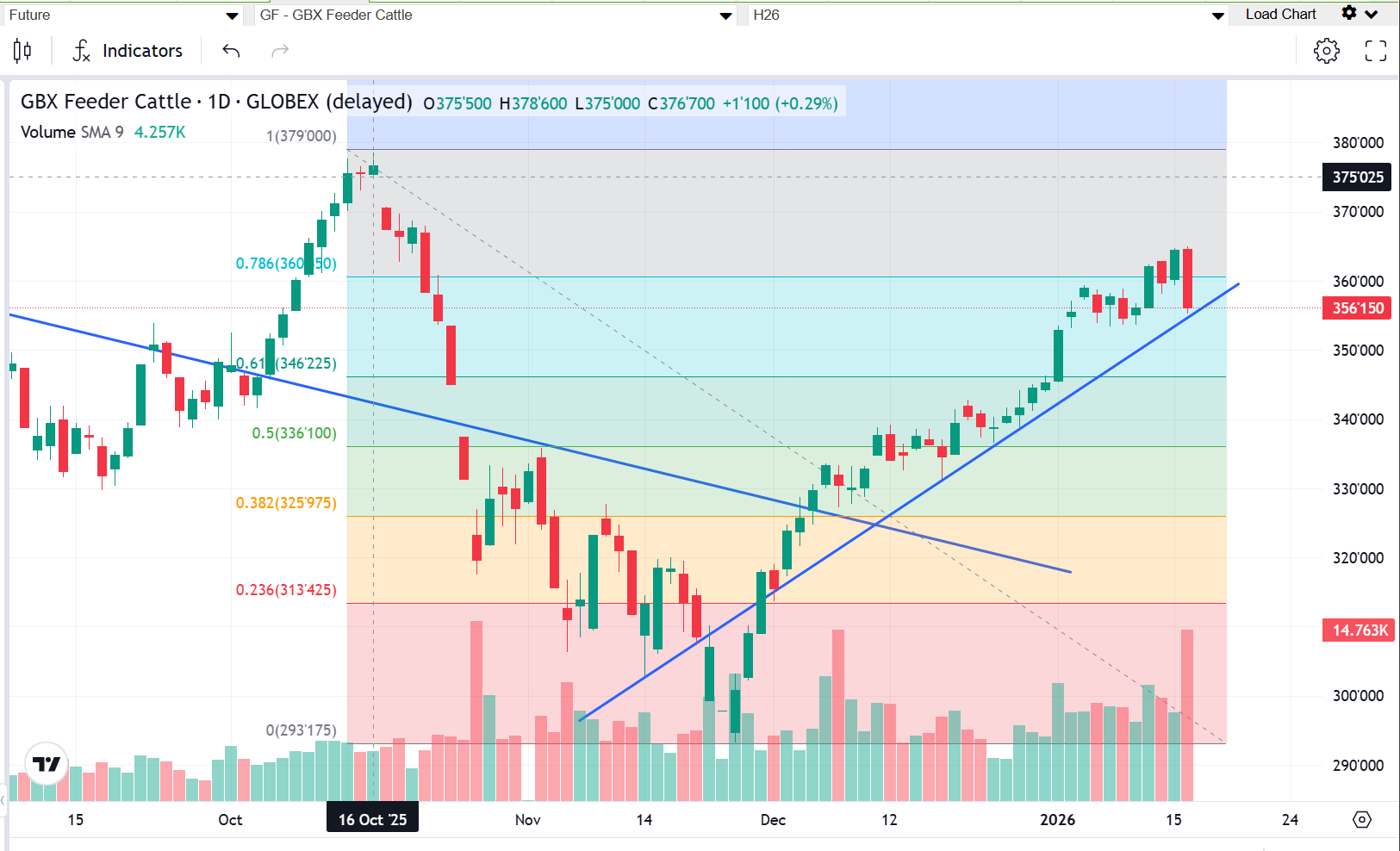
The last remaining chart gap goes back to the all-time high, which is at $375 on March feeder futures versus Friday’s close at $356.150. Friday's market weakness initially was explained by rumors of New World Screw Worm in the US, which was false, but there were more cases in Mexico near the US border. It was also the final day of trading ahead of a long weekend after big moves higher this past week. Ag markets will be closed on Monday in observance of Martin Luther King, Jr. day and so we will have to see what Tuesday brings.
With increasingly negative margins, packers have made every attempt to slow the pace of purchasing. However, they had to jump back in on Friday with the highest trade at $234 report in Western Nebraska. The highest trades in Texas and Kansas were at $233. Tyson’s Lexington, Nebraska packing plant closes at the end of this month as does it’s Amarillo facility going to one shift. I suspect we will see additional plant closures that will reduce competition for fed cattle ready for slaughter. There are fewer cattle, which we will likely see in this next Friday’s Cattle on Feed report, but less competition for those cattle from fewer packing plants may also serve to balance things out more, which may limit upside.
I’m starting to hear talk again that we may be heading towards $4.00 on feeder futures, but keep a level-headed perspective as we are back near where we were that preceded an $80 per cwt drop in 6 weeks. Anything is possible in this market and volatile trading environment and so error on the side of protecting your risk even if you “leave money on the table.” Instead of doing all or nothing, consider protecting 20 percent at a time or whatever you’re comfortable with doing to get started. I would rather be upset about spending too much on risk management and selling for a higher price than I would be about not selling at a higher price and saving on risk protection. With markets closed on Monday, there will be no LRP until Tuesday. Recall, there is no LRP on limit down days or on Cattle-on-Feed report days.
Sidwell Strategies is the one-stop shop to protect cattle with futures, puts, LRP or a combination of all, which is probably the best strategy overall. If you’re ready to trade commodity markets, give me a call at (580) 232-2272 or stop by my office to get your account set up and discuss risk management and marketing solutions to pursue your objectives. Self-trading accounts are also available. It is never too late to start and there is no operation too small to get a risk management and marketing plan in place.
Wishing everyone a successful trading week! Let us know if you'd like to join our daily market price and commentary text messages to stay informed!
Brady Sidwell is a Series 3 Licensed Commodity Futures Broker and Principal of Sidwell Strategies. He can be reached at (580) 232-2272 or at brady@sidwellstrategies.com. Futures and Options trading involves the risk of loss and may not be suitable for all investors. Review full disclaimer at https://www.sidwellstrategies.com/fccp-disclaimer-21951.

/Intel%20Corp_%20logo%20on%20mobile%20phone-by%20Piotr%20Swat%20via%20Shutterstock.jpg)
/Alphabet%20(Google)%20Image%20by%20Markus%20Mainka%20via%20Shutterstock.jpg)
/An%20image%20of%20a%20Tesla%20humanoid%20robot%20in%20front%20of%20the%20company%20logo%20Around%20the%20World%20Photos%20via%20Shutterstock.jpg)
/Nvidia%20logo%20by%20Konstantin%20Savusia%20via%20Shutterstock.jpg)