



Had it not been for retail investors who bought the dip in 2025, the market’s performance last year could have been dramatically different.
From April’s tariff-induced correction to last fall’s rotation out of tech and AI stocks, time and time again, everyday investors stepped in to buy the dip, helping the market find a short-term bottom and ultimately bounce higher.
According to Bespoke Investment Group, 2025 was the second best year for buying the dip since at least 1993 based on the S&P 500’s changes on days following losses.
Meanwhile, JPMorgan data found that retail flows surged to records last year, climbing by more than 50% from 2024 and around 14% higher than 2021’s retail investor-driven meme stock rally.
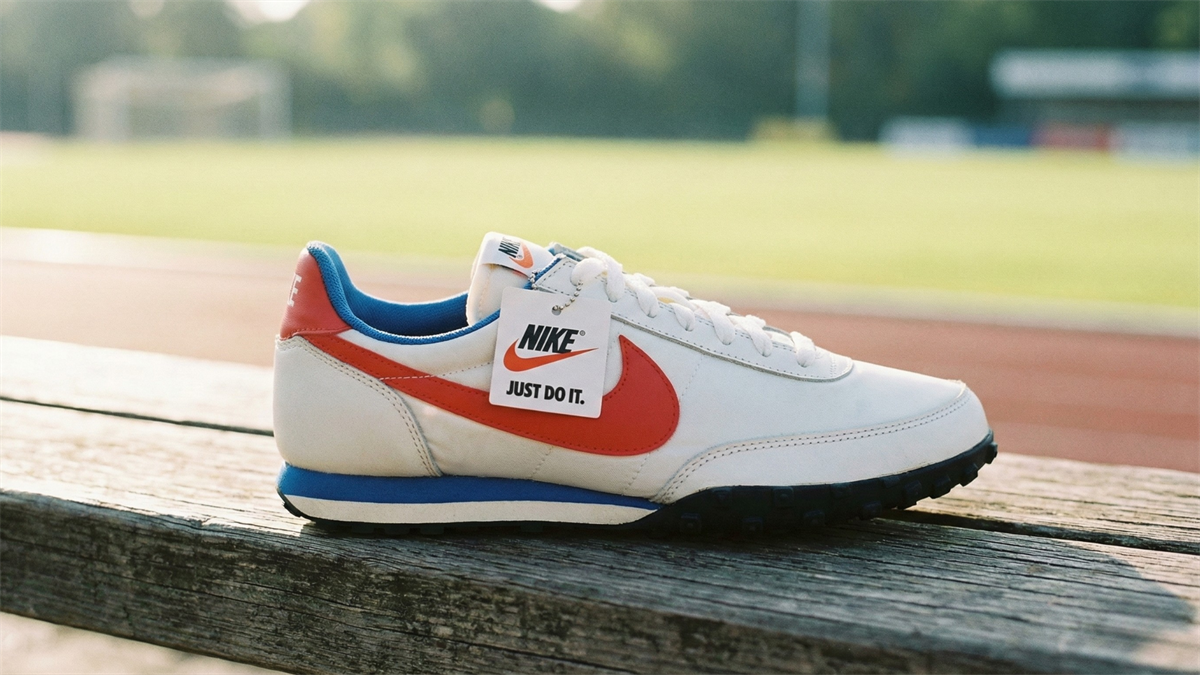
The executive teams at Nike (NYSE: NKE) and IonQ (NYSE: IONQ) are likely hoping that trend continues, as both stocks have struggled mightily in the recent past. But for both, there are indications that a turnaround could be ahead.
Nike Looks to Bounce Back From Tariff-Stricken Year
Consumer discretionary stocks got hammered last year as the fallout from President Trump’s tariffs caused shoppers to dial back and focus their household budgets on essentials. Among the S&P 500’s 11 sectors, consumer discretionary finished third to last with only a 6% gain.
Nike felt that pinch, with its shares falling by nearly 17%. That failed to provide hope for a turnaround, which the athletic footwear and apparel maker desperately needs.
Since its all-time high on Nov. 5, 2021, shares of NKE have lost more than 63% and are down 20% from their one-year high on Feb. 25, 2025.
Unsurprisingly, much of that had to do with the current administration’s trade policies.
Tariffs significantly impacted Nike’s margins, adding billions in costs and forcing the company to raise its prices.
Much of Nike’s materials are sourced in China, and a notable portion of its production is in Vietnam—two countries that were adversely affected by Trump’s tariffs.
As a result, the company saw a staggering year-over-year (YOY) decrease in net income from $1.5 billion to just $211 million between Q4 2024 and Q4 2025—a nearly 96% decline.
Nike Has Regrouped and Net Income Is Rebounding
While not much has changed on the tariff front, which the company expects to continue impacting its margins in Q1 2026, the company has adapted.
Last year, Nike reduced the amount of footwear it imported from China while lowering its Vietnam production demands. Additionally, the company has taken measures to reduce corporate costs.
In turn, net income—which bottomed in Q4 2025—has rebounded as of the company’s Q2 2026, climbing to $792 million or more than 275% higher.
Net cash from operating activities has been negative in five of the past six quarters. But despite remaining negative at -$50 million in the most recent quarter, that figure is steadily improving from -$1.375 billion in Q1 2025.
Analysts are expecting a positive year, with the average 12-month price target representing potential upside of nearly 16%. Meanwhile, the current short interest of 2.52%—which is 11.27% lower than the prior reporting period—suggests that bears think the worst is in the past.
This is corroborated by over $4 million worth of insider buying of NKE shares, signaling that management and independent directors of the company see upside going forward.
Quantum Computing Ambitions Didn’t Help IonQ Last Year
Quantum computing had its moment in the spotlight last year, but for IonQ, those aspirations failed to materialize. From its all-time high on Oct. 3, 2025, the stock is down nearly 31%.
That’s despite the company having amassed an impressive list of clients, including Magnificent Seven members Alphabet (NASDAQ: GOOGL), Amazon (NASDAQ: AMZN), and Microsoft (NASDAQ: MSFT), which use IonQ’s quantum computers for cloud services including Amazon Web Services’ Bracket, Azure Quantum, and Google Cloud’s Marketplace.
But the company has missed on earnings expectations three out of the last four quarters (though revenues exceeded forecasts in each instance).
Since the company went public in October 2021, cash flow has been negative every quarter.
IonQ’s Revenue Growth Will Begin Rewarding Shareholders
The company continues to operate at a loss, but from 2022 to 2024, IonQ saw YOY revenue growth of more than 430%, 98%, and 95%.
One issue the firm is working through is its elevated burn rate—a common challenge for firms looking to scale quantum computing for practical commercial purposes. But profitability is expected by 2030, and much of that has to do with one of IonQ’s biggest customers.
The company receives significant funding from the U.S. federal government in the form of contracts, grants, and strategic partnerships. That includes agencies such as the Department of Defense, the Department of Energy, NASA, the National Science Foundation, and others.
Through those partnerships, IonQ has solidified its role in both infrastructure and national security initiatives. The company’s government contracting has become so prolific that last September, it announced the formation of a dedicated division—IonQ Federal—to focus on providing services for the U.S. government and national defense.
That has contributed to a decidedly bullish outlook from Wall Street. Analysts’ average 12-month price target for the stock implies nearly 43% potential upside. And while retail investors might be the ones to step in and drive shares higher, institutional owners are already patiently waiting, having injected $2.56 billion into IonQ over the past 12 months versus outflows of just $734 million.
Where Should You Invest $1,000 Right Now?
Before you make your next trade, you'll want to hear this.
MarketBeat keeps track of Wall Street's top-rated and best performing research analysts and the stocks they recommend to their clients on a daily basis.
Our team has identified the five stocks that top analysts are quietly whispering to their clients to buy now before the broader market catches on... and none of the big name stocks were on the list.
They believe these five stocks are the five best companies for investors to buy now...
The article "Is It Time to Buy the Dip on Nike and IonQ?" first appeared on MarketBeat.


/A%20Tesla%20Cybertruck%20with%20visible%20bullet%20impacts_%20Image%20by%20Karolis%20Kavolelis%20via%20Shutterstock_.jpg)
/Apple%20store%20and%20shoppers%20-%20by%20PhillDanze%20via%20iStock.jpg)

/Boeing%20Co_%20plane-by%20Wirestock%20via%20iStock.jpg)