




Casino, sports betting and entertainment operator PENN Entertainment (NASDAQ:PENN) met Wall Street’s revenue expectations in Q2 CY2026, with sales up 5.2% year on year to $1.86 billion. Its non-GAAP profit of $0.44 per share was 66.9% above analysts’ consensus estimates.
Is now the time to buy PENN Entertainment? Find out by accessing our full research report, it’s free.
PENN Entertainment (PENN) Q2 CY2026 Highlights:
- Revenue: $1.86 billion vs analyst estimates of $1.86 billion (5.2% year-on-year growth, in line)
- Adjusted EPS: $0.44 vs analyst estimates of $0.26 (66.9% beat)
- Adjusted EBITDA: $312.6 million vs analyst estimates of $454.6 million (16.8% margin, 31.2% miss)
- Operating Margin: 7.1%, up from 5.3% in the same quarter last year
- Free Cash Flow Margin: 5.2%, up from 1.1% in the same quarter last year
- Market Capitalization: $2.49 billion
Company Overview
Established in 1982, PENN Entertainment (NASDAQ:PENN) is a diversified American operator of casinos, sports betting, and entertainment venues.
Revenue Growth
A company’s long-term sales performance is one signal of its overall quality. Any business can put up a good quarter or two, but the best consistently grow over the long haul. Unfortunately, PENN Entertainment’s 7.5% annualized revenue growth over the last five years was weak. This fell short of our benchmark for the consumer discretionary sector and is a poor baseline for our analysis.
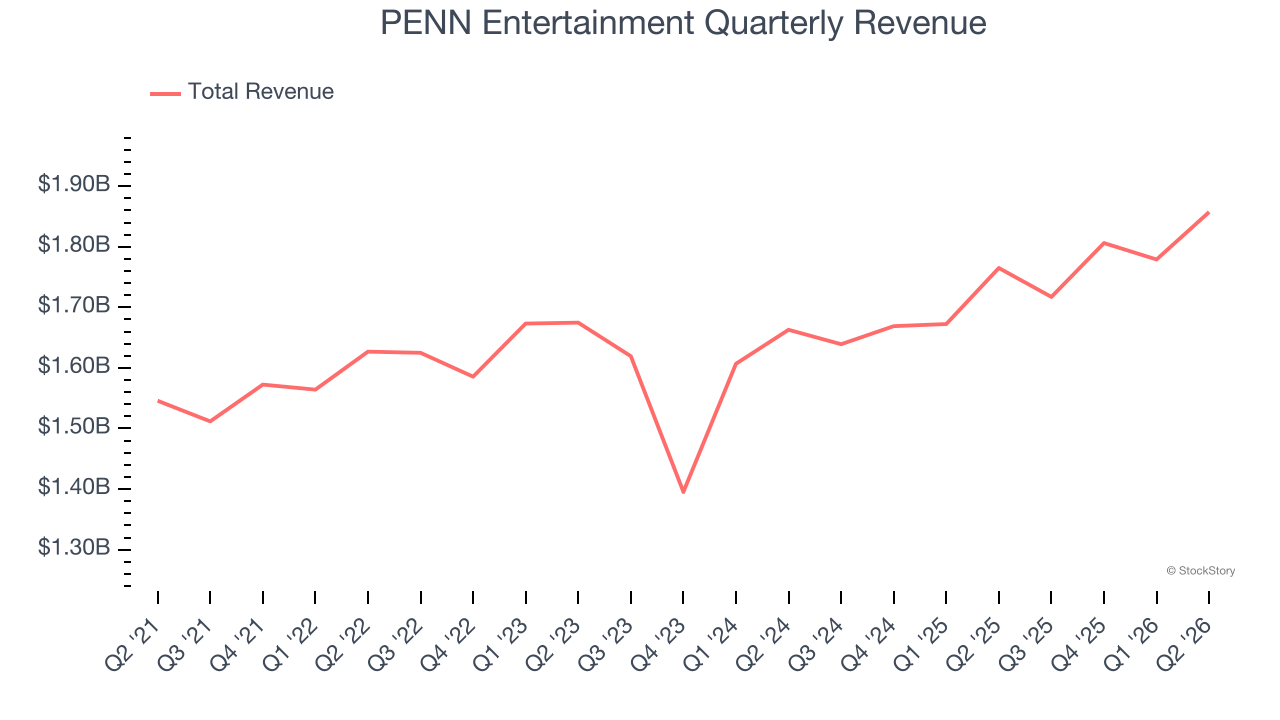
We at StockStory place the most emphasis on long-term growth, but within consumer discretionary, a stretched historical view may miss a company riding a successful new product or trend. PENN Entertainment’s annualized revenue growth of 6.7% over the last two years aligns with its five-year trend, suggesting its demand was consistently weak. Note that COVID hurt PENN Entertainment’s business in 2020 and part of 2021, and it bounced back in a big way thereafter. 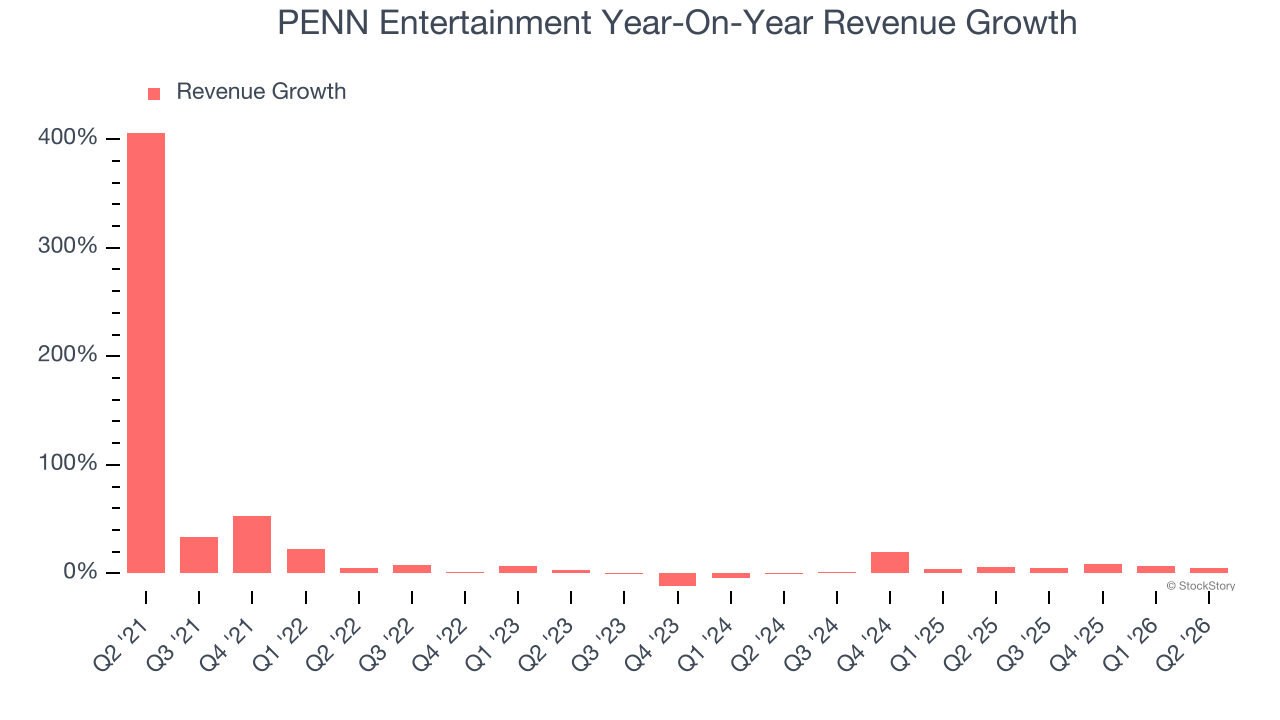
PENN Entertainment also breaks out the revenue for its most important segment, Northeast Region. Over the last two years, PENN Entertainment’s Northeast Region revenue (casinos, hotels) averaged 1.4% year-on-year growth. This segment has lagged the company’s overall sales. 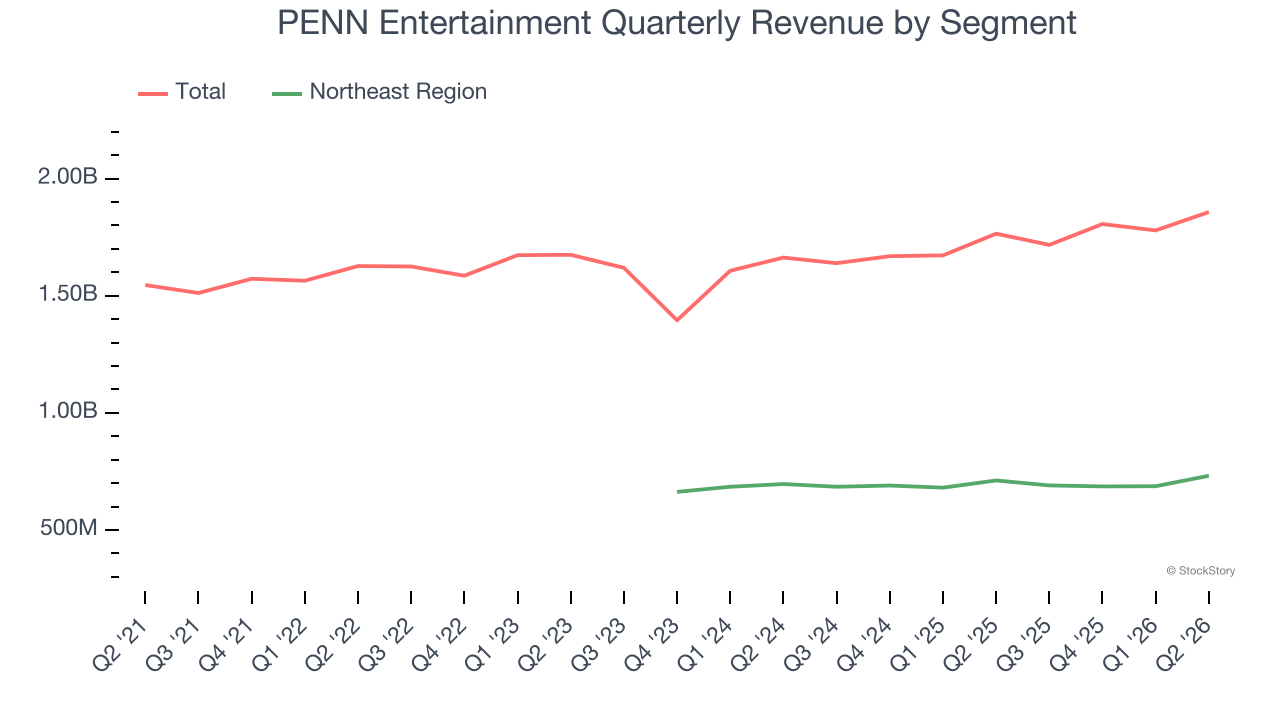
This quarter, PENN Entertainment grew its revenue by 5.2% year on year, and its $1.86 billion of revenue was in line with Wall Street’s estimates.
Looking ahead, sell-side analysts expect revenue to grow 5.5% over the next 12 months, similar to its two-year rate. This projection is underwhelming and indicates its products and services will face some demand challenges.
WHILE YOU’RE HERE: The Next Palantir? One satellite company captures images of every point on Earth. Every single day. The Pentagon wants it. Hedge funds are using it to beat earnings. You’ve probably never heard of it.
This is what the early days of Palantir looked like before it became a giant. Same playbook. Different technology. If you missed Palantir, you need to see this. Claim The Stock Ticker for Free HERE.
Operating Margin
PENN Entertainment’s operating margin has been trending up over the last 12 months and averaged 4.4% over the last two years. The company’s higher efficiency is a breath of fresh air, but its suboptimal cost structure means it still sports inadequate profitability for a consumer discretionary business.
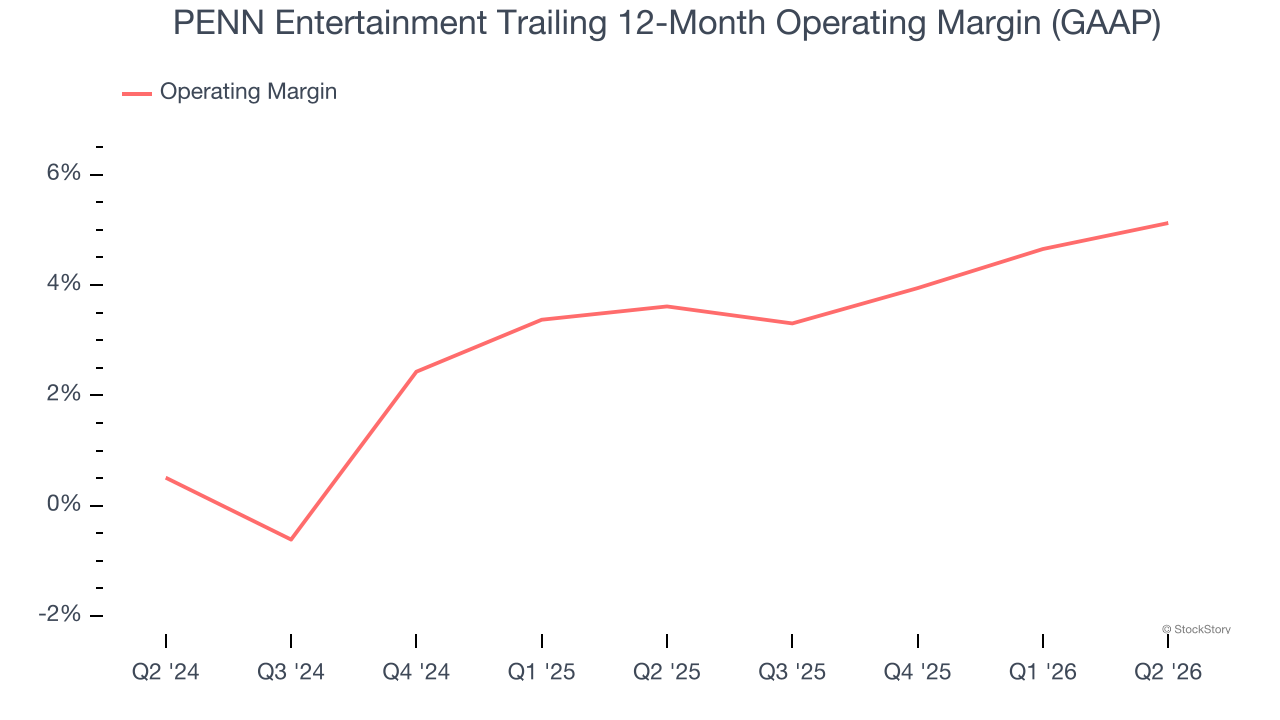
In Q2, PENN Entertainment generated an operating margin profit margin of 7.1%, up 1.8 percentage points year on year. This increase was a welcome development and shows it was more efficient.
Earnings Per Share
Revenue trends explain a company’s historical growth, but the long-term change in earnings per share (EPS) points to the profitability of that growth — for example, a company could inflate its sales through excessive spending on advertising and promotions.
Sadly for PENN Entertainment, its EPS declined by 33.6% annually over the last five years while its revenue grew by 7.5%. This tells us the company became less profitable on a per-share basis as it expanded due to non-fundamental factors such as interest expenses and taxes.
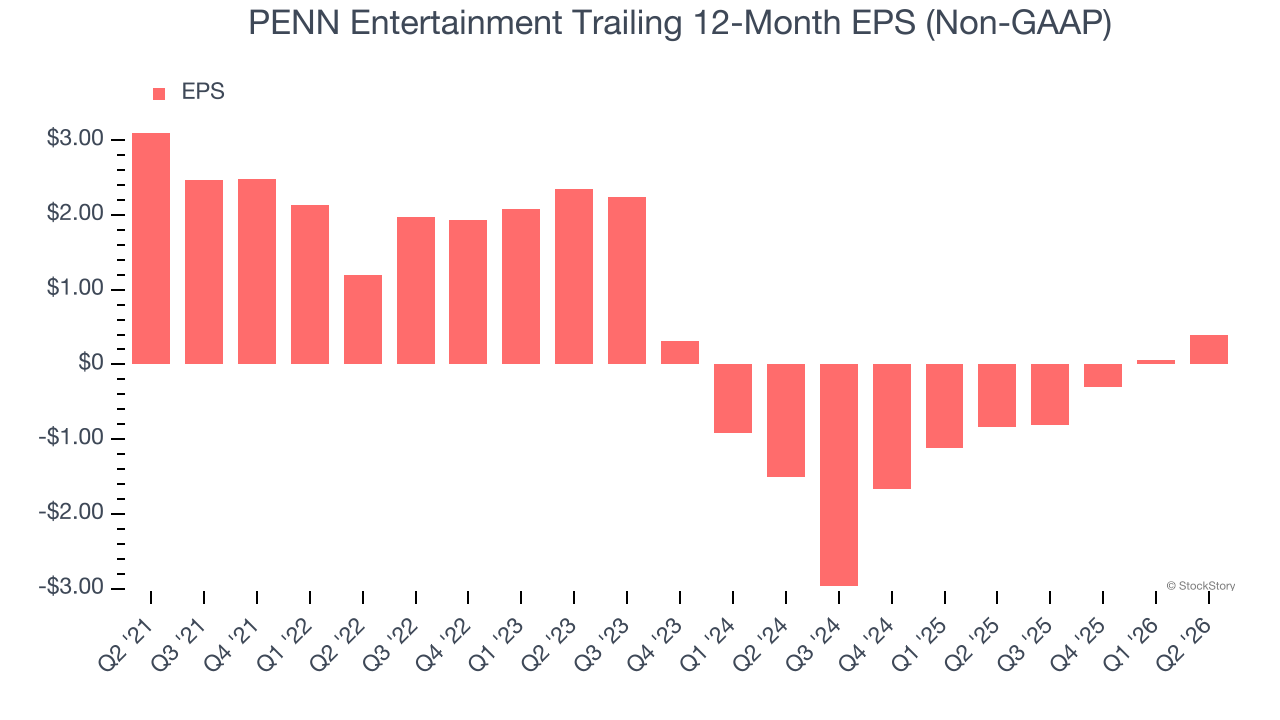
In Q2, PENN Entertainment reported adjusted EPS of $0.44, up from $0.10 in the same quarter last year. This print easily cleared analysts’ estimates, and shareholders should be content with the results. Over the next 12 months, Wall Street expects PENN Entertainment’s full-year EPS to grow 158% from $0.40 to $1.03.
Key Takeaways from PENN Entertainment’s Q2 Results
It was good to see PENN Entertainment beat analysts’ EPS expectations this quarter. On the other hand, its EBITDA missed. Overall, this quarter could have been better. The stock remained flat at $19.51 immediately following the results.
Big picture, is PENN Entertainment a buy here and now? What happened in the latest quarter matters, but not as much as longer-term business quality and valuation, when deciding whether to invest in this stock. We cover that in our actionable full research report which you can read here (it’s free).


/An%20image%20of%20the%20Snowflake%20logo%20on%20a%20corporate%20office_%20Image%20by%20Grand%20Warszawski%20via%20Shutterstock_.jpg)


/Netflix%20on%20tv%20with%20remote%20by%20freestocks%20via%20Unsplash.jpg)