


Howdy market watchers!
‘Twas the weekend before Christmas and some markets soared, while others traded in a range and seemed to be bored. And we’ll just leave that rhyming right there while we’re somewhat ahead.
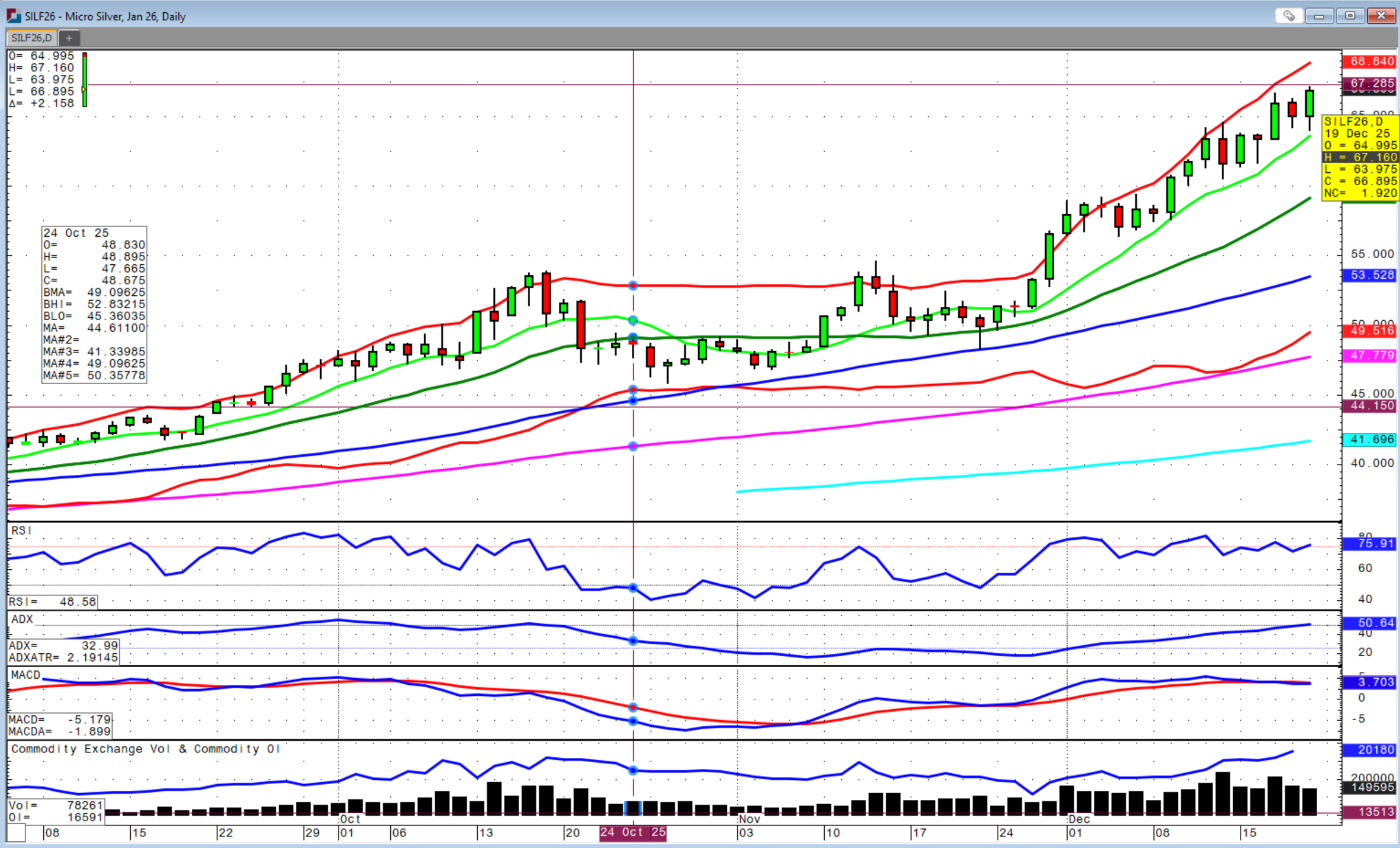
It was all about the metals. Silver, platinum and palladium have been on an absolute tear while gold is doing its best to keep up. New, all-time highs were made this week for those former three with more likely to come next week. The question is, what are surging metals telling us about the health of the economy?
While there are questions about the accuracy of the November payroll numbers released this week given the government shutdown, last month’s job creations increased by 64,000, better than the expected 45,000 jobs, after supposedly falling by 105,000 in October. The US unemployment rate is now at 4.6 percent, more than expected, which is the highest level since September of 2021. The health care sector accounted for more than 70 percent of the increases at 46,000 positions.
The consumer price index for November rose 2.7 percent annually, which was lower than the expected 3.1 percent. Core CPI, which excludes food and energy prices that are often more volatile was also lower than expected at 2.6 percent annually. This is welcome news for the overall economy as well as the Fed that is trying to balance weaker employment numbers with lower interest rates, but it is difficult to do so when inflation is increasing.
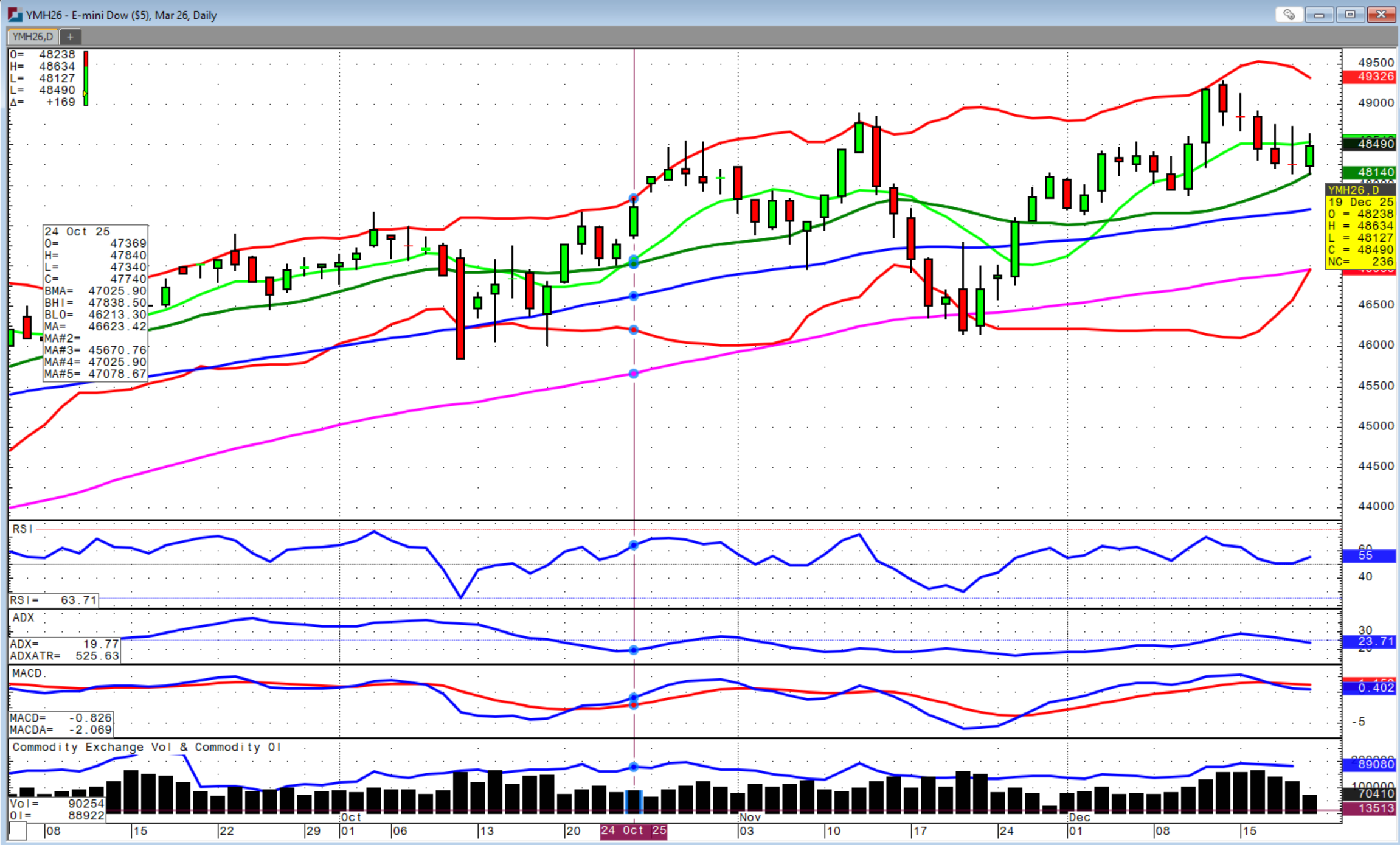
Equity markets had a down week overall after last week’s ten plus consecutive session surge but finished the week on a strong note. There is always hope for a Santa Claus rally, but that is increasingly on shaky ground this year with uncertainty building over the strength of the jobs market and inflationary pressures. There are also many political headwinds domestically and globally that have the potential to dampen investor sentiments as trade wars and border conflicts remain tense.
At home, there continue to be questions rather the Trump Administration is permitted to make unilateral decisions without Congressional approval that is resulting in a growing number of lawsuits against the White House.
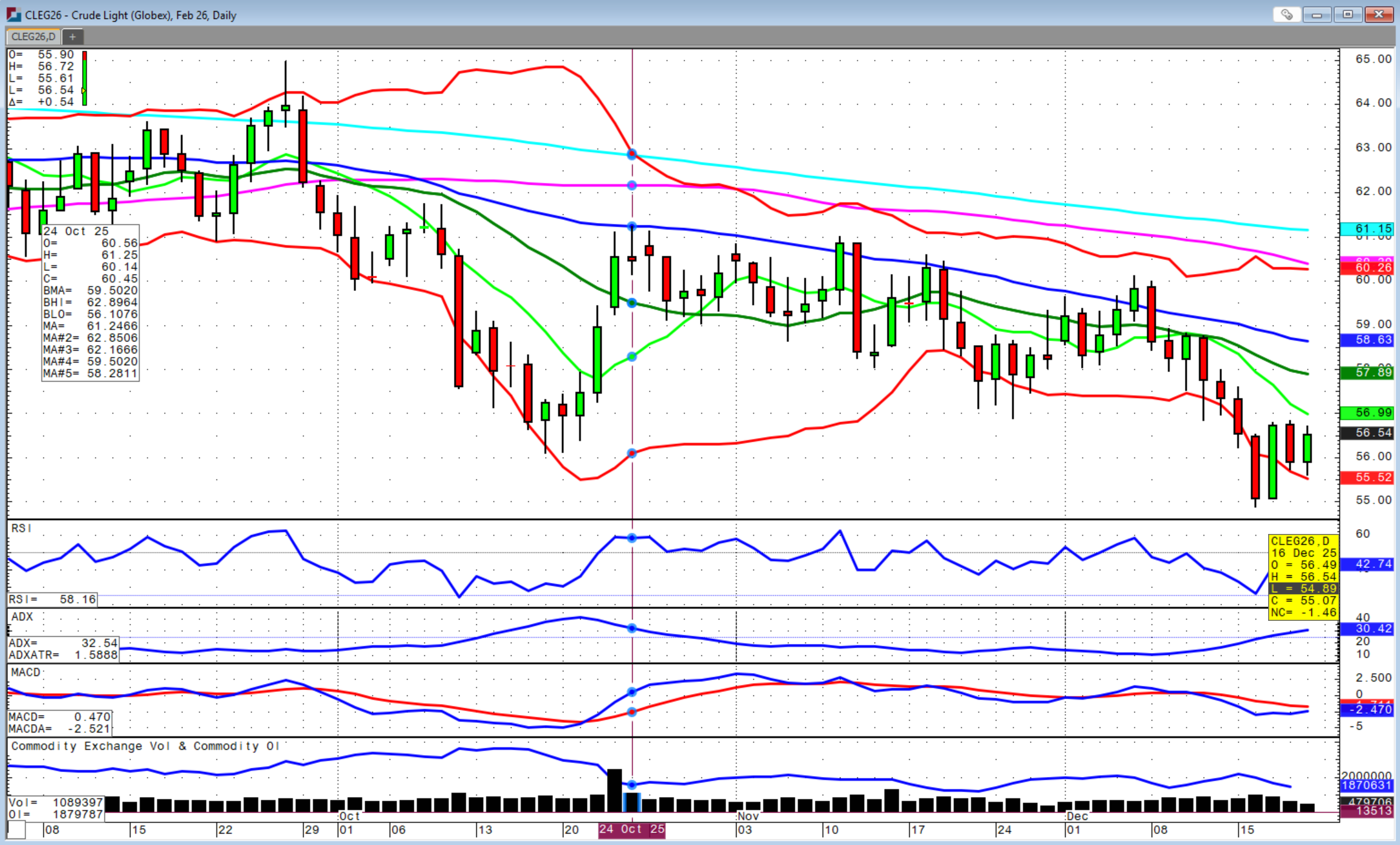
The intensifying standoff in the Caribbean off the shores of Venezuela seem to be on the verge of attack at any moment. Major oil companies have been asked by the Trump Administration if they are interested to re-enter the oilfields of Venezuela after Hugo Chavez nationalized foreign operations in 2007 and the resulting sanctions since then limited foreign investment. The downward pressure on oil prices that traded below $55 per barrel this week for the first time since April this year seem to be the result President Trump is seeking to lower inflation and score a win with consumers concerned about affordability. More production out of Venezuela could continue to lower this price with some analysts calling for oil prices below $50 per barrel.
While cheaper energy prices are welcome when refueling and getting your utility bill, it is also an extremely critical industry to pay those very consumers and keep cash flowing in those communities. Therefore, lower oil prices is a double-edged sword and between $50-60 per barrel is probably about as low as we want to be when looking at the overall picture of the economy.
The ongoing negotiations for peace between Russia and the Ukraine are creating more divisions between Europe and the US. We will have to see if there is any material progress by Christmas, but the bottom line is that Ukraine doesn’t want to give up territory and Russia will not negotiate without it, namely the Donbas. The attacks and counter attacks has added some slight risk premium in commodity markets, but nothing like we’ve saw previously. Ukraine’s wheat exports have slowed due to port attacks while Russia’s energy and fertilizer infrastructure has been hit by Ukrainian drones, surprisingly far inland.
Europe seems to be more concerned with Ukraine not ceasing more territory believing that Putin will never just stop there while the Trump Administration seems more on the side of ceasing territory to Russia for the sake of ending the war. I think the biggest hope for the US economy out of this is that Europe completely stops sourcing energy, particularly natural gas, from Russia and buys it from the US. This is already happening to a small degree, but there is significant potential for the US natural gas and in turn, the overall energy sector to capture the European market for natural gas.
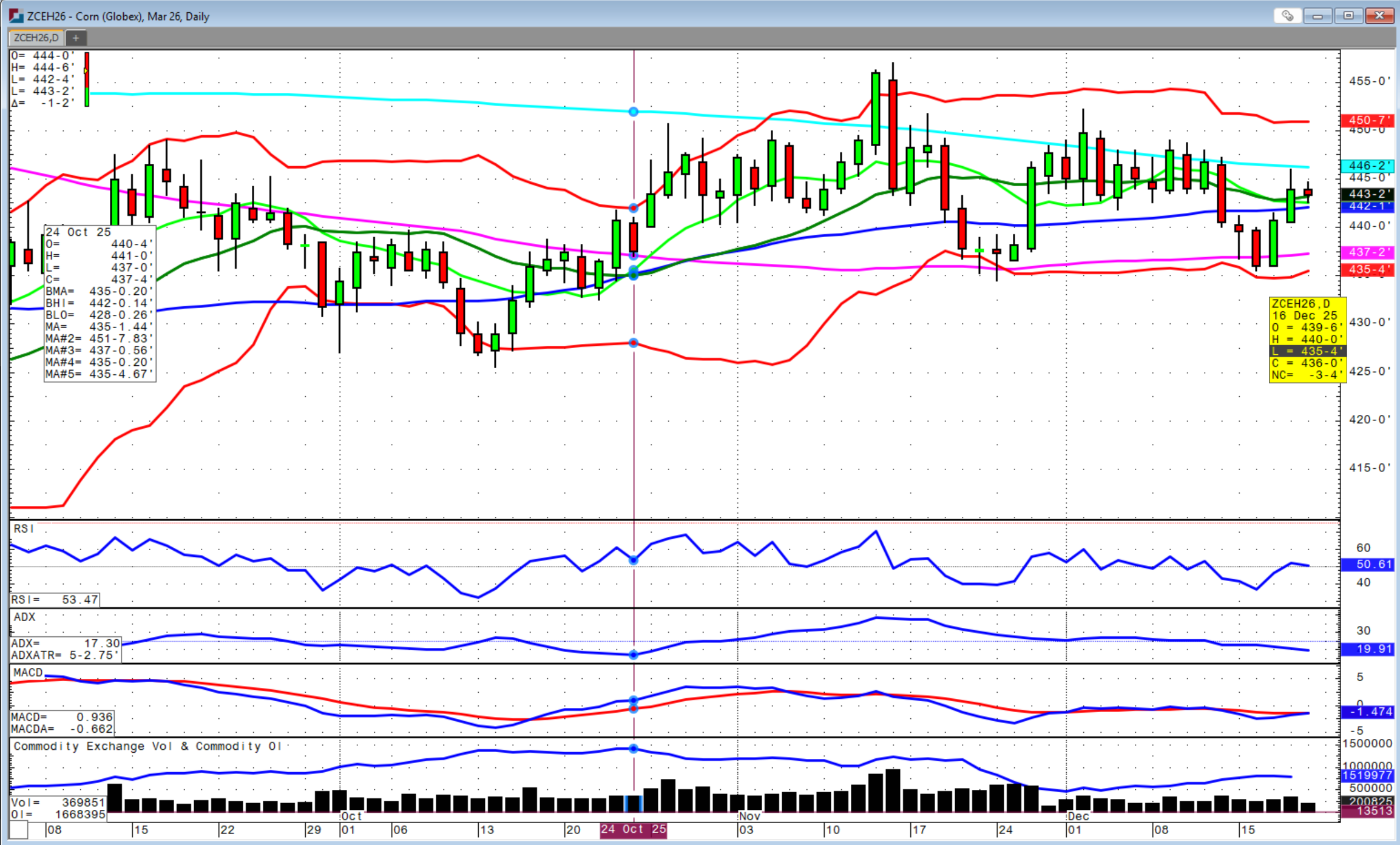
Weakness in the energy sector has also weighed on grains given their use in biofuels. Having said that, US corn exports continue to be phenomenal and it was said that China bought US corn this week out of the PNW. March corn futures rallied Wednesday and Thursday up to the 200-day moving average before closing lower on Friday with an inside chart day around the key moving averages. We will need some fresh, bullish news to get a push and close above the 200-day moving average at $4.46 on March corn.
The KC wheat market followed while Chicago wheat remained steady. Finally, the KC wheat futures traded back to a premium above Chicago wheat, as it should given KC wheat is higher quality. However, it has long been trading at a discount largely due to ample supplies and steady-to-weaker demand.
China did buy Argentine this week for the first time in decades which is now the cheapest FOB wheat in the world. Changing politics in Argentina, largely backed by Trump, have in fact resulted in more export-friendly policies that is increasing competition with US agriculture exports.
Dryness across the Southern Plains wheat areas has brought some weather premium into the market and I believe we could see more of a push higher next week with limited precipitation in the forecast. It is however only December and so there is not a great need for moisture right at this time, but next week’s warmer weather means wheat will not be in dormancy and continuing to grow.
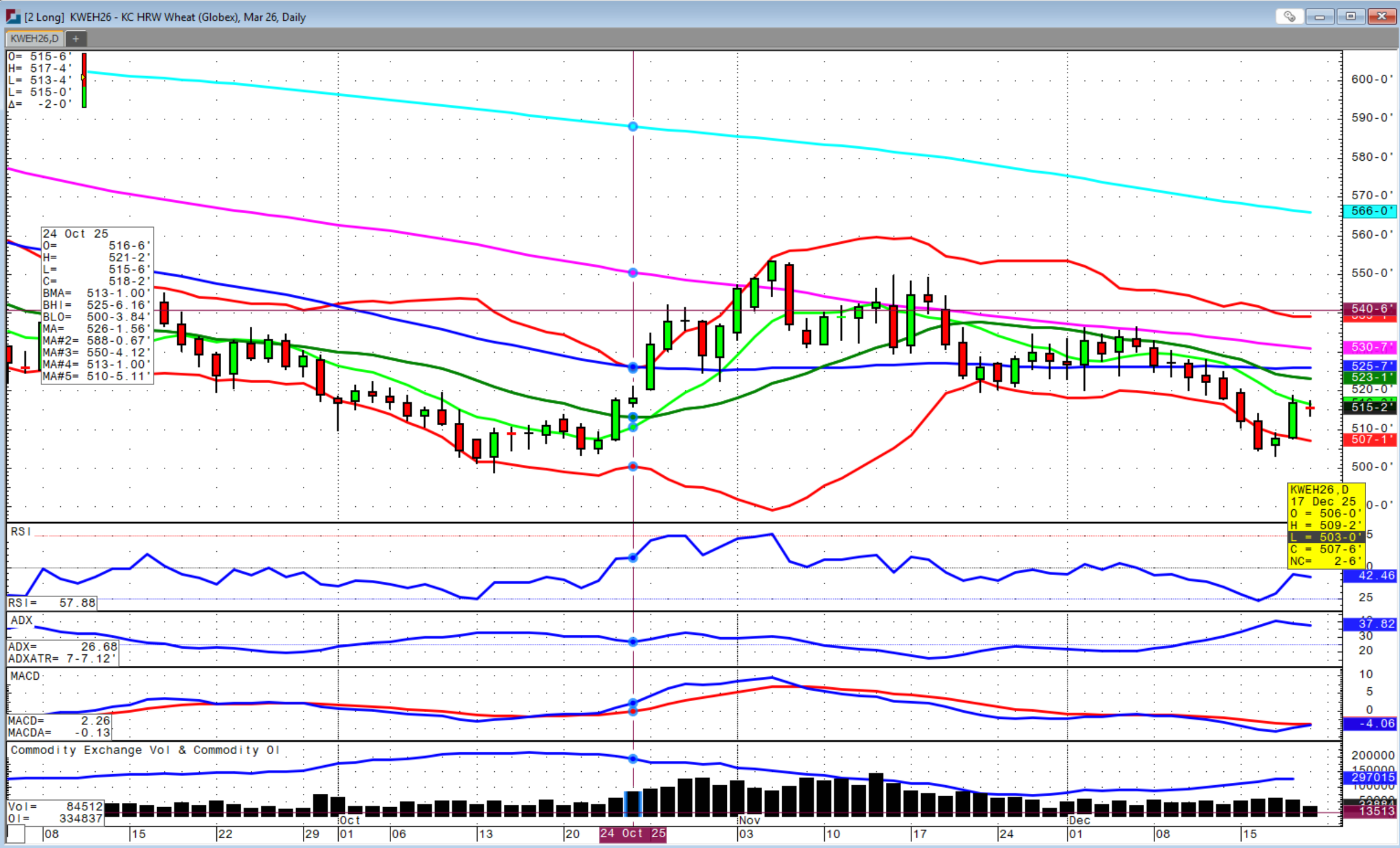
KC wheat contracts finished Friday with an inside chart day closing right near the 9-day moving average while Chicago wheat managed a slightly higher high versus Thursday’s inside chart day. There is an outside chance that March KC wheat could rally to the 100-day moving average at $5.44, but I would definitely be a seller there unless we have news that suggests otherwise. We have not been able to sustain a close above the 100-day moving average since April this year that started in mid-January. Should we stay dry until the new year with a dryer outlook and get risk premium from the Black Sea, we could see more upside and remember we often get a rally after the turn of the calendar.
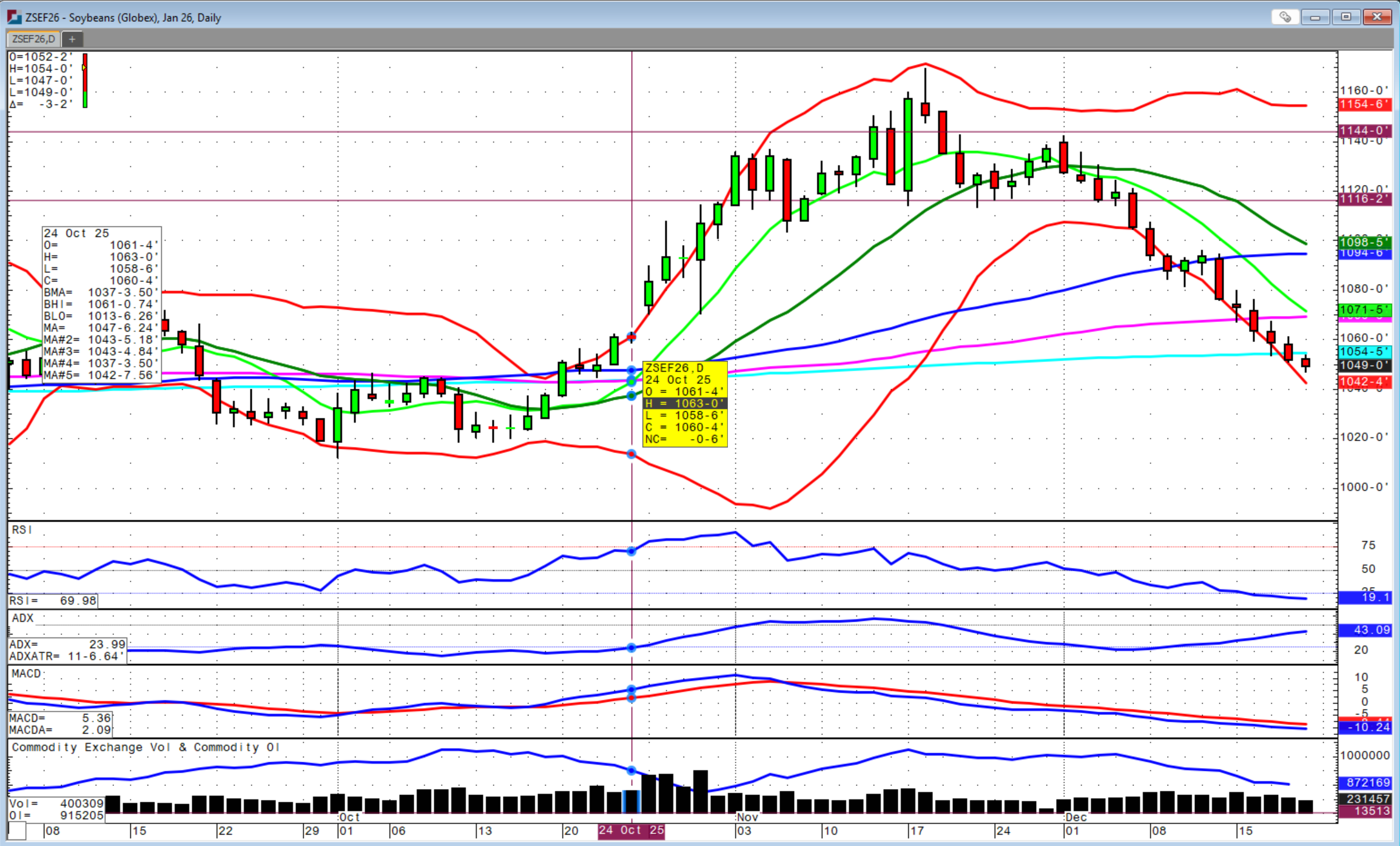
The soybean chart filled that lower gap this week, but was unable to rally after. Thursday closed below the 200-day moving average and Friday put in a lower low. China continues to make steady US bean purchases and is believed to have bought half or slightly more than the 12 million metric ton commitment. China’s reserve auctions to make room for imported beans was weaker at the end of the week than at the beginning of the week. I believe we are due for a bounce, but we need some news for the bulls to take over the chart. A push higher in corn and wheat could spillover into bargain buying in the soybean contract, but Brazil soybean planting is complete and the weather is non-threatening for the time being.
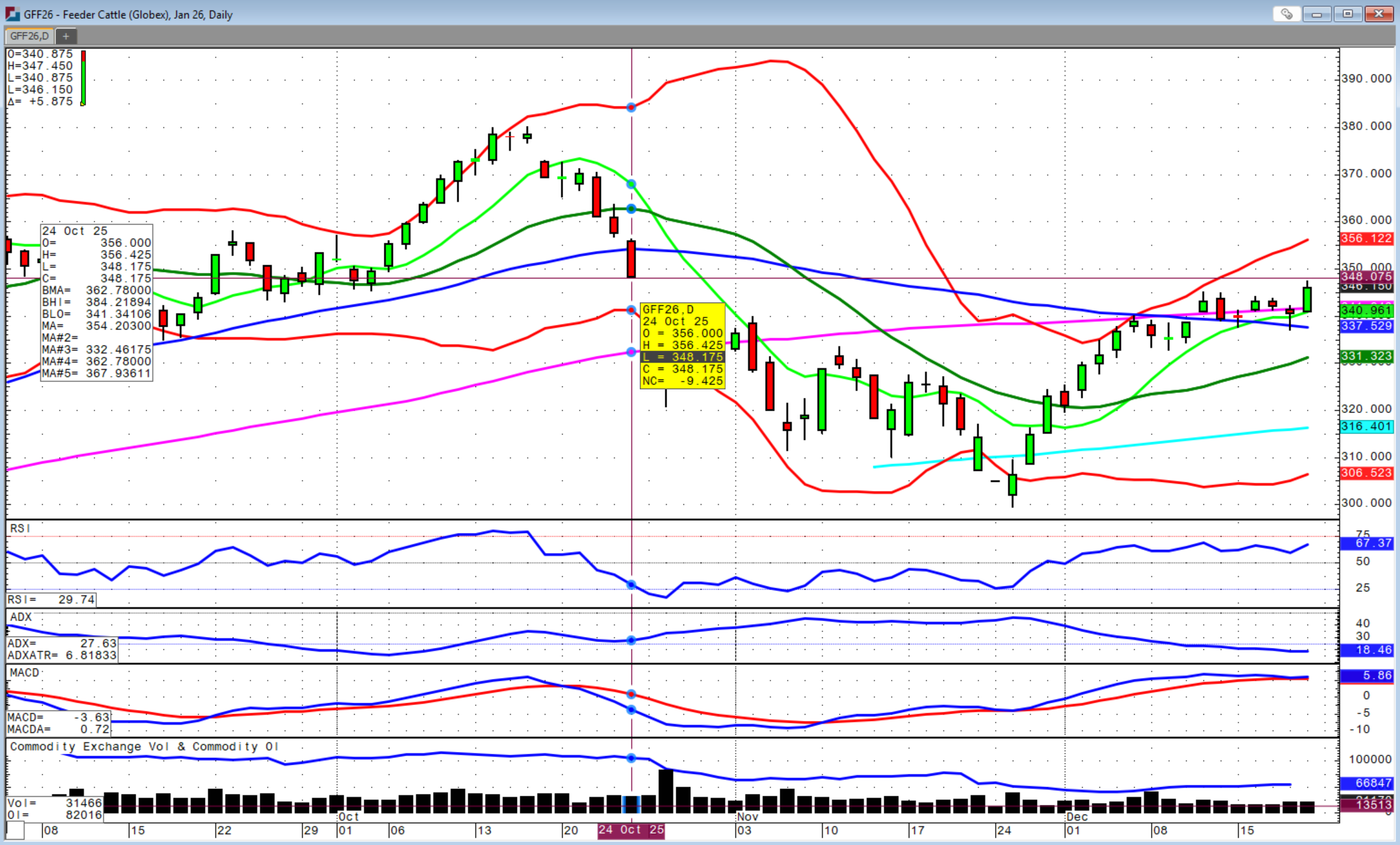
The rally in the cattle complex stalled since its recent high last week. We’ve basically been chopping sideways awaiting fresh news for another push higher to fill the large chart gap above. Cash fed cattle trade was light this week and topped out at $228, which was $2 lower than last week.
Friday was USDA’s monthly Cattle-on-Feed report and the news must have leaked before the report’s 2 PM release as the market began surging midday. Feeder futures were up $7.00 per cwt at one stage and closed near the highs while making highs above last week’s recent high. However, the gap above, at $348.175 on January feeders, is yet to be filled. With Friday’s post-close report coming in bullish, I believe we could fill that gap on Monday or early next week.
December 1st on-feed came in lower than expected at 97.9 percent of last year versus expectations of 98.4 percent. November placements were the real bullish number coming in at 88.8 percent of last year versus 92.0 percent expected. November marketings were lower than expected at 88.2 percent versus 88.8 percent expected, but only by a small margin. There is no other way to call this report than bullish given much lower placements.
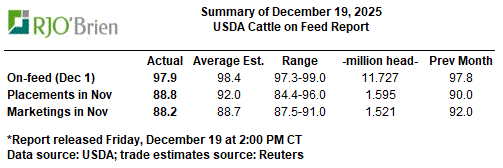
The cattle are simply not there, and no bit of import announcements will change that. There are expectations for a January announcement of the US-Mexico border reopening to live cattle imports, but that timeline remains unknown and the pace will likely be slow. However, the packing plants need cattle and we could soon see more packing plants reducing shifts or closing due to a lack of animals. Such news could be negative to cattle futures, but the bullish bias may outweigh such expected announcements.
Feeder contracts closed Friday above the recent highs from last week while live cattle futures mostly traded up to their 100-day moving averages. With next week’s holiday, we may not see much cash trade, which may stall this rally somewhat.
Cash markets for stockers have been on fire with many making new records. The CME Cash Feeder Index is now above $350 while front-month, January feeder futures are around $347. We could and should see the futures trade up to the cash. Some say that cash markets are stronger than usual given buyers are eager to regain ownership of cattle to lower income tax liabilities from record cattle sales this tax year. Either way, it is welcome news and great to see the fundamentals back in charge!
Sidwell Strategies is the one-stop shop to protect cattle with futures, puts, LRP or a combination of all, which is probably the best strategy overall. If you’re ready to trade commodity markets, give me a call at (580) 232-2272 or stop by my office to get your account set up and discuss risk management and marketing solutions to pursue your objectives. Self-trading accounts are also available. It is never too late to start and there is no operation too small to get a risk management and marketing plan in place.
Wishing everyone a successful trading week! Let us know if you'd like to join our daily market price and commentary text messages to stay informed!
Brady Sidwell is a Series 3 Licensed Commodity Futures Broker and Principal of Sidwell Strategies. He can be reached at (580) 232-2272 or at brady@sidwellstrategies.com. Futures and Options trading involves the risk of loss and may not be suitable for all investors. Review full disclaimer at https://www.sidwellstrategies.com/fccp-disclaimer-21951.





/Alphabet%20(Google)%20Image%20by%20Piotr%20Swat%20via%20Shutterstock.jpg)