

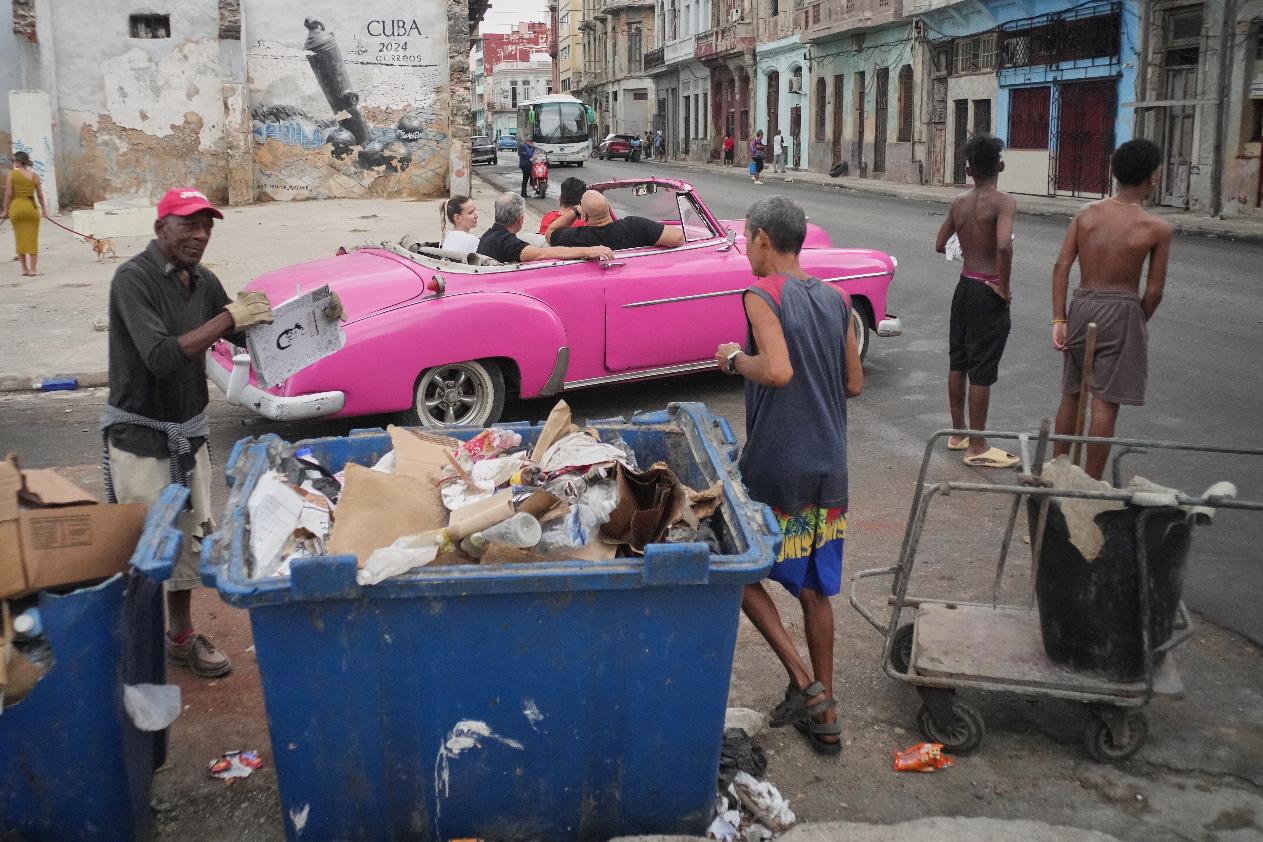
HAVANA (AP) — A blackout hit Havana and the rest of the western half of Cuba on Wednesday, leaving millions of people without power on an island struggling with chronic outages blamed on a crumbling electric grid.
Lázaro Guerra, general director of the Ministry of Energy and Mines, said the massive outage was caused by a failure on a transmission line that connects two major plants.
The power grid was operational once again by Wednesday afternoon, but the government warned that the restoration of electricity would not be immediate and that generation deficits persisted.
The nearly 12-hour blackout snarled activities in the capital and beyond.
In Havana, dozens of police officers tried to direct traffic while many students who were already in school were sent back home. Small businesses that have generators resumed their sales, especially of food. Some areas had intermittent internet service, so many residents were left wondering what had happened.
“There’s no connection. No one knows why the power is out. ... They’re not saying anything; it’s all silence,” grumbled Raúl Calderón, an 82-year-old retiree, as he waited to hear official reports on the radio.
The outage followed two days of peak-hour power shortages across the island.
A total blackout hit Cuba in September, with officials blaming aging infrastructure and fuel shortages at power plants. The ongoing outages also affect water service and impact the island’s fragile business sector.
“Things are bad. The power plants are breaking down a lot. I have two children, and food is hard to come by,” said Liubel Quintana, a 47-year-old cafe owner. “It’s very tough everywhere you look.”
Cuba is going through a severe economic crisis that deepened during the coronavirus pandemic, which paralyzed the key tourism sector, and was exacerbated by an increase in U.S. sanctions and a failed internal financial reform to unify the currency.
Meanwhile, thermal power plants have been operating for over 30 years and receive little maintenance, which is expensive for Cuban budgets. The lack of maintenance, coupled with fuel shortages due to either a lack of funds or the fact that ships are targeted by U.S. sanctions, threatens the country’s power generation. The government has implemented a solar park program with Chinese and Vietnamese support, but it is still in its early stages.
The eastern half of Cuba also has been struggling with power outages after Hurricane Melissa slammed into that region in late October. While no fatalities were reported on the island, thousands of Cubans in the eastern region remained without power, water or proper shelter for nearly a month after the storm hit.
___
Follow AP’s coverage of Latin America and the Caribbean at https://apnews.com/hub/latin-america


/A%20concept%20image%20of%20space_%20Image%20by%20Canities%20via%20Shutterstock_.jpg)
/A%20concept%20image%20of%20a%20flying%20car_%20Image%20by%20Phonlamai%20Photo%20via%20Shutterstock_.jpg)
/Oracle%20Corp_%20office%20logo-by%20Mesut%20Dogan%20via%20iStock.jpg)
/Oracle%20Corp_%20logo%20on%20phone%20and%20stock%20data-by%20Rokas%20Tenys%20via%20Shutterstock.jpg)