




Happy Mother’s Day market watchers!
To all those mothers out there who keep our families on track and on time for life, we say thank you for all that you do, which we never say out loud enough! It has been a week with high hopes of rainfall that began to see some prayers answered on Sunday.
While Colorado and Kansas received much needed precipitation this week that was a combination of rain as well as snow, we still believe it is too little too late to make any meaningful difference for the winter wheat crops there given how far ahead of schedule the crop is this year. Some areas of Colorado and Kansas also got down to below freezing temperatures this week, which will be impactful.
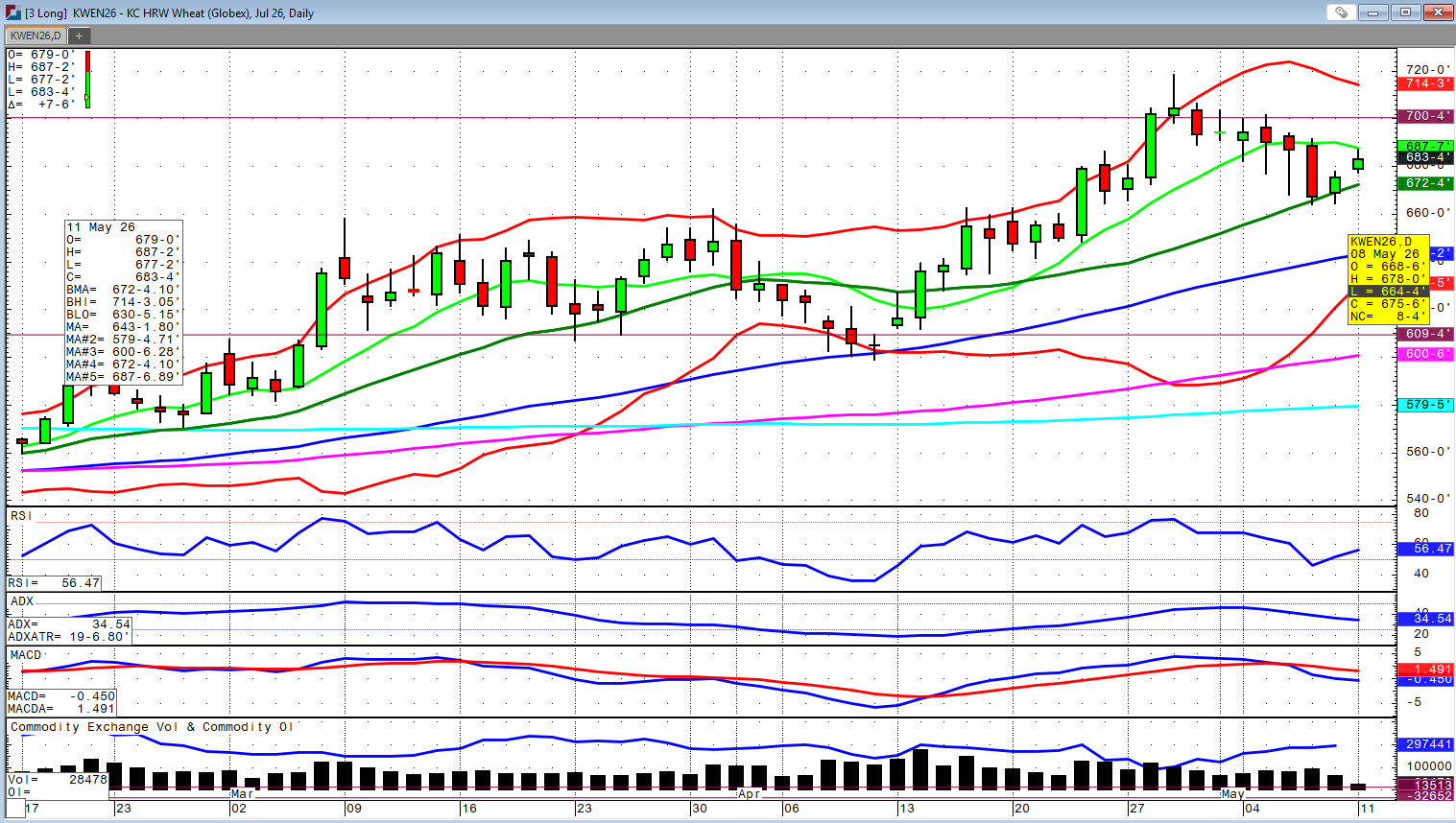
The lack of rainfall and return of hotter temperatures continue to lower yield prospects for hard red winter wheat traded on the Kansas City wheat futures. Such conditions rallied July KC wheat futures by $1.20 per bushel to its high at $7.18 ½ on April 29th since April 10th when the move started.
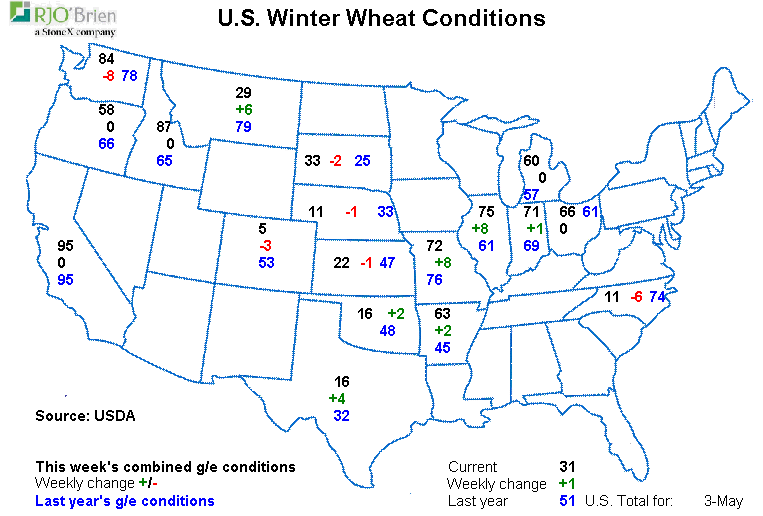
While winter wheat conditions stabilized and increased by one percent to 31 percent Good-to-Excellent versus last week, Kansas conditions were lower again and Poor-to-Very Poor actually increased 2 percent. Oklahoma made headlines this week with field tour inspections pegging the state’s crop at a 23.11 bushel per acre average with total production expected to be 47.799 million bushels versus the 10-year average of 94.499 million bushels! That is half of the average crop and compared to last year’s nearly 107 million bushels.
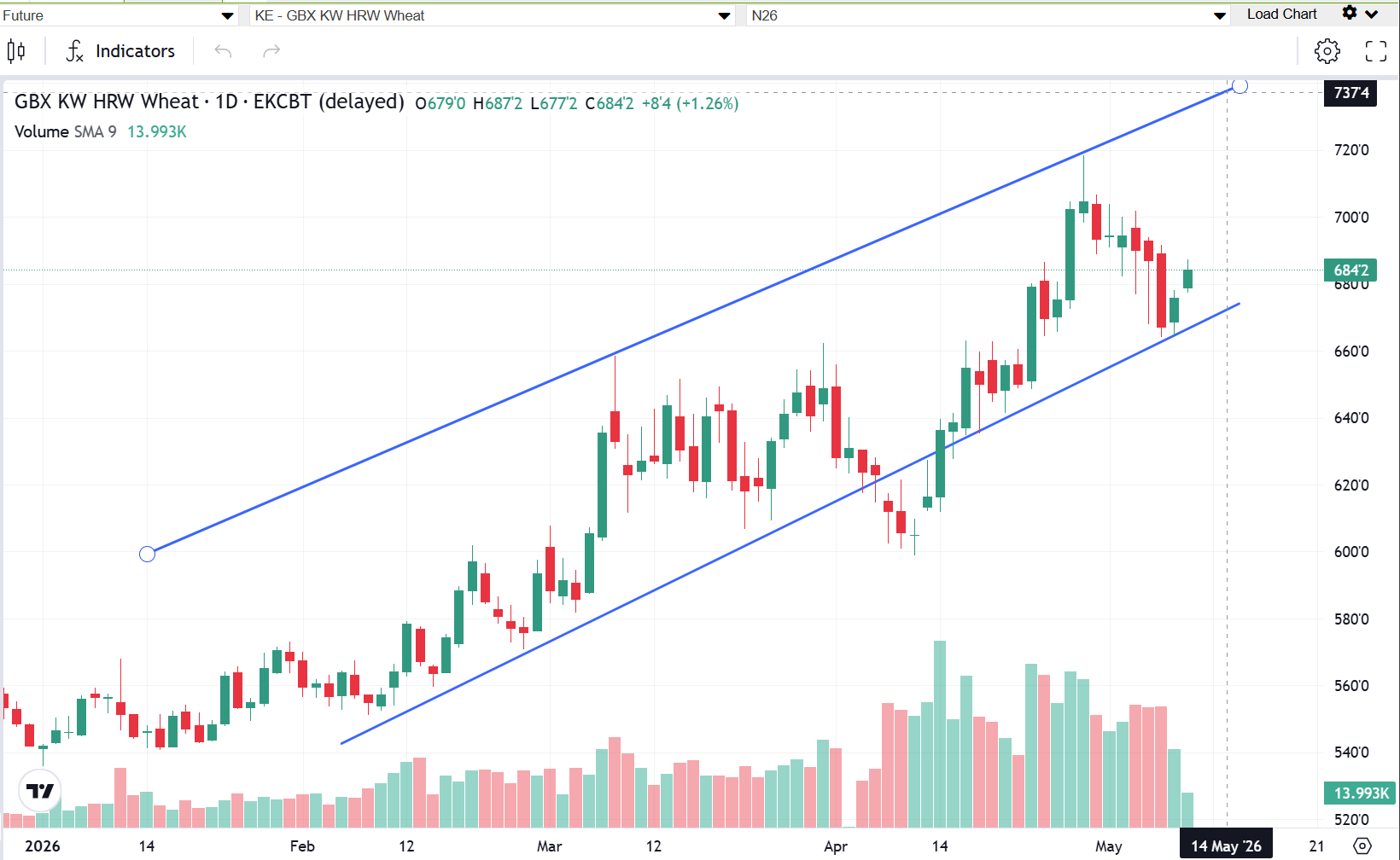
The Kansas wheat crop tour will be held this next week and is sure to create some headlines and market volatility. Despite the continued bleak outlook, recent rains and the selloff in crude oil on deal hopes with Iran had an outsized impact on fund flows and futures contracts that bottomed on Thursday at $6.64, near the 20-day moving average. Friday’s action saw buying return with the low holding above Thursday’s low and recovering half of the prior session losses of nearly 20 cents. We are now in a bull channel that could see a retest of the top trendline near $7.40.
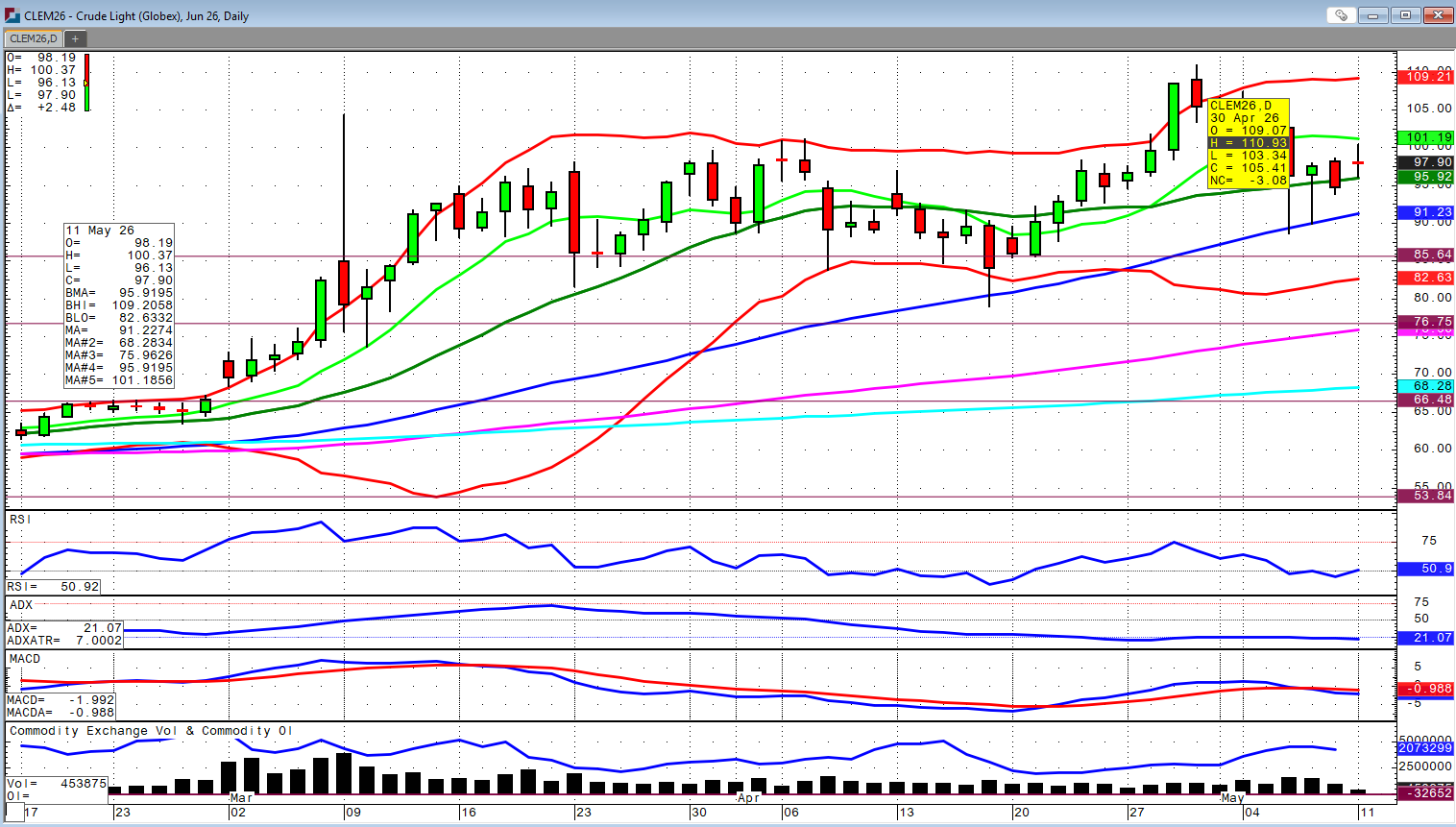
Rhetoric explaining the selloff focused on the expense of US wheat versus abundant old crop supplies domestically and globally, but I believe it was more macro-driven with plummeting crude oil prices after President Trump said that Iran had responded to the proposed peace deal. India was also said to be starting wheat exports for the first time in four years.
We continued to hear that a deal was near through Friday, but there is clearly not agreement with Iran attacking US military vessels on Friday although President Trump said the ceasefire still holds. Israel also attacked Lebanon again this week. Then, everything fell apart on Sunday when President Trump said that Iran's ask in the peace deal were “completely unacceptable”.
Ceasefire deals are always fragile in the fog of war, but this one is particularly so with rising energy and fertilizer prices creating critical poll issues for the upcoming mid-term elections. Regardless, I don’t see how we can expect to negotiate with the terrorist regime that is the Islamic Revolutionary Guard Corps (IRGC). Perhaps easier said than done, but the Administration should have finished the job of regime change as we are now dealing with an injured, but emboldened and possibly more radical IRGC that is somehow still surviving with revengeful intentions. What is to say that even if a “deal” is struck that they don’t start attacking US and Allied ships as the election nears or right before to spike oil and fertilizer prices and keep them elevated for an extended period that could have sizeable impacts on the US and global economies.
Inflationary concerns are already returning with Central Banks around the world balancing upward price pressures with rising unemployment in select areas that require opposite monetary policy directions to address. It is the widening “K” shaped economy that you’re beginning to hear more about. Michael Burry, known for predicting the devastating US housing market crash leading up to the Great Recession in 2008, said this week that it is “feeling like the last months of the 1999-2000 bubble,” referring to the explosive AI and related technology stocks. The S&P 500 and NASDAQ surged to new, all-time highs again on Friday while the Dow Jones closed just under 50,000 points.
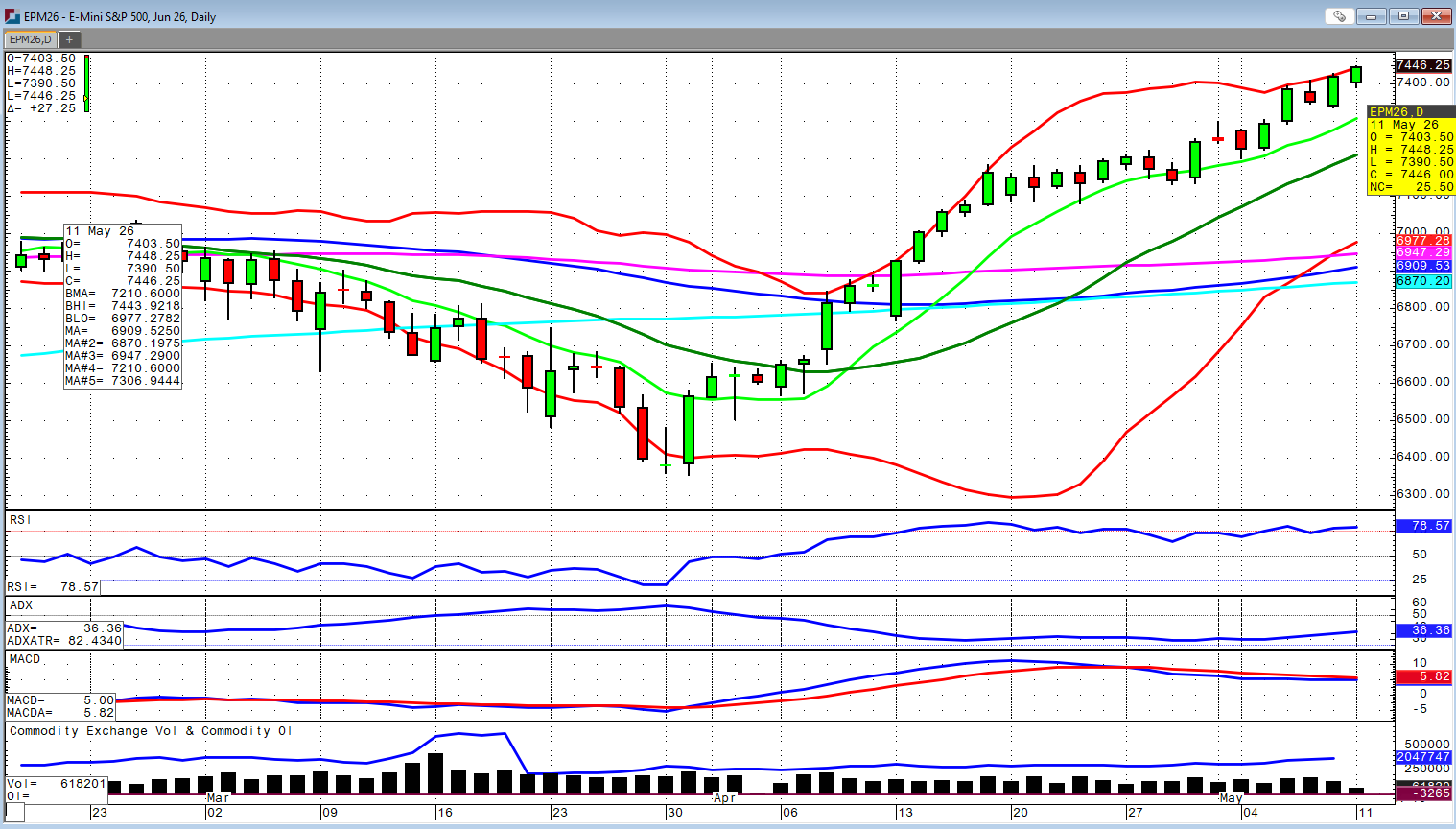
The US jobs report for April was released Friday morning with payrolls increasing more than expected at 115,000 versus the forecasted 55,000 jobs. Unemployment held at 4.3 percent, but the average hourly earnings came in lower than expected at 0.2 percent versus 0.3 percent forecast. Annually, this was a 3.6 percent increase versus 3.8 percent expected.
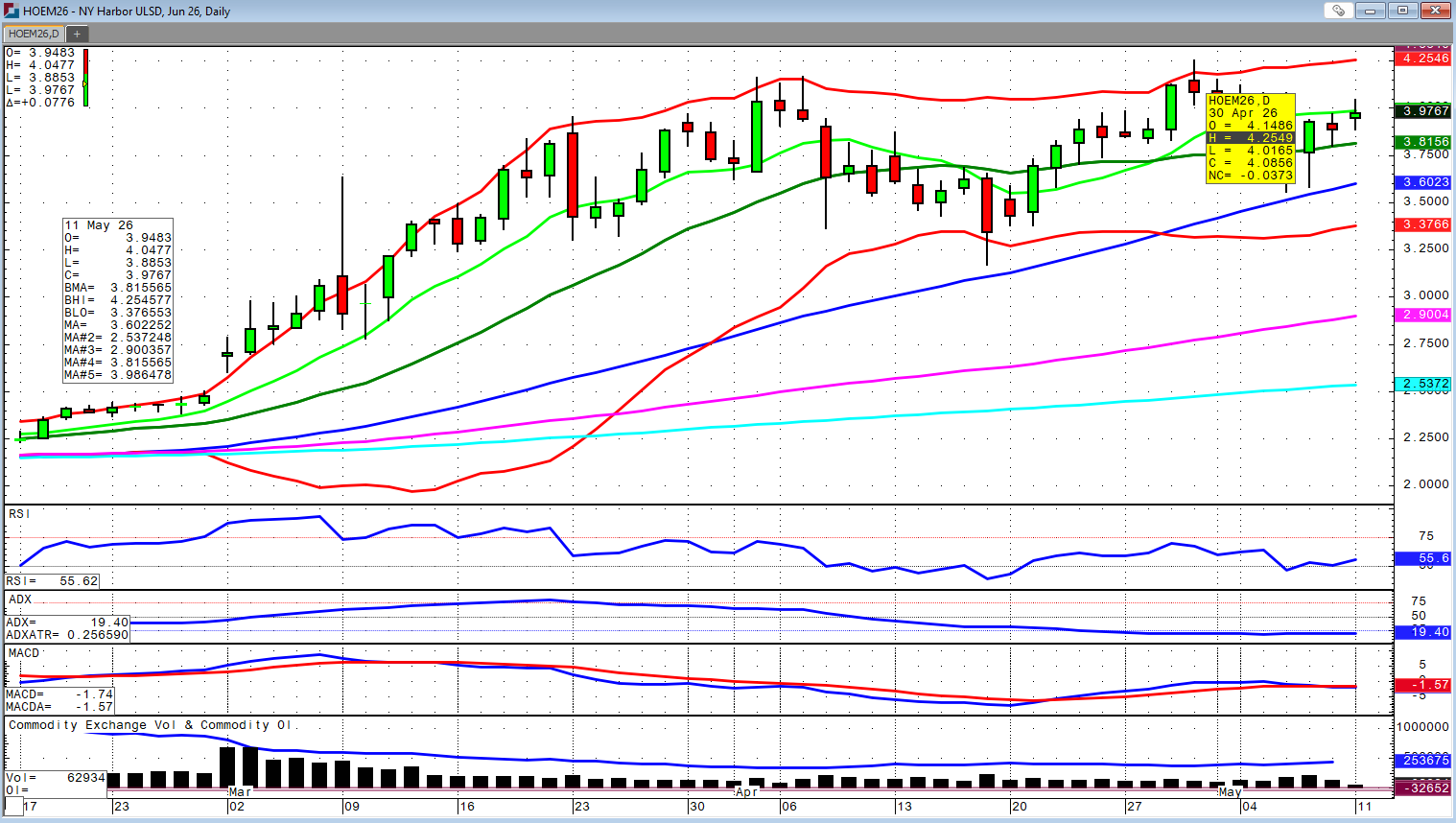
While inflation is said to be slowly coming down, it sure doesn’t feel that way across the economy. Everything sure seems more expensive each week, not to mention the price of fuel. Should these higher fuel prices pass soon, the bigger negative impact to the economy could be avoided. Here is the diesel futures chart that look set to retest recent highs.
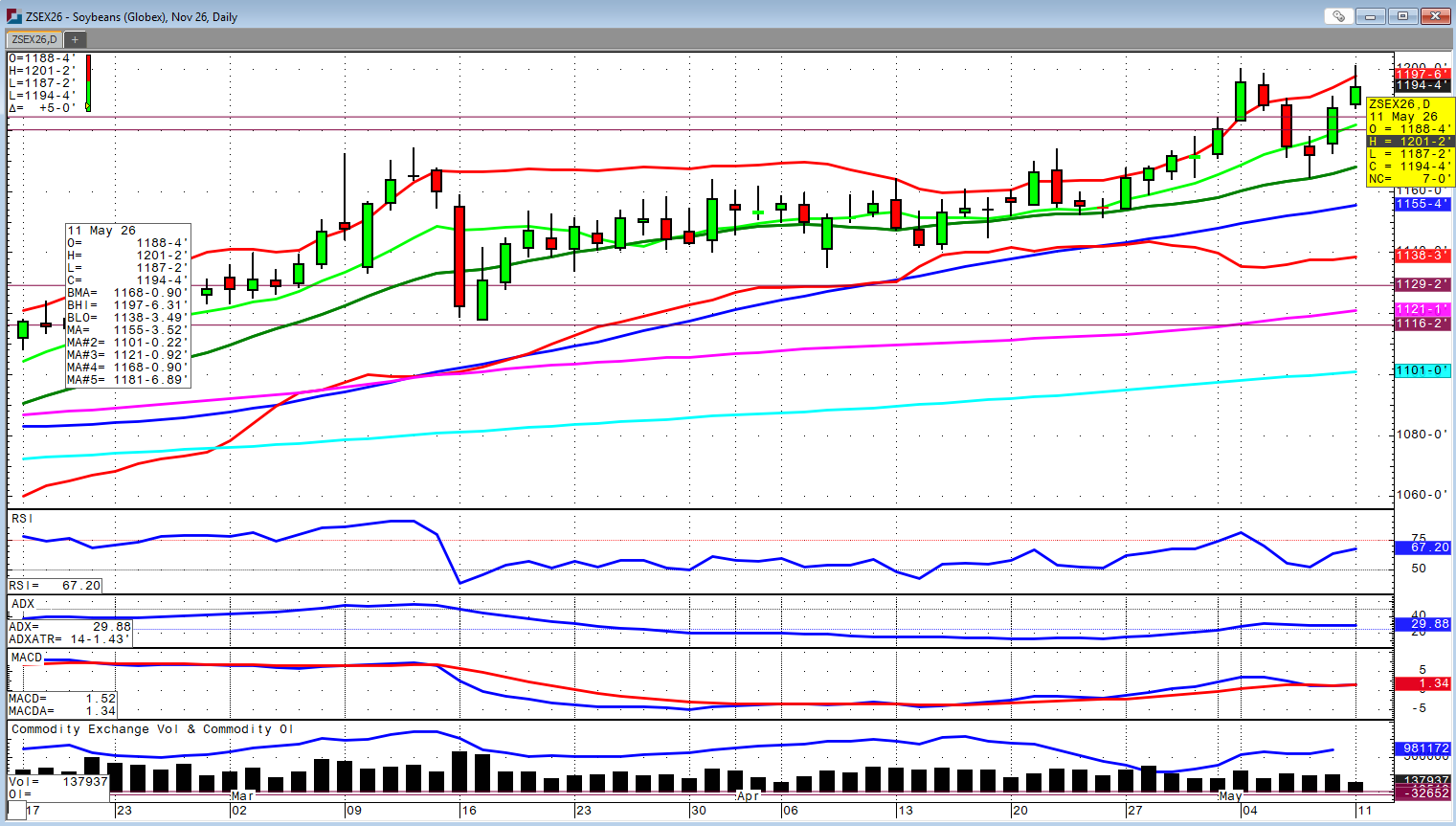
However, I’m losing hope by the day. President Trump heads to China next week to meet President Xi on Thursday. I could see some “deals” announced by the US that remain unconfirmed by China as we’ve seen in recent interactions. There will likely by more announcements on China purchases of US soybeans, but how specific and tangible will they actually be remains a question. Soybean futures also rebounded on Friday, closing back above $12.00 and the 9-day moving average. Overnight on Sunday-Monday's trade, November soybean futures made new recent highs at $12.01 ¼.
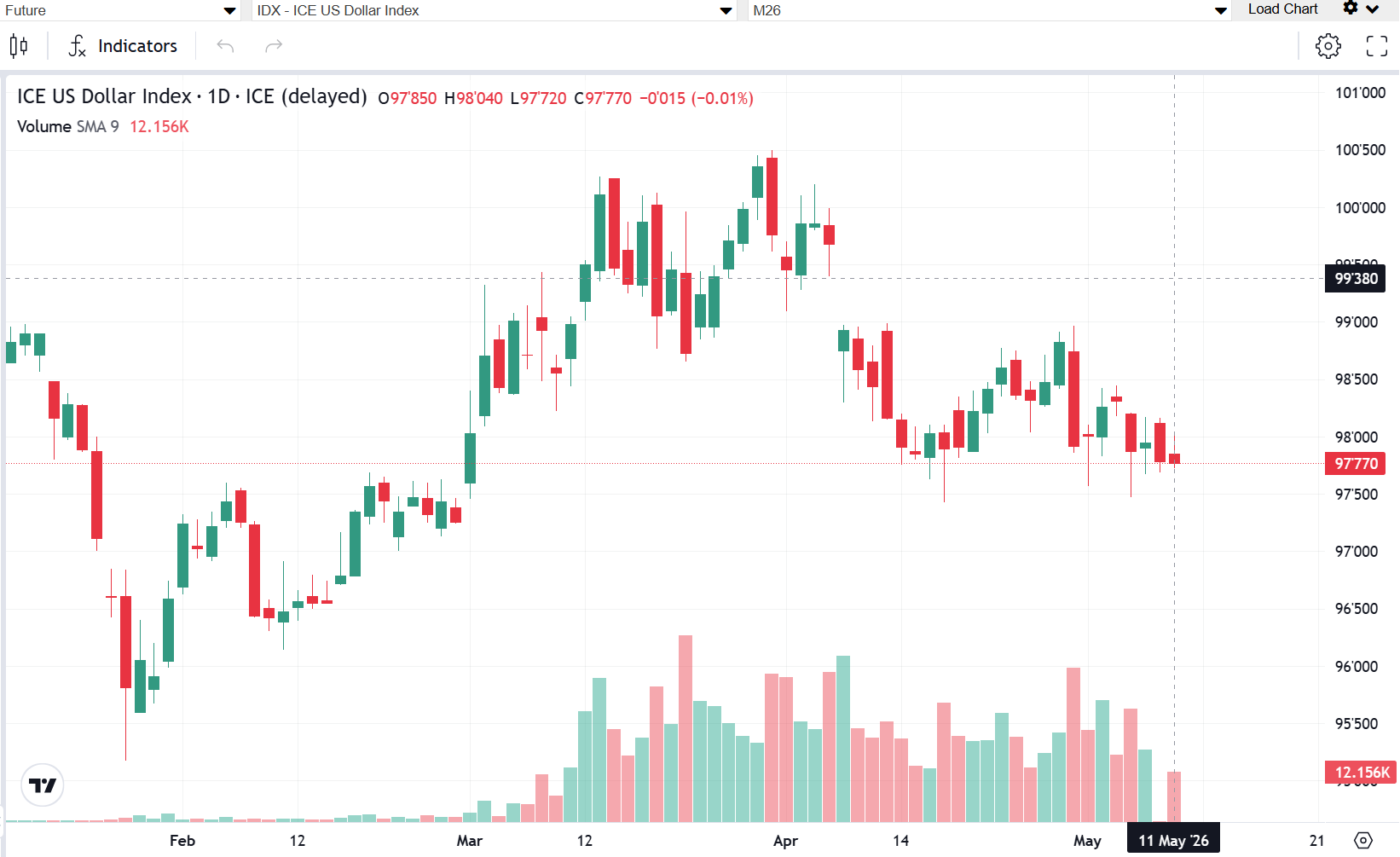
The US dollar has chopped sideways to lower this week, but remains on the high side and could begin to move higher if the prospects of higher inflation grow. There is a large chart gap above on the US dollar index at 99.40 will likely be the next upside target. Note that commodities are used as a hedge against inflation by managed money and so inflationary pressures could continue to support fund flows to commodities generally and agriculture has not kept pace with others and so relatively cheaper to buy even here.
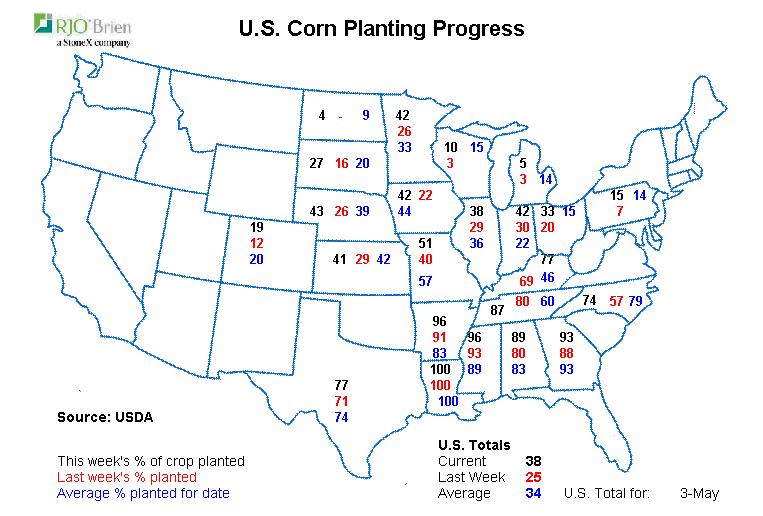
As of this last Sunday, the USDA said that US corn planting was 38 percent complete, right in line with last year and 4 percent ahead of average. Soybean planting was 33 percent complete, well ahead of last year and the average. Spring wheat planting was 32 percent complete, 10 percent behind last year and 3 percent behind the average. Cotton planting was 21 percent complete ahead of both last year and the average. Sorghum was 22 percent planted that was behind last year, but right in line with the average.
The next USDA monthly Crop Production and World Supply and Demand Estimate reports will be released next Tuesday, May 12th at 11 AM CDT.
In South America, Brazil’s soybean harvest is effectively complete, and its 1st crop corn harvest is also nearing completion despite the weather induced slowdown in Mato Grosso do Sul and Goias. In Argentina, soybean harvest has accelerated very strongly this week, nearly catching up with the 3-year average while corn harvest continues ahead of average.
The cattle market had a very choppy weak with lower closes. There was very limited fed cattle cash trade this week to stimulate the market after last week’s surge to $256 per cwt. Packers are expectedly trying to hold out as long as they can to avoid paying these high prices, but if the market needs the beef, they will have to pay up. Negotiated fed cattle exchanged cash trade this week did reach $265, but we didn’t see that on the open market. If we see that level paid next week in the broader market, it could reopen this rally to new levels.
However, the cattle market did get spooked this week on news that President Trump talked with Brazil’s President Lula da Silva to begin discussions about trade and tariffs. The tariffs on beef will indeed be included, especially considering that high beef prices in the US factor into the “affordability” headlines that could plague Trump-backed GOP candidates. The Justice Department’s actions to investigate the four large US beef packers over price collusion was elevated this week, but I see this more as political theater rather than achieving real results. We will see what actually comes of it.
The same goes for the fertilizer industry that reported surging returns from the recent escalation in product prices from the restrictions to Hormuz shipments.
May feeders held above Thursday’s low by one-tick while deferred months made lows below the May 4th lows, but recovered well off the lows of the session. Live cattle futures held above Thursday’s lows, closing right below the 20-day moving averages. We need some bullish cash trade news to get this market out of this area quickly next week or we could see some further deterioration, especially in the feeder cattle contract. Could President Trump’s trip to China result in any beef export deals? Possibly, but it seems it would be vague at best.
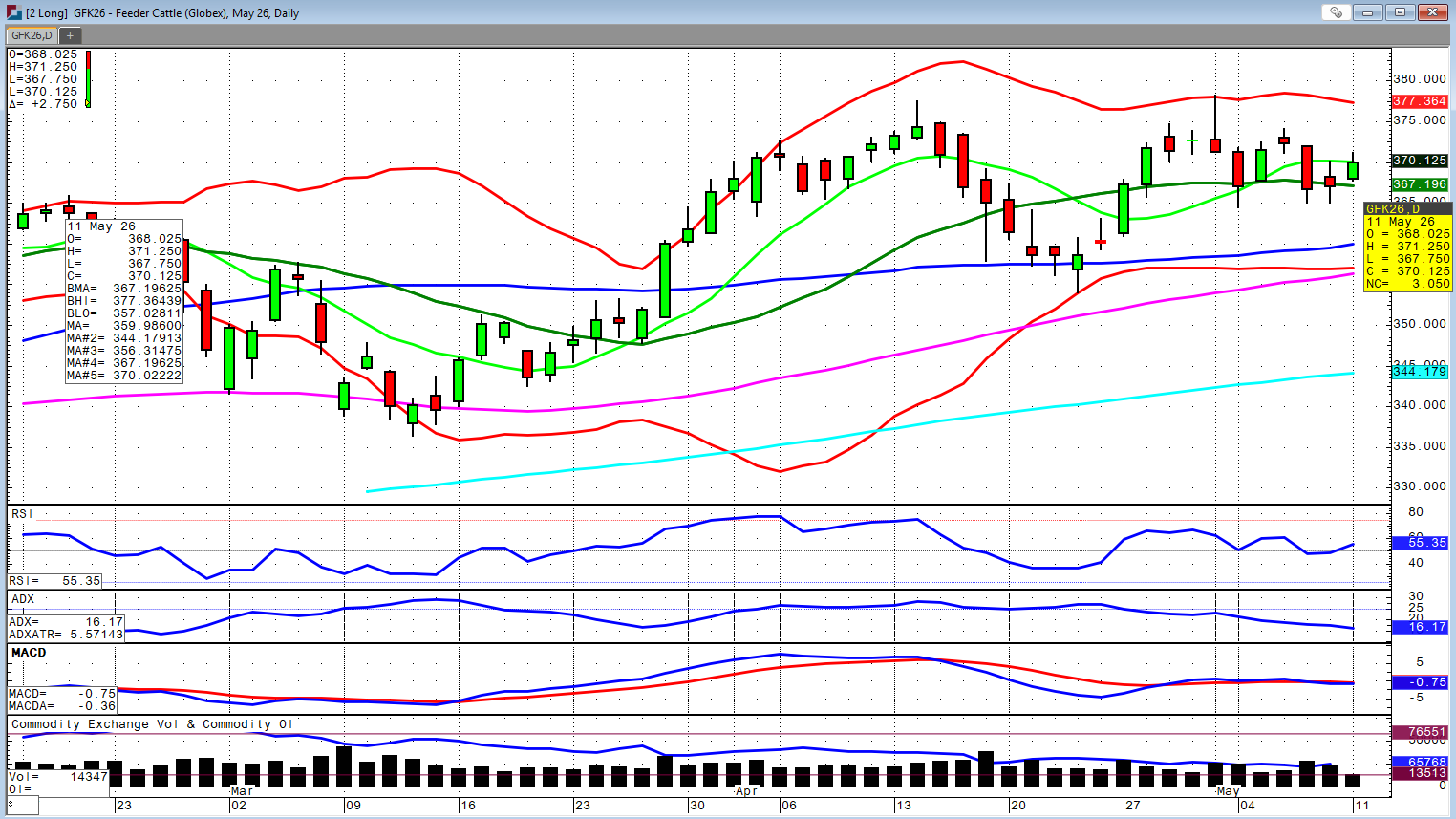
May feeders exploded higher mid-session on Monday, trading above the 9-day moving average and looks set to see follow-through if we can get a close above that key moving average. However, tread very carefully here as President Trump could eliminate higher tariffs on Brazil beef imports at any time as was expected on Monday and could be a precursor of what's coming, especially after the recent call with Brazil's President and continued pressure on higher food costs in the US, with beef at elevated levels.
I do have growing concerns that these higher fuel prices will begin to eat into disposable incomes to the point where consumers will begin making larger shifts in protein purchases from beef to pork and poultry. That is not a story that we want to dominate the headlines.
Packers continue reducing the number of cattle processed due to higher prices driven by fewer cattle. To keep these prices heading higher, we need consumer demand to remain intact and the pricing power to be in the hands of the feeders and not the packers.
Headlines of a successful de-escalation in Iran could go a long way in maintaining the status quo of this needed balance versus a weakening consumer trading away from beef purchases.
Sidwell Strategies is the one-stop shop to protect cattle with futures, puts, LRP or a combination of all, which is probably the best strategy overall. If you’re ready to trade commodity markets, give me a call at (580) 232-2272 or stop by my office to get your account set up and discuss risk management and marketing solutions to pursue your objectives. Self-trading accounts are also available. It is never too late to start and there is no operation too small to get a risk management and marketing plan in place.
Wishing everyone a successful trading week! Let us know if you'd like to join our daily market price and commentary text messages to stay informed!
Brady Sidwell is a Series 3 Licensed Commodity Futures Broker and Principal of Sidwell Strategies. He can be reached at (580) 232-2272 or at brady@sidwellstrategies.com. Futures and Options trading involves the risk of loss and may not be suitable for all investors. Review full disclaimer at https://www.sidwellstrategies.com/fccp-disclaimer-21951.

/Advanced%20Micro%20Devices%20Inc_%20logo%20on%20phone%20and%20website-by%20T_Schneider%20via%20Shutterstock.jpg)
/A%20concept%20image%20of%20a%20flying%20car_%20Image%20by%20Phonlamai%20Photo%20via%20Shutterstock_.jpg)
/Palantir%20by%20Hiroshi-Mori-Stock%20via%20Shutterstock.jpg)
/AI%20(artificial%20intelligence)/AI%20engineer%20working%20on%20laptop%20by%20ART%20STOCK%20CREATIVE%20via%20Shutterstock.jpg)
/Dell%20Technologies%20by%20Poetra_RH%20via%20Shutterstock.jpg)