



This is sponsored content. Barchart is not endorsing the websites or products set forth below.
Every great technology shift has a hidden winner.
When the smartphone era arrived, most investors chased Blackberry and Apple. The smart money chased ARM and Qualcomm, the chip designers inside every device.
When AI exploded in 2023, most investors chased OpenAI and Anthropic. The smart money chased NVIDIA, the company selling the picks and shovels.
The pattern is always the same. The visible players get the headlines. The hidden infrastructure layer gets the returns.
So here's the question every serious investor should be asking right now:
In the AI era, what is the next layer of infrastructure that almost nobody is paying attention to?
Those who know already have the answer: data. Specifically, the kind of data that teaches an AI model not just what humans say, but how humans actually think, work, and move: behavioral data.
OpenAI is built on scraped web text. That well is mostly tapped. Anyone with enough GPUs can now train another chatbot from the same data. What was once a moat is now a commodity.
By collecting driving footage from millions of vehicles, Tesla built the foundation for something the world will pay enormous sums for: autonomous cars. That data is genuinely valuable, because it produces something genuinely valuable. And now Tesla is trying to do it again with Optimus.
Optimus is not a single-industry play the way self-driving is. A general-purpose humanoid robot, if it works, replaces millions of human tasks across every sector that runs on physical or cognitive labor. The economic prize is orders of magnitude larger than autonomous driving.
But Tesla has a problem. The driving data that powers Autopilot teaches Optimus almost nothing about how humans actually think, focus, organize information, and work through a real day. To build a robot that can replace human knowledge work, you need observed data on how humans do knowledge work. Not in a lab. Not from a staged warehouse demo. Across regular workdays. Observed over the years.
That data is the most valuable training set on Earth right now. Almost no one has it. Almost, but there is one company quietly sitting on one of the biggest data sets of this kind… And you can invest in it for $0.72 per share before it lists on NASDAQ.
The Quiet Winner Most Investors Missed
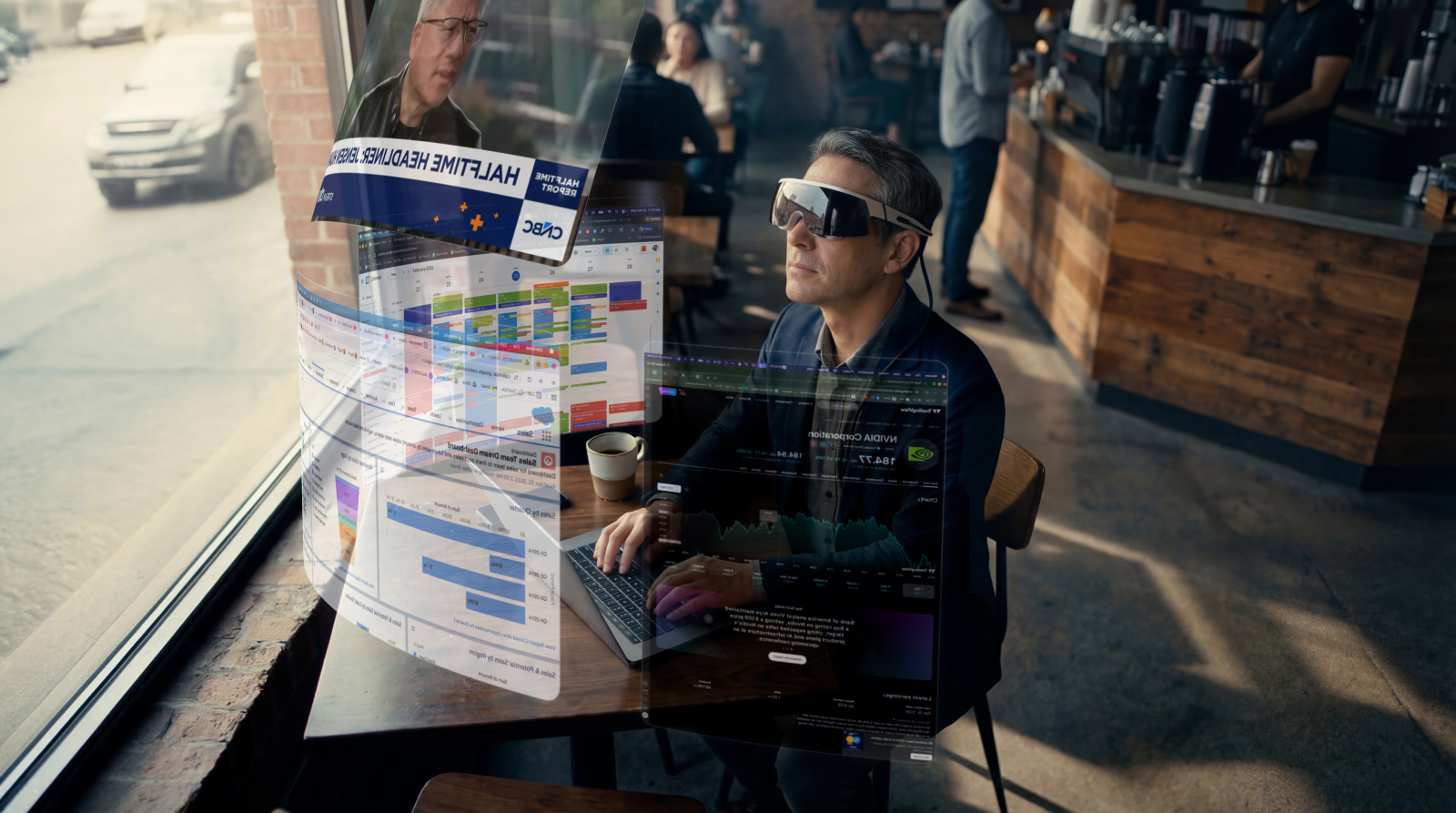
The company is called Immersed. They have spent the last six years building the most-used AR/VR work software on the planet. While Apple was burning roughly $10 billion on Vision Pro and Meta was shutting down its enterprise AR/VR division, Immersed quietly accumulated something far more valuable than market share.
They accumulated time inside headsets.
The numbers are difficult to comprehend until you sit with them:
- 1.5M+ users working inside Immersed's virtual workspace
- 2,000 years of total logged time inside the platform
- Up to 60 hours per week of average use per active professional
- #1 productivity app on the Meta Quest store
- $29M+ raised to date
The average TikTok user spends about 95 minutes per day on the app. The average Immersed user spends roughly eight hours. That is not a consumer app. That is a computer replacement.
And every minute of that usage is generating exactly the kind of behavioral data that the next generation of AI systems needs to function.
Why the Data Matters More Than the Hardware
Here is the part most reporting on this category misses.
Building an AR/VR headset is hard, but it is not the moat. Companies like Apple, Meta, Samsung, and ByteDance can all build headsets. But they’ve struggled to find a use case anyone cares about.
The moat is what happens when 1.5 million people wear the headset for eight hours a day, every day, for years. How attention drifts. How professionals organize information across multiple displays. How meetings actually flow. How focus collapses and recovers. How humans interact with AI agents that live in their field of view.
This is the dataset companies building autonomous AI agents need. It is the dataset companies building humanoid robots need. It is the dataset every major tech giant is currently scrambling to assemble and consistently failing to acquire at scale.
Immersed has been quietly compiling it for six years.
The Hardware Is Just the Collection Mechanism
To extend that data lead, Immersed is now shipping its own hardware. The Visor headset is the world's lightest 4K-per-eye Spatial Computer. It weighs less than a smartphone, packs 2 million more pixels than the Apple Vision Pro, and costs one-third the price.
More than 75,000 professionals are on the waitlist. The company projects $71 million in first-year hardware sales.
But the real story isn't the unit economics of hardware. It's the data engine the hardware feeds. Every Visor sold is another node in the largest behavioral dataset in Spatial Computing.
The Validation Stack
A story this big doesn't go unnoticed for long. They have forged strategic relationships with Samsung, Qualcomm, Meta, and Microsoft. They were the official launch partner for Samsung's newly released headset.
The investor roster is even more revealing. Pat Gelsinger, the previous CEO of Intel, invested his own money. So did football Hall of Famer Tim Tebow, along with the founders of Facebook, SailPoint, and Reddit. Over 7,000 retail and accredited investors have already participated, investing more than $29 million in capital to date.
The CEO, Renji Bijoy, is a Forbes 30 Under 30 honoree, a Techstars alum, and a Georgia Tech A.I. Ph.D. dropout who built the company from scratch.
The Setup
Here is where the math gets interesting for investors.
Immersed has reserved the NASDAQ ticker symbol $IMRS in preparation for a potential public listing. The current pre-IPO share price is $0.72. The company has already posted 4,000% valuation growth over previous funding rounds.
On May 14th, the share price increases.
It is worth saying plainly: this is the kind of asymmetric setup that gets harder to access the longer you wait. By the time a company like this is trading on a public exchange, the entry price typically reflects the validation that early investors are paying a fraction for today.
The pre-IPO window does not stay open forever. If $IMRS lists on NASDAQ, the $0.72 share price might just be a footnote in the company's history.
The question for investors is not whether Spatial Computing is the next major computing platform. That debate is over (and Immersed is winning there, too). The question is who owns the data that powers it.
Right now, the answer is a private company you can still invest in for less than a dollar a share.
Click here to invest before the pre-IPO deadline.
This is a paid advertisement for Immersed made pursuant to Regulation A+ offering and involves risk, including the possible loss of principal. The valuation is set by the Company. There is currently no public market for the Company's Common Stock. Brand names referenced reflect factual instances associated with the Immersed Platform and do not imply endorsement. Please read the offering circular and related risks at invest.immersed.com. Barchart has not reviewed, approved, or endorsed the content and was paid up to $3.00 per click for placement and promotion of the content on this site and other forms of public distribution covering the period of April-June 2026. For more information please view the Barchart Disclosure Policy here.

/Advanced%20Micro%20Devices%20Inc_%20logo%20on%20phone%20and%20website-by%20T_Schneider%20via%20Shutterstock.jpg)
/Intel%20Corp_%20badge%20holder-by%20hasrul_rais%20via%20Shutterstock.jpg)
/Palantir%20by%20Hiroshi-Mori-Stock%20via%20Shutterstock.jpg)

/Robinhood%20app%20on%20phone%20by%20Andrew%20Neel%20via%20Unsplash.jpg)