/CPU%20Chip.jpg)
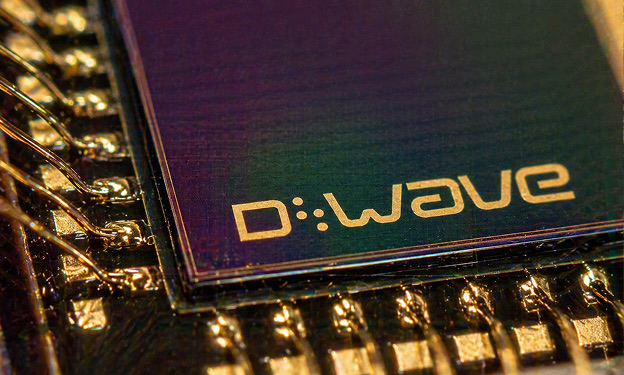
Classical computing infrastructure approaches absolute physical limits globally. Over 81% of business leaders believe classical optimization has peaked. Enter D-Wave Quantum Inc. (QBTS). First-quarter 2026 bookings quickly exceeded $32.8 million, with January alone surpassing total fiscal 2025 revenues. But the real catalyst is the realization of quantum supremacy. Researchers recently executed highly complex spin-glass physics simulations on D-Wave's processor, solving massive combinatorial instances in mere moments. Achieving this exact computation on the world's most powerful classical supercomputer, Frontier, would require millions of years and drastically exceed annual global electricity consumption. The quantum revolution is no longer theoretical; it is an active commercial reality.
D-Wave’s Quantum Technology Advantage: Patents and Innovation
D-Wave (QBTS) secures its market dominance through an impenetrable wall of intellectual property and rapid, dual-platform hardware iterations.
- Patent Monopoly: The firm controls the third-largest quantum patent portfolio globally. With over 500 granted and pending patents worldwide, including over 240 U.S. patents, D-Wave protects its architecture fiercely. Over 60% of these cover core superconducting technology, and the company holds eight critical patents specifically targeting error-corrected implementations.
- Technology Innovation (Advantage2 Architecture): The current Advantage2 system boasts over 4,400 active qubits and effectively doubles the coherence time of previous architectural generations. Built on a 20-way dense topology, the hardware utilizes a revolutionary Fast Anneal capability that pushes the calculation through before decoherence occurs. Consequently, software compilation processes become significantly more efficient and faster.
- Gate-Model Expansion (QCI Acquisition): D-Wave bypassed a decade of research by acquiring Yale University spin-out Quantum Circuits Inc. for $550 million. This instantly created the industry's first true dual-platform provider. QCI’s revolutionary dual-rail qubit hardware architecture naturally converts computational noise into easily detectable erasure errors. This hardware-native error detection achieves logical qubit ratios of 1:100 reliably, vastly outpacing legacy superconducting design timelines.
Quantum Computing's Impact on Geopolitics, Defense, and Cybersecurity
Quantum computing defines modern global geopolitical supremacy. With Chinese entities controlling 60% of global quantum patents, the United States recognizes an existential technological and military threat.
- Defense & Space Domain Awareness: D-Wave formed a dedicated United States Government business unit to address these threats directly. Deployments are already live: Davidson Technologies hosts a highly secure, on-premise Advantage2 deployment for dynamic weapon-to-target assignment. Concurrently, D-Wave partners with Anduril Industries on complex missile defense planning, yielding a 10x faster time-to-solution metric and orchestrating 45 additional enemy missile interceptions in simulations. For space domain awareness, Artificial Brain uses D-Wave to optimize global satellite tasking frameworks, managing geostationary orbit resources to prevent wasting millions of dollars in orbital resources daily.
- Cybersecurity and Cryptanalytic Threats: Hostile state actors employ "harvest now, decrypt later" strategies as classical RSA encryption faces absolute technological obsolescence. D-Wave annealing hardware poses unique threats to symmetric ciphers. Researchers mathematically mapped complex Boolean cryptography expressions into mixed-integer linear programming, turning AES-256 into over 125,000 interacting variables represented as Quadratic Unconstrained Binary Optimization penalties. The annealer explores millions of variable combinations simultaneously to reveal the cryptographic hash pre-image perfectly. Institutions must upgrade to post-quantum cryptography immediately to survive.
D-Wave Commercial Traction: Business Models and Quantum Chemistry Deployments
D-Wave leverages a tri-fold revenue generation architecture: Professional Services, metered Leap cloud usage (representing over 25% of new contract value), and lucrative physical quantum computer system sales that bring immediate capital infusions.
- Global Enterprise Traction: Over 135 customers globally utilize D-Wave systems to drive measurable return on investment today.
- Chemistry & Corporate Deployments: D-Wave's technology applies directly to vast business contexts, evidenced by strategic partnerships with entities like Japan Tobacco (JAPAY). Chemical titans are also actively scaling operations; BASF (BASFY) utilized hybrid quantum optimization to reduce chemical tank unloading durations by 18% and achieved a 14% overall latency reduction.
QBTS Financial Health and Quantum Computing Valuation Metrics
Fiscal year 2025 revenue reached $24.6 million, an aggressive 179% year-over-year increase. Non-GAAP gross margins expanded rapidly to 86.0%, proving the company achieves software-like margins on complex hardware platforms. Capital structure is pristine. Backed by an aggressive $400 million at-the-market offering, D-Wave holds over $884 million in total liquidity currently. This unparalleled financial runway deters predatory short sellers and funds acquisitions and intensive research effortlessly.
D-Wave Investment Risk Factors and Competitive Challenges
D-Wave reported a hefty $355.1 million net loss for 2025, though non-cash warrant liability remeasurement entirely drove this specific loss. Furthermore, the stock exhibits a nosebleed price-to-sales ratio of 1,237. Short interest hovers around 12.47% of the public float as skeptics cite the relatively low absolute corporate revenue figures. Lastly, executing the Advantage3 roadmap to scale the architecture to 100,000 qubits requires immense physical engineering, including the flawless deployment of sophisticated multi-chip processor fabrics.
The Bottom Line: Quantum Computing Investment Thesis for D-Wave
Markets consistently undervalue the QCI merger synergies and gate-model expansion. Investors treat D-Wave as a high-margin optimization software entity. The TIKR advanced valuation model targets a price of $75.42, implying a massive 274.5% projected total shareholder return. By redefining computational boundaries across all industries, D-Wave stands decisively as the apex entity in this commercial sector.
___
By Udi Jacoby, 18 Years of Financial Market Experience & Trade The Pool Senior Analyst


/A%20close-up%20of%20an%20AMD%20office%20by%20gehapromo%20via%20Adobe%20Stock.jpeg)
/Space/Rocket%20launching%20into%20space%20by%20BEST%20BACKGROUNDS%20via%20Shutterstock.jpg)
/Applied%20Materials%20Inc_%20campus%20sign-by%20Sundry%20Photography%20via%20iStock.jpg)