



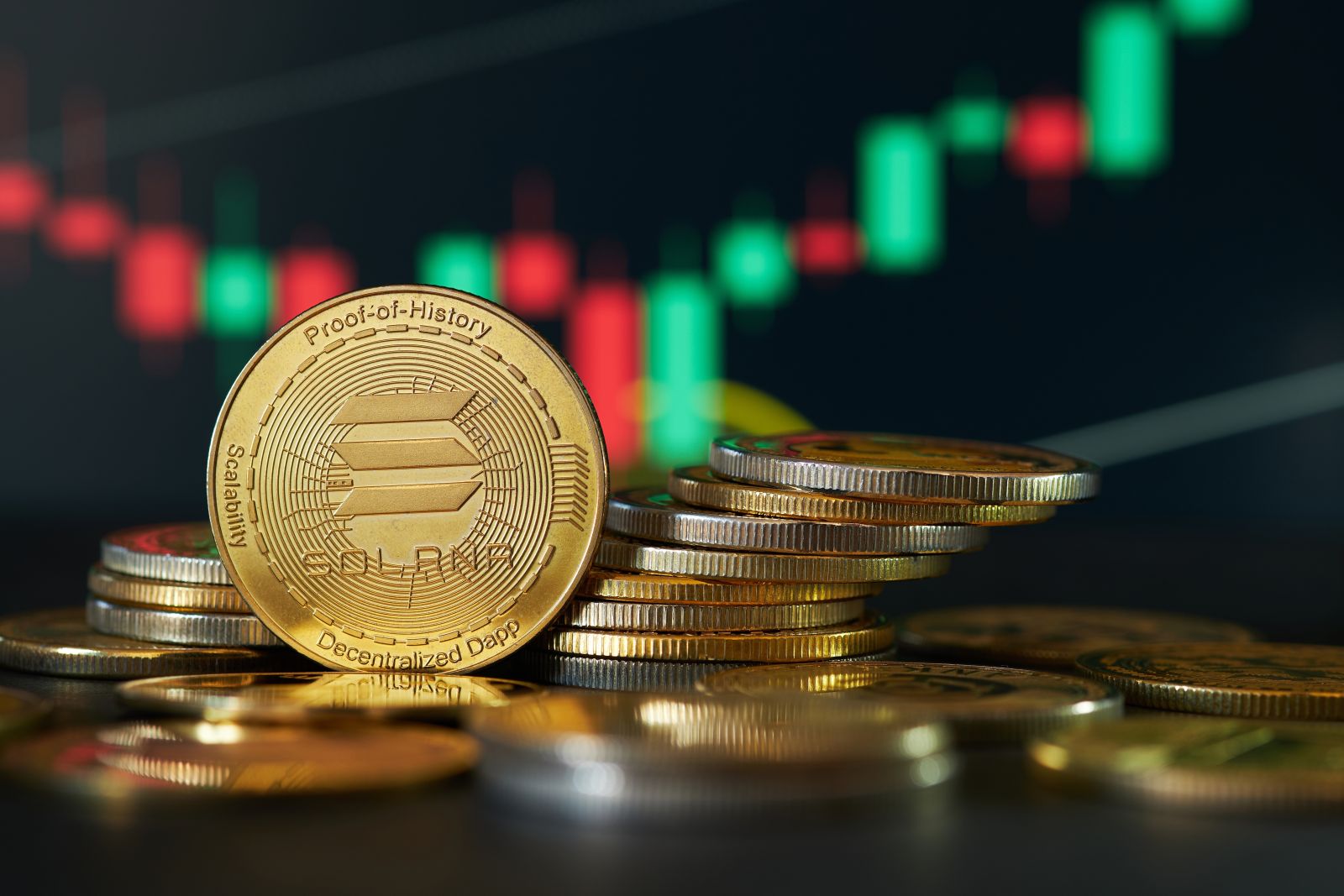
This is sponsored content. Barchart is not endorsing the websites or products set forth below.
Crypto payments have long been in an awkward in-between. It has been touted as offering quicker settlement, reduced fees, and borderless transfers, but reality has often fallen short of the language. A number of networks have been powerful at speculation, some have been handy to decentralized finance, and a few have even established serious communities of developers, but becoming the payment chain that people use every day is yet another challenge. It requires not just speed but also consistency, scale, low transaction costs, and sufficient ecosystem support to ensure businesses and users have confidence in the rails beneath them.
That is why the discussion about the Solana price has begun to extend beyond trading and market cycles. Solana is not solely being evaluated as a high-performance blockchain by investors and developers. It is increasingly being tested as a serious contender for payment infrastructure, a network capable of supporting everything from stablecoin payments to merchant and cross-border payments.
Why Payments Need More Than Hype
A blockchain can not be used to make payments because it is fast on paper. Real payments need to be reliable in stressful situations, have predictable charges, offer easy user interfaces, and connect to exchanges, wallets, payment processors, and financial apps. Merchants are not particularly concerned with ideological debates between chains when settlement takes too long, costs are uncertain, and user onboarding is too complex.
Here, Solana can make a strong argument. It was constructed with efficiency in mind, and these qualities are much more significant in payments than in speculative marketing. A payment network should be transparent to the customer. Individuals desire transactions to be completed fast and at a low cost without concern of congestion, failed transactions and high costs. At that, the most impressive pitch Solana could make is that it is exciting. It is because it has the potential to fade into the background, and this is precisely what good infrastructure is prone to do.
This benefit becomes even greater as stablecoins expand further. The most obvious step towards bridging crypto rails and real payments is stablecoins, as they eliminate much of the volatility that makes spending money on ordinary things challenging. A low-cost, speedy chain, coupled with liquidity in stablecoins, is beginning to appear less like a crypto experiment and more like a new settlement layer.
Solana’s Technical Edge in the Payments Race
When the payments market is to be concentrated in a small number of large rails, the winners will require other technical features than brand recognition. The speed of Solana and relatively low fees make it one of the most feasible options. The transmission of value over a network must be economical enough to scale, particularly with smaller transactions. When a chain cannot efficiently handle routine payments, it will struggle to move beyond niche use cases.
It is also why infrastructure improvements are important. To Solana, performance is not merely a verbal discussion amongst traders. It plays a pivotal role in the thesis of payments. Companies considering adopting blockchain-based settlement should be assured that the network will remain stable under high demand. That is what makes the difference between a promising chain and a reliable one.
Meanwhile, it is never about the chain itself when it comes to payments. Liquidity, accessibility and market trust are important as well. Here is where exchanges like Binance come in handy. Binance has assisted in the formation of how users find, trade, and move digital assets and that type of exchange assistance makes any chain more practical. A network will be more conducive to payments, where people can easily obtain assets, transport, and move in and out of the trading and spending worlds without rubbing shoulders.
The Stablecoin Factor Could Change Everything
If Solana becomes the default chain for actual payments, chances are stablecoins will be the cause. The majority of consumers and companies would not like to base the prices of goods or wages on volatile assets. They desire digital dollars or other equally stable units that can move quickly and clear effectively. That model provides that the blockchain serves as the transport layer, and the stablecoin becomes the spending tool.
That arrangement would fit Solana. The network's economics and speed enable stablecoin payments to create an environment in which they feel competitive with traditional digital payment rails, particularly in cross-border use cases. The exchange of money between countries can remain slow, costly, and disjointed when relying on legacy systems. That a blockchain can transfer funds in near-instantly at low cost is immediately appealing in comparison.
The greater the adoption of stablecoin support by payment providers, fintech companies, and exchanges on Solana, the greater this flywheel. This equation reappears on Binance because large exchanges normalize usage patterns. They are not speculative markets. They are also used to bridge the liquidity, wallets, and payment behavior. Having large platforms that support a chain will help narrow the gap between the ownership of a digital resource and its practical application.
What Still Stands in Solana’s Way
The direction that Solana is taking towards being the default payment chain is not self-evident. Trust at scale is the largest obstacle. A network can be cheap and quick, yet when companies are concerned about reliability, security attacks in the wider ecosystem, or unpredictable regulation, then its uptake is slack. The nature of payments is conservative as the cost of failure is high. Merchants and institutions would prefer infrastructure that is less efficient but a lot more predictable.
And there is the competition issue. Solana is not a lone construct. Other chains want the same role, and traditional payment companies are rapidly modernizing their own systems. There might not be a winner in the future at all. It can be part of a hybrid environment where stablecoins can move across various chains depending on the application.
Nonetheless, Solana is one of the few blockchains that has a plausible case for mass-market payments. It is fast, economical, increases stablecoin relevance, and offers expansive exchange support, all done in a commercially significant manner. That is not the assurance of victory, but it makes the question a reality.
From Crypto Asset to Financial Rail
The biggest change in the Solana narrative is that it is no longer a question of whether or not the token can increase in value. It concerns the possibility of the network becoming part of the infrastructure people use without paying attention. It is the actual payment technology trial. Excitement does not measure success, but normalization.
Should Solana be able to continue enhancing reliability, further the adoption of stablecoins, and establish stronger connections with platforms that link users to digital finance, it stands as a real opportunity to become one of the defining payment chains of the next age. Not a fast blockchain, but an actual financial rail.
This article contains sponsored content. Barchart has not reviewed, approved, or endorsed the content, and may receive compensation for placement of the content on this site. For more information please view the Barchart Disclosure Policy here.

/Advanced%20Micro%20Devices%20Inc_%20logo%20and%20chart%20data-by%20Poetra_%20RH%20via%20Shutterstock.jpg)

/Cisco%20Systems%2C%20Inc_%20HQ-by%20Sundry%20Photography%20via%20iStock.jpg)