
AI lending platform Upstart (NASDAQ:UPST) beat Wall Street’s revenue expectations in Q4 CY2025, with sales up 35.2% year on year to $296.1 million. The company’s full-year revenue guidance of $1.4 billion at the midpoint came in 10.1% above analysts’ estimates. Its GAAP profit of $0.17 per share was 12.7% above analysts’ consensus estimates.
Is now the time to buy Upstart? Find out by accessing our full research report, it’s free.
Upstart (UPST) Q4 CY2025 Highlights:
- Revenue: $296.1 million vs analyst estimates of $289 million (35.2% year-on-year growth, 2.5% beat)
- EPS (GAAP): $0.17 vs analyst estimates of $0.15 (12.7% beat)
- Adjusted EBITDA: $63.69 million vs analyst estimates of $63 million (21.5% margin, 1.1% beat)
- Operating Margin: 6.4%, up from -2.2% in the same quarter last year
- Free Cash Flow was $104.6 million, up from -$135.3 million in the previous quarter
- Market Capitalization: $3.78 billion
Company Overview
Using over 2,500 data variables and trained on nearly 82 million repayment events, Upstart (NASDAQ:UPST) is an AI-powered lending platform that uses machine learning to help banks and credit unions more accurately assess borrower risk for personal loans, auto loans, and home equity lines of credit.
Revenue Growth
A company’s long-term performance is an indicator of its overall quality. Any business can experience short-term success, but top-performing ones enjoy sustained growth for years. Luckily, Upstart’s sales grew at an excellent 34.9% compounded annual growth rate over the last five years. Its growth beat the average software company and shows its offerings resonate with customers, a helpful starting point for our analysis.
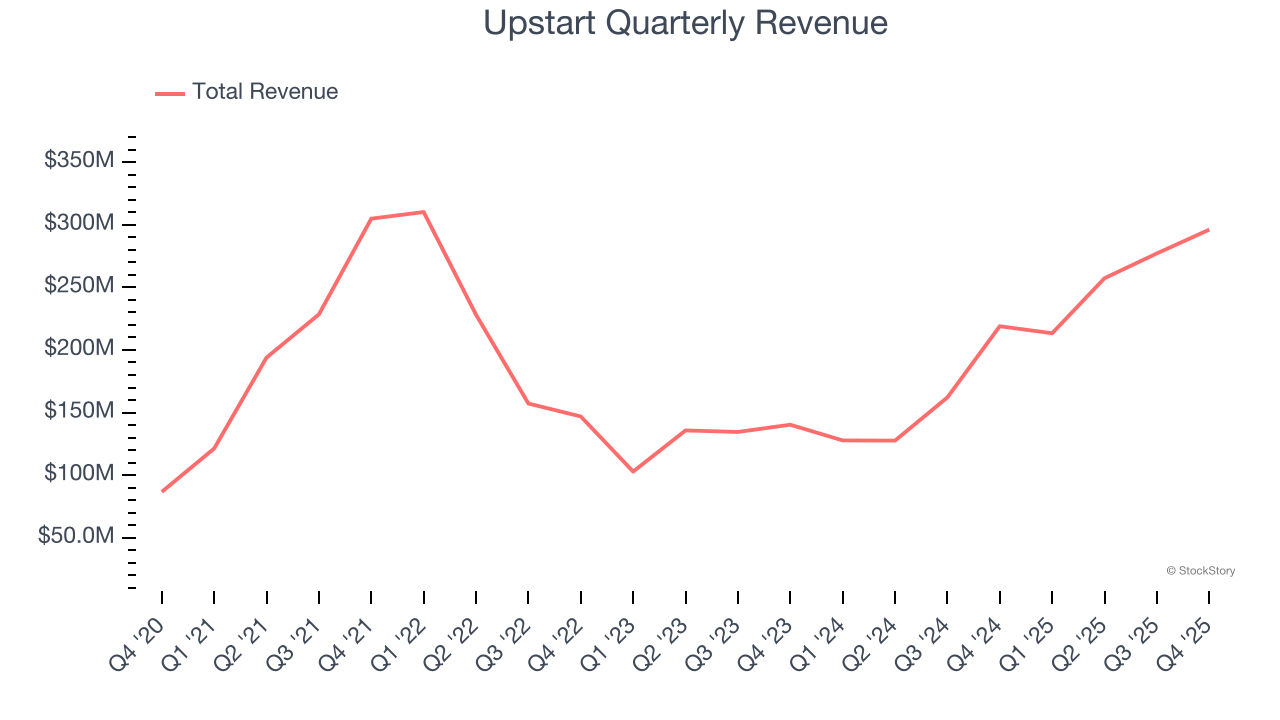
Long-term growth is the most important, but within software, a half-decade historical view may miss new innovations or demand cycles. Upstart’s annualized revenue growth of 42.6% over the last two years is above its five-year trend, suggesting its demand was strong and recently accelerated. 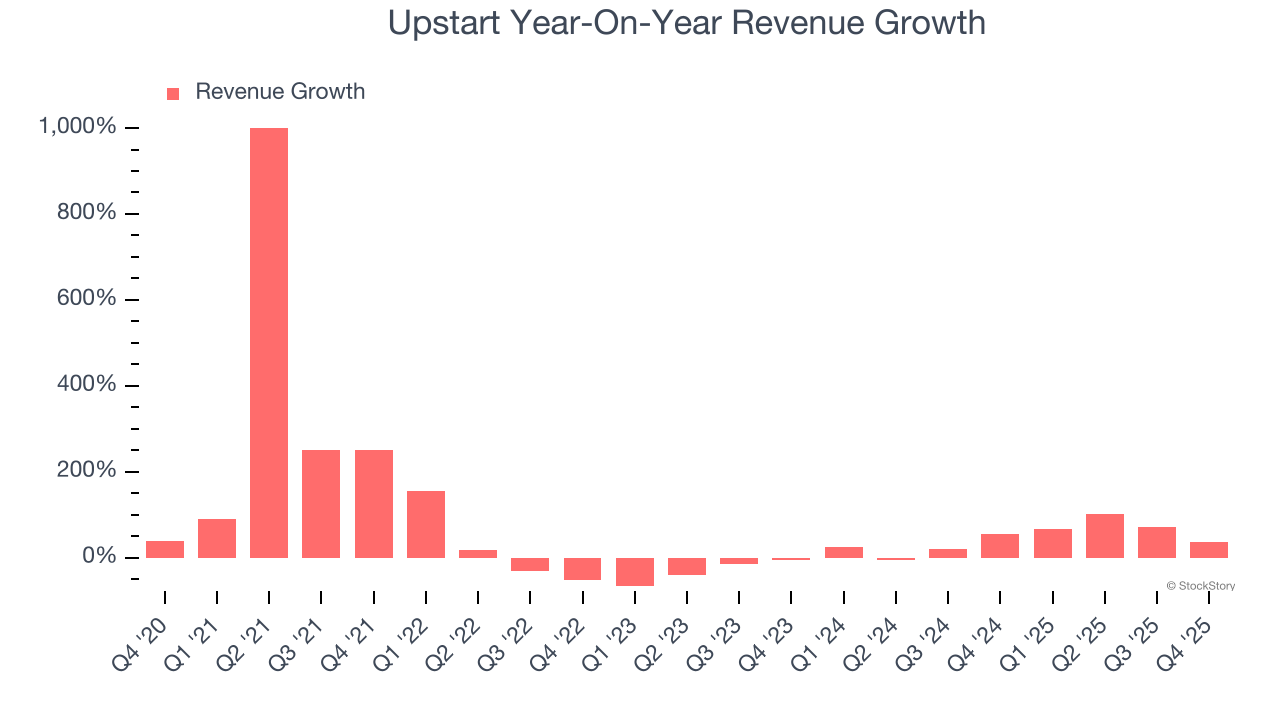
This quarter, Upstart reported wonderful year-on-year revenue growth of 35.2%, and its $296.1 million of revenue exceeded Wall Street’s estimates by 2.5%.
Looking ahead, sell-side analysts expect revenue to grow 22.7% over the next 12 months, a deceleration versus the last two years. Still, this projection is admirable and suggests the market sees success for its products and services.
Software is eating the world and there is virtually no industry left that has been untouched by it. That drives increasing demand for tools helping software developers do their jobs, whether it be monitoring critical cloud infrastructure, integrating audio and video functionality, or ensuring smooth content streaming. Click here to access a free report on our 3 favorite stocks to play this generational megatrend.
Total Transaction Volume
Total transaction volumes show the aggregate dollar value of loans processed on Upstart’s platform. This is the number from which the company will ultimately collect fees, and the higher it is, the more accurate its software becomes at assessing credit risk.
Upstart’s transaction volume punched in at $3.20 billion in Q4, and over the last four quarters, its growth was fantastic as it averaged 51.6% year-on-year increases. This alternate topline metric grew slower than total sales, meaning the interest income from loans retained on its balance sheet outpaced its loan processing fees. This is a double-edged sword - if the trend continues, it would expand Upstart’s revenue opportunities but also expose it to more delinquencies and defaults, increasing its risk profile. 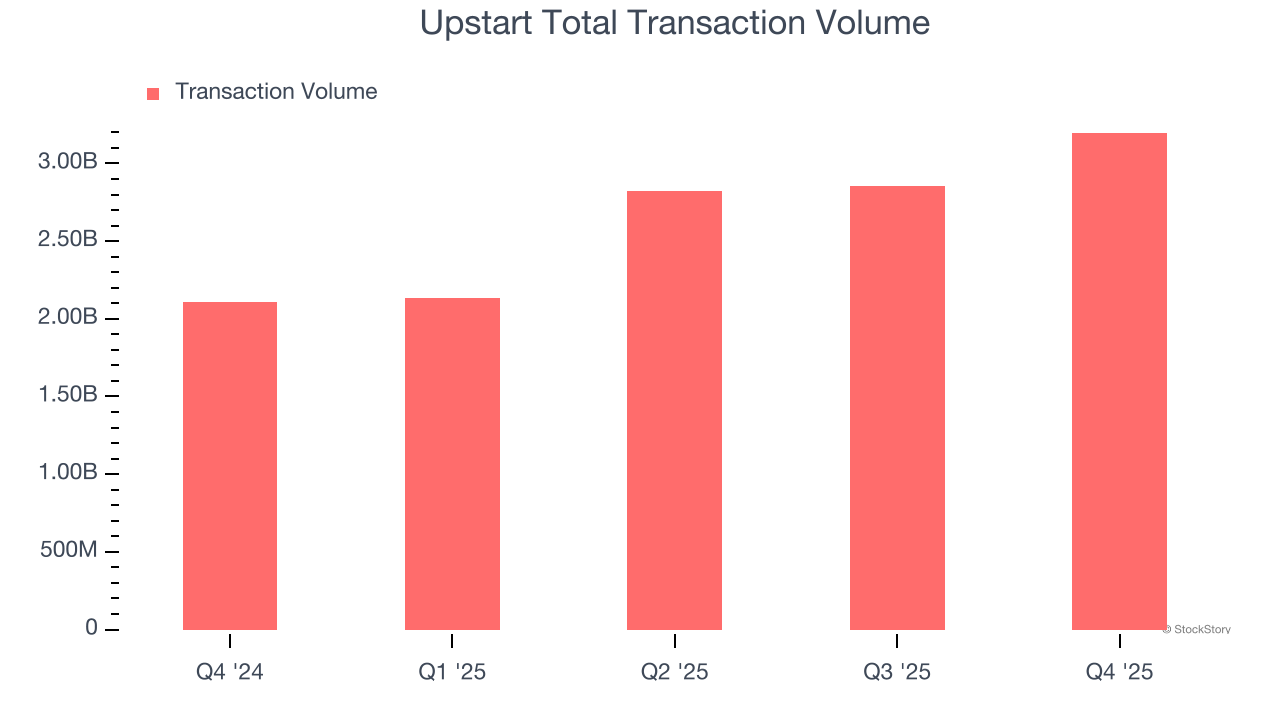
Customer Acquisition Efficiency
The customer acquisition cost (CAC) payback period measures the months a company needs to recoup the money spent on acquiring a new customer. This metric helps assess how quickly a business can break even on its sales and marketing investments.
Upstart’s recent customer acquisition efforts haven’t yielded returns as its CAC payback period was negative this quarter, meaning its incremental sales and marketing investments outpaced its revenue. The company’s inefficiency indicates it operates in a competitive market and must continue investing to grow.
Key Takeaways from Upstart’s Q4 Results
We were impressed by Upstart’s optimistic full-year revenue guidance, which blew past analysts’ expectations. We were also happy its revenue outperformed Wall Street’s estimates. Overall, we think this was a solid quarter with some key areas of upside. The stock traded up 4.6% to $41.07 immediately following the results.
Indeed, Upstart had a rock-solid quarterly earnings result, but is this stock a good investment here? If you’re making that decision, you should consider the bigger picture of valuation, business qualities, as well as the latest earnings. We cover that in our actionable full research report which you can read here (it’s free).

/Microsoft%20sign%20at%20the%20headquarters%20by%20VDB%20Photos%20via%20Shutterstock.jpg)