





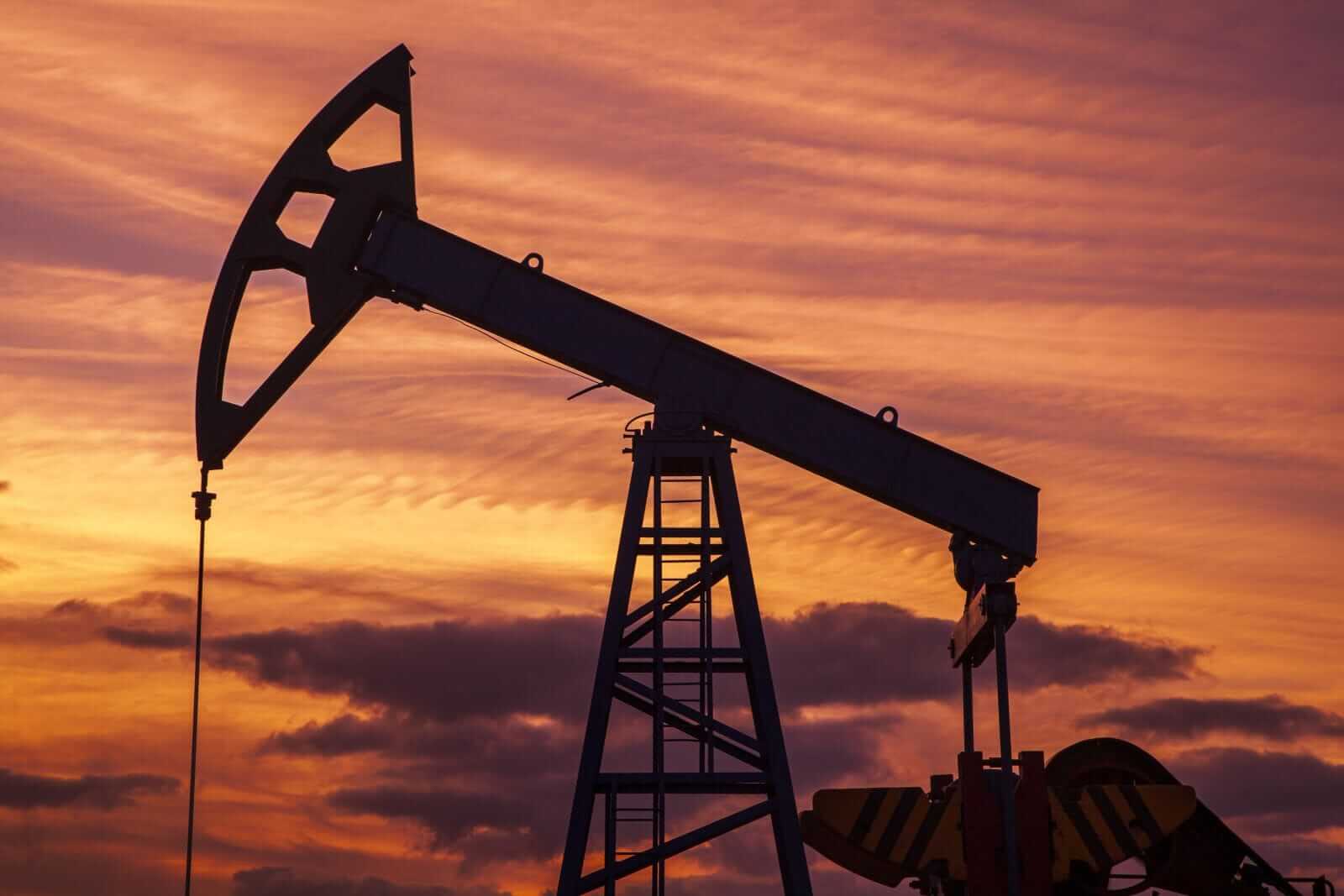
Oct WTI crude oil (CLV22) on Monday closed up +0.62 (+0.73%), and Oct RBOB gasoline (RBV22) closed up +0.484 (+2.00%).
Crude oil and gasoline prices Monday recovered from 1-week lows and closed moderately higher after the dollar erased an early rally, which sparked short-covering in energy futures. Crude oil Monday initially fell to a 1-week low on concern that sharp interest rate hikes by the world's central banks will undercut economic growth and curb energy demand. The Fed is expected to raise interest rates by +75 bp on Wednesday, and the BOE is expected to raise interest rates by +50 bp on Thursday.
Crude oil prices Monday were also under early pressure on global energy demand concerns after Germany's Bundesbank, in its monthly report Monday, said, "there are increasing signs of a recession of the German economy in the sense of a clear, broad-based and longer-lasting decline in economic output."
Crude oil prices have support as China eases some of its pandemic restrictions. China last Wednesday announced it is easing pandemic lockdowns in Chengdu, a city of 21 million people, which should boost economic activity and energy demand. China's Covid lockdowns have hurt Chinese energy demand in recent months. Chinese refineries in July handled the least amount of oil since March 2020 as Covid lockdowns and refinery shutdowns for maintenance undercut crude demand. Also, recent crude demand remains weak as China's Bureau of Statistics today reported China Aug crude processing rose just +0.9% from July and was still down -8% y/y to 12.69 million bpd.
Oil prices are seeing support from the dim prospects for a nuclear deal with Iran that would lift sanctions against Iran and allow its crude back onto the global markets. The International Atomic Energy Agency (IAEA) last Monday said that "the information gap is bigger and bigger" on Iran's recent nuclear activities. Also, the European Union's chief negotiator recently said that "in light of Iran's failure to conclude the agreement on the table, we will consult with our international partners on how best to deal with Iran's continued nuclear escalation."
Crude oil prices garnered support after OPEC+ on Sep 5 agreed to cut its crude production level by 100,000 bpd in October, its first cut in production in more than a year. Saudi Arabian Energy Minister Prince Abdulaziz bin Salman said, "the simple tweak in production shows that OPEC+ will be attentive, preemptive and pro-active" in managing crude markets. OPEC+ production in August rose by +590,000 bpd to a 2-1/4 year high of 29.640 million bpd, according to the IEA, but is still running more than 2 million bpd below quotas due to various supply disruptions and capacity constraints. Nigerian and Libyan crude output has fallen in recent months due to damaged pipelines in Nigeria and political unrest in Libya, undercutting the overall OPEC+ production level. Libya's state-run National Oil Corp said Sep 6 that Libyan crude production had dropped more than -100,000 bbl to 1.1 million bpd, down from the 1.226 million bpd it produced the previous week.
In a bullish factor, Vortexa reported today that the amount of crude stored on tankers that have been stationary for at least a week fell -7.3% w/w to 85.67 million bbls in the week ended September 16.
Last Wednesday's EIA report showed that (1) U.S. crude oil inventories as of September 9 were -2.6% below the seasonal 5-year average, (2) gasoline inventories were -6.2% below the seasonal 5-year average, and (3) distillate inventories were -20.5% below the 5-year seasonal average. U.S. crude oil production in the week ended September 9 was unchanged at 12.1 million bpd, which is only -1.0 million bpd (-7.6%) below the Feb-2020 record-high of 13.1 million bpd.
Baker Hughes reported last Friday that active U.S. oil rigs in the week ended September 16 rose by +8 rigs to 599 rigs, modestly below the 2-1/4 year high of 605 rigs posted in the week ended July 29. U.S. active oil rigs have more than tripled from the 17-year low of 172 rigs seen in Aug 2020, signaling an increase in U.S. crude oil production capacity.
More Crude Oil News from Barchart



/AI%20(artificial%20intelligence)/Ai%20chip%20by%20Quality%20Stock%20Arts%20via%20Shutterstock.jpg)

/A%20close-up%20of%20the%20Broadcom%20logo%20on%20a%20smartphone%20by%20Timon%20via%20Adobe%20Stock.jpeg)